Starting an Australian Shepherd in Herding
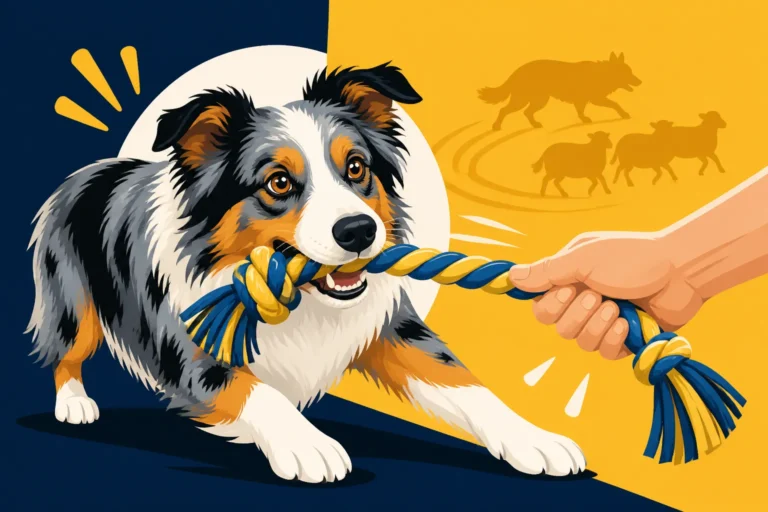
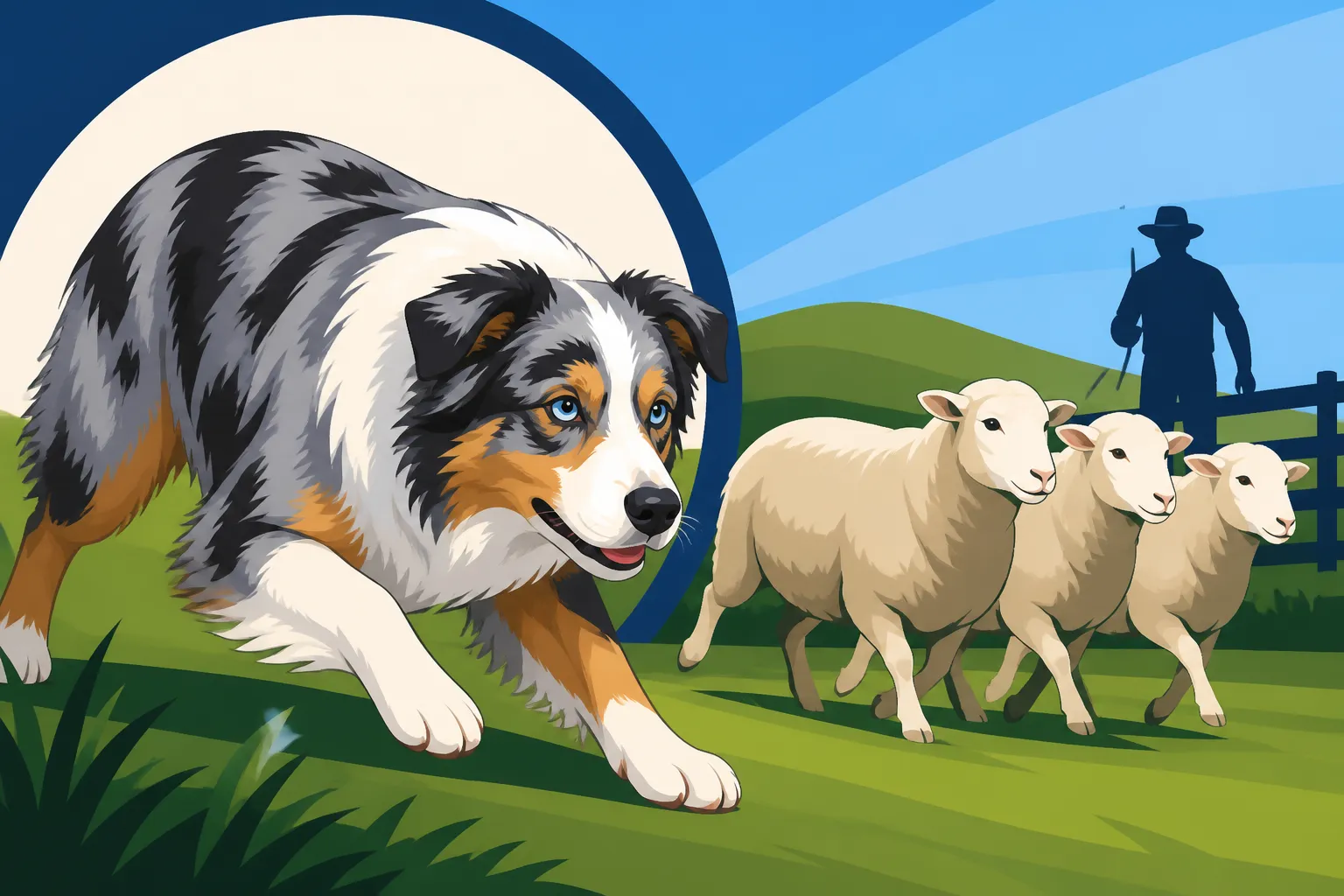
Many Australian Shepherd owners find themselves bewildered by their dog's intense focus on movement, their tendency to "collect" family members, or that unsettling stare directed at the cat. It's not a flaw, but a deeply ingrained instinct, a remnant of generations spent working livestock. For many, the question isn't if their Aussie has herding drive, but how to channel it productively. This guide is for those who are ready to explore that incredible heritage and give their Australian Shepherd a chance to do what it was born to do, offering a realistic, step-by-step look at how to get started in the rewarding world of herding.
Understanding Your Australian Shepherd's Innate Herding Drive
Before you even think about putting your Aussie in front of a sheep, it’s vital to understand the fundamental wiring that makes these dogs so special. It’s more than just a preference; for many Aussies, herding is an intrinsic part of who they are.
The Deep Roots of Aussie Herding Instinct
Imagine generations of dogs, day in and day out, helping ranchers manage unruly sheep and cattle. That’s the legacy etched into your Australian Shepherd’s DNA. This isn't just a learned trick; it's their "operating system," a complex set of behaviors designed for a very specific purpose: to gather, move, and control livestock. When we talk about herding instinct, we’re talking about a natural compulsion to use their body, their gaze, and their intelligence to manipulate the movement of other animals.
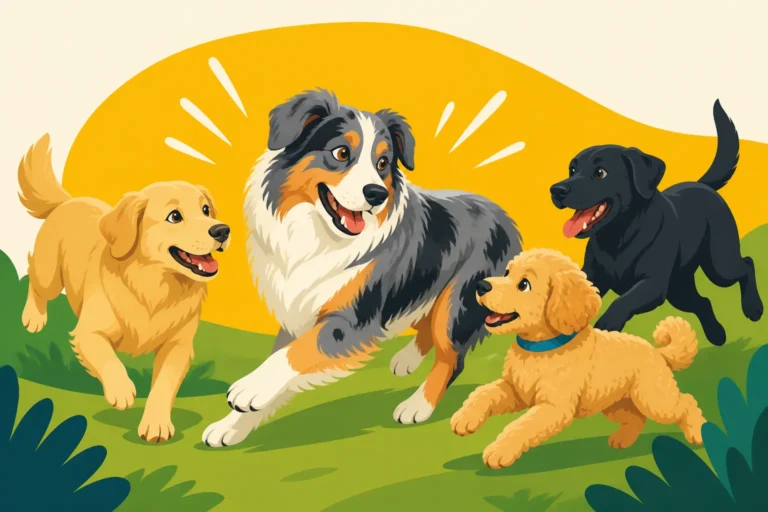
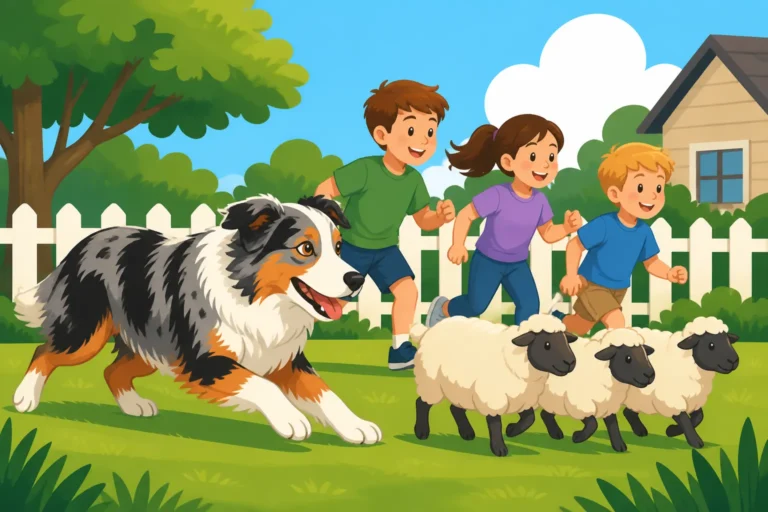
This instinct dictates so much of their behavior, even in a suburban home. You might notice your Aussie gently nudging you or the kids, trying to "keep the flock together." They might circle the perimeter of the yard or stare intently at anything that moves quickly. This isn't naughtiness; it's their brain attempting to fulfill its ancient programming. Understanding this inherent drive is the first step toward appreciating your Aussie's true nature and why providing an outlet for this instinct can be so profoundly satisfying for them. For a deeper dive, check out Why Herding Instinct Is the Aussie Operating System.
Recognizing True Herding Instinct vs. General Prey Drive
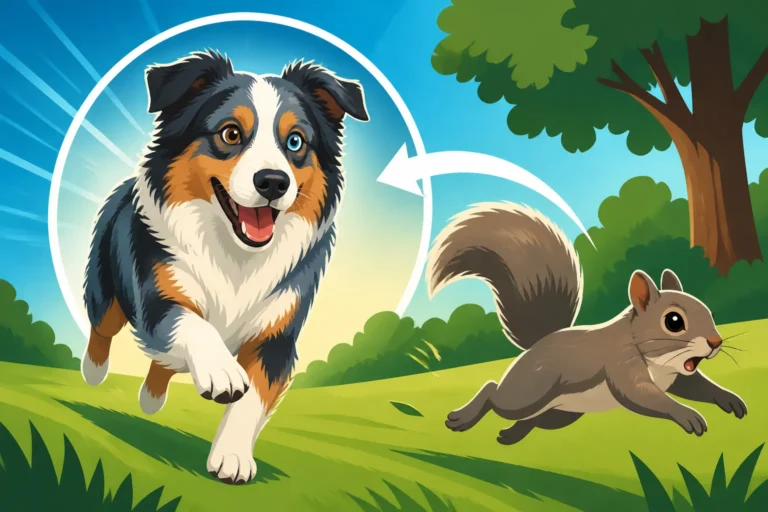
It's easy to confuse a strong prey drive with true herding instinct, but there's a crucial difference. Almost all dogs have some level of prey drive – the urge to chase, catch, and dispatch smaller animals. This is why many dogs will bolt after a squirrel or try to catch a ball. Herding, however, involves a specific sequence of behaviors that goes beyond just chasing. A herding dog doesn't want to catch the sheep; it wants to control them, to move them as a unit.
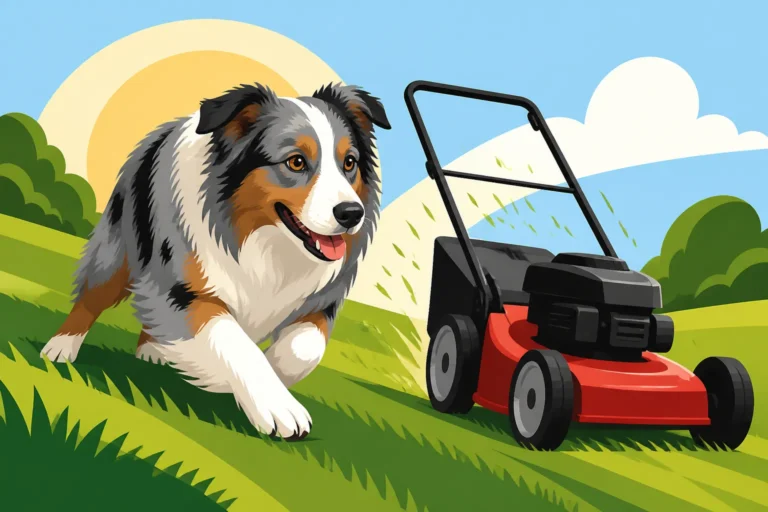
This manifests as a distinct "herding eye" – an intense, focused gaze often accompanied by a low, deliberate posture. They use flanking movements (running wide around the stock) to gather them, and they apply pressure strategically. In a non-working environment, this might look like your Aussie trying to "herd" children by nipping at their heels (though this should always be redirected with appropriate training) or circling you to bring you back to a group. Some Aussies might even try to "organize" household objects, or, as comical as it sounds, even inanimate objects that move. We've all seen videos of Aussies trying to gather robotic vacuums – it's a perfect example of their instinct finding an outlet! If you're curious, you can learn more about how this instinct plays out in unexpected ways in An Australian Shepherd Herding a Vacuum Cleaner.
Assessing Your Aussie's Herding Potential
You’ve observed your Aussie’s natural tendencies, and you’re convinced there’s a spark. The next logical step is to get a professional assessment to see if your dog has the innate aptitude and desire for herding. This isn't about setting them up to be a grand champion, but about understanding their potential and giving them a fulfilling experience.
The Herding Instinct Test: What It Is and Why It Matters
A Herding Instinct Test (HIT) is specifically designed to determine if a dog possesses the inherent traits necessary for herding. It's usually conducted in a small, secure round pen with a few docile sheep, ducks, or goats, under the watchful eye of an experienced herding trainer. The trainer observes how your dog reacts to the stock: do they show interest, stalk, circle, or try to gather? Do they engage with the stock in a herding-specific way, or are they just trying to chase or play?
The beauty of a HIT is that it provides a safe, controlled environment for your dog’s first introduction to livestock. It's not about training; it's about seeing if the instinct is there. The trainer can gauge your dog's "eye" (the intensity of their gaze), their natural flanking tendencies, and their overall courage and desire to work. For a novice owner, this test is invaluable because it takes the guesswork out of whether pursuing herding is even an option. It can confirm that your dog has the drive, or it can help you understand if other outlets for their energy might be a better fit. You can read more about the process in Getting an Australian Shepherd Herding Instinct Tested and What Happens at an Aussie Herding Instinct Test.
Finding a Qualified Herding Trainer or Facility
This is perhaps the most critical step in your herding journey. You wouldn't trust just anyone with your dog and livestock, and the quality of your initial experience can make or break your Aussie's enthusiasm for the sport. A good herding trainer is a rare gem, possessing not only dog training skills but also a deep understanding of livestock behavior and how to introduce dogs to stock safely and effectively.
When looking for a facility, prioritize places that emphasize positive reinforcement and patient, clear communication. Ask about their philosophy: do they focus on developing natural instinct, or do they push for immediate control? Observe a session if possible. A good trainer for Aussies will understand their tendency to be sensitive and intelligent, and they'll know how to manage their intense focus without resorting to harsh methods. Don't be afraid to ask about their experience with Australian Shepherds specifically, as different breeds herd in different ways. While online resources like BAXTER & Bella offer fantastic foundational obedience and puppy training, for something as specialized as herding, in-person instruction from a dedicated herding professional is truly indispensable. They can provide immediate feedback on your handling and your dog's responses that no online course can replicate.
Starting Your Australian Shepherd on Stock
Once you've confirmed your Aussie has the instinct and found a fantastic trainer, the real fun begins! The first sessions on stock are often a mix of awe and chaos, but with a good trainer and a controlled environment, it quickly becomes incredibly rewarding.
The First Steps: Safety and Introduction to Livestock
Your Australian Shepherd's first real encounter with livestock will typically happen in a small, secure area like a round pen. This confined space limits the stock's escape routes and allows the trainer to safely manage the interaction. The stock itself is usually chosen for its docility – often small groups of sheep, sometimes ducks or goats. The key here is safety, for both your dog and the animals. Your Aussie will likely be on a long line, often held by the trainer, to prevent them from running into the stock or getting overwhelmed. You'll observe their initial reactions: some dogs are hesitant, some are immediately fired up. The trainer's role is to guide these raw instincts, showing your dog how to use their natural talents in a constructive way.
These initial sessions are kept very short, often just a few minutes. The goal is positive exposure, building confidence, and preventing the dog from getting over-stimulated or stressed. You'll learn how to read your dog's body language in a whole new context – the subtle shifts in their stance, the intensity of their "eye," and their natural desire to move the stock. It's a dance between handler, dog, and stock, and the trainer is the choreographer, ensuring everyone stays safe and has a good experience. For more specific insights, you might want to read Starting an Australian Shepherd on Sheep.
Basic Commands and Foundation Skills in the Round Pen
Even though your Aussie has a natural instinct, herding requires a language. In the round pen, your trainer will introduce you and your dog to fundamental herding commands. These aren't just parlor tricks; they are crucial tools for controlling the stock through your dog. Commands like "walk up" (move toward the stock), "lie down" (stop and settle, often used to stop the stock's movement), "come by" (move clockwise around the stock), and "away to me" (move counter-clockwise) become your dog's vocabulary for manipulating the herd.
You'll quickly learn that herding is less about yelling commands and more about subtle body language, timing, and reading both your dog and the stock. The trainer will teach you how to position yourself, how to apply pressure, and when to release it. It's a partnership, where your dog is the physical worker, and you are the brain guiding their efforts. These foundation skills are paramount because they establish clear communication and control, which are essential as you progress to larger fields and more complex tasks. It takes patience, repetition, and a willingness to learn, but seeing your Aussie respond to these commands and genuinely work stock is an unparalleled feeling.
Here's a simple table of some basic herding commands:
| Command | Meaning (for the Dog) | Purpose in Herding |
|---|---|---|
| Walk Up | Move forward towards the stock. | To apply pressure and move stock. |
| Lie Down | Stop moving and typically lie down. | To stop the stock, or pause. |
| Come By | Move clockwise around the stock. | To flank and gather stock. |
| Away to Me | Move counter-clockwise around the stock. | To flank and gather stock. |
| That'll Do | Stop working and come to the handler. | To end a working session or task. |
| Look Back | Look behind for any stray stock. | To gather any missed animals. |
Progressing Beyond the Instinct Test
The initial taste of herding is exciting, but the journey doesn't end there. Once your Aussie understands the basics and shows a strong desire to work, you can begin to expand their skills and explore the diverse world of herding sports and practical applications.
Moving to Larger Arenas and Developing Control
After mastering the round pen, the next natural progression is to move into larger enclosed areas. This presents new challenges because the stock has more room to move, and your dog has more space to work. The trainer will help you transition, guiding you on how to maintain control and direct your Aussie over greater distances. This is where those foundational commands really get put to the test. Your dog will learn to execute wider flanks, bring stock from farther away, and navigate small obstacles that might be present in the field.
The focus shifts from simply stimulating instinct to developing precision and responsiveness. Your communication with your dog becomes even more critical, and you'll likely start using a whistle for directional commands, especially in open fields where your voice might not carry. The physical and mental demands on both of you increase, requiring more endurance and focus. It’s a rewarding phase where you truly start to see your Aussie develop into a capable working partner, refining their natural talents into controlled, purposeful actions.
Exploring Different Herding Disciplines and Goals
Herding isn't a one-size-fits-all sport; there are various organizations and disciplines, each with its own rules and nuances. Organizations like the American Kennel Club (AKC), the Australian Shepherd Club of America (ASCA), and the American Herding Breed Association (AHBA) all offer different levels of herding trials and titles. Some focus on specific types of stock (sheep, ducks, cattle), while others emphasize different working styles or historical ranch scenarios.
You might start with a goal of simply passing some instinct tests and enjoying the occasional lesson, or you might find yourself drawn into the world of competition, aiming for advanced titles. For some, the ultimate goal is practical farm work, using their Aussie to help with daily chores. The beauty of herding is its versatility and the deep bond it fosters. Whether you pursue formal trials or just enjoy recreational sessions, the act of working together to move stock is incredibly satisfying for both you and your Australian Shepherd. You can explore the various levels of competition by looking into Australian Shepherd Herding Trial Levels.
Challenges and Considerations in Herding Training
While immensely rewarding, herding training isn't without its hurdles. It taps into very primal instincts, and managing those can sometimes be tricky. A realistic approach means acknowledging these challenges and learning how to navigate them effectively.
Managing Frustration and Overarousal
Australian Shepherds are incredibly intelligent and highly driven, which means they can also get easily frustrated or overaroused when their instincts are stimulated but they lack the skills or control to execute their desires. Imagine seeing a task you desperately want to do, but your hands are tied, or you don't speak the language. That's often what an Aussie feels when first encountering stock. They might bark excessively, try to rush the stock, or even nip if they feel they aren't getting anywhere.
A good trainer will help you recognize the signs of frustration or overarousal – things like frantic barking, persistent nipping at the stock, or a dog that simply can't settle. Learning to bring your dog "down" from that highly stimulated state is crucial. This might involve calling them off the stock, making them lie down, or simply ending the session before they become completely overwhelmed. Short, positive sessions are always better than long, frustrating ones. The goal is to build controlled confidence, not a manic obsession.
Balancing Herding with Everyday Life
It's a common misconception that once an Aussie starts herding, all their other "problems" disappear, or that herding is the only exercise they need. While herding certainly provides a fantastic outlet for their mental and physical energy, it doesn't replace the need for good manners, basic obedience, and a balanced life at home. A dog that is brilliant on sheep still needs to know how to walk politely on a leash, greet guests appropriately, and settle calmly indoors.
In fact, channeling their herding drive on stock can help with everyday behavior, as it fulfills a deep-seated need. But it's not a magic bullet. You'll still need to provide regular physical exercise and mental stimulation that complements their herding work. It's about integration, ensuring your Aussie is a well-rounded and well-adjusted member of your family, whether they're on the field or curled up at your feet. For example, a dog that learns to control sheep in a field is still capable of trying to "organize" the other dogs at the park if not properly managed, so consistent training in all aspects of life is key. You can find more about how their herding tendencies impact their daily interactions in An Aussie That Organizes the Dogs at the Park.
Equipment and Resources for the Aspiring Herding Team
Embarking on the herding journey requires a few key pieces of equipment and a commitment to ongoing learning. Think of it as preparing for any new sport – having the right gear and the right support makes all the difference.
Essential Gear for Herding Training
While you don't need a truckload of expensive gadgets to start, some basic gear will make your herding lessons safer and more effective. A good quality, comfortable flat collar that won't slip over your Aussie's head is a must. Many trainers also recommend a sturdy, long line – typically 15 to 30 feet – to provide control in the initial stages. You can often find durable, high-quality long lines on platforms like Amazon, which offer a wide selection of lengths and materials to suit your needs. A whistle will also become an invaluable tool as you progress, especially when working in larger fields where your voice won't reach.
For yourself, comfort and safety are paramount. Wear sturdy, closed-toe shoes or boots, especially if you're working with sheep or goats that might step on your feet. Dress in layers, as you'll be active outdoors in various weather conditions. Sunscreen, a hat, and plenty of water are also essential for both you and your dog during sessions. The focus is always on making the experience positive and secure for everyone involved.
Continuing Education and Community Support
Herding is a journey, not a destination. There's always something new to learn, whether it's refining your dog's flanks, understanding stock behavior better, or mastering advanced trial patterns. Don't underestimate the power of ongoing education and community support. Many experienced herding enthusiasts have a wealth of knowledge to share, and finding a local herding club or community can be incredibly beneficial. These groups often organize clinics, practice sessions, and offer mentorship opportunities.
Look for books, DVDs, and online resources from reputable herding trainers. Joining online forums or social media groups dedicated to Australian Shepherd herding can also connect you with like-minded individuals who can offer advice, support, and share their experiences. Remember that herding, at its heart, is a traditional skill, and much of the best learning comes from observing, asking questions, and getting hands-on experience under the guidance of those who have dedicated years to the craft. The commitment to learning and growth will not only improve your skills but deepen the incredible bond you share with your working Australian Shepherd.
Disclaimer
This article is for general informational purposes only and does not constitute professional advice. Laws, prices and regulations vary by location and change over time. Consult a qualified professional for guidance on your specific situation.