An Australian Shepherd Herding a Vacuum Cleaner
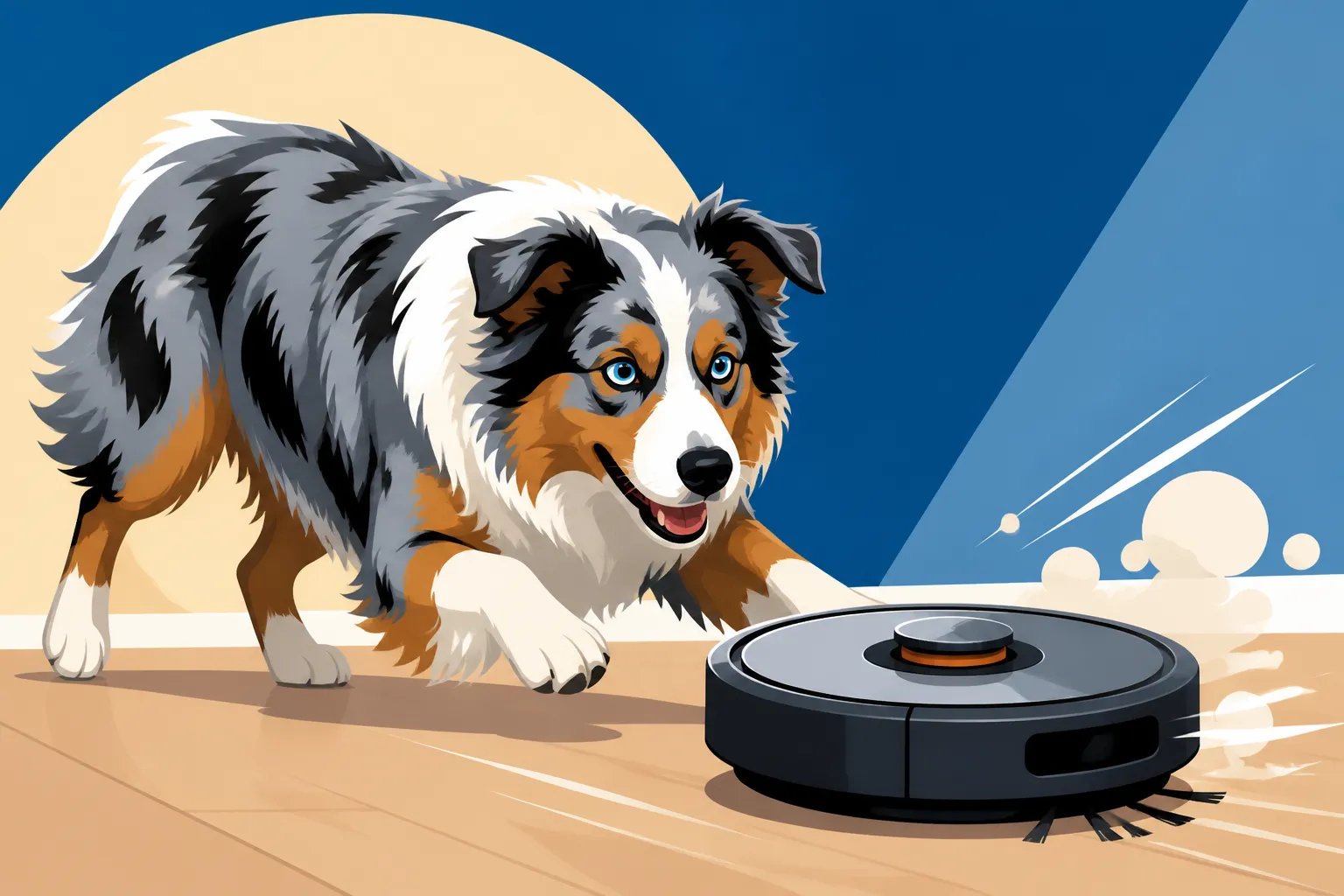
There's nothing quite like the sheer chaos of trying to clean your home only to have your normally well-behaved Australian Shepherd suddenly transform into a furry, barking, tail-wagging tornado, attempting to "herd" your vacuum cleaner. It's a common, incredibly frustrating scenario that leaves many Aussie owners wondering if their house will ever be truly spotless, or if they'll forever be dodging their dog's enthusiastic (and often noisy) attempts to corral the noisy contraption. This guide is here to unravel why your Aussie acts this way, and more importantly, to give you actionable strategies to manage, redirect, and even prevent this very specific, very Australian Shepherd brand of cleaning-day mayhem.
Understanding the Herding Instinct Behind the Behavior
Let's be real: your Australian Shepherd isn't trying to be difficult. They're just being… well, an Australian Shepherd. Their breed was developed for centuries to work livestock, to move and control animals with intelligence, agility, and an unshakeable drive. When you bring a vacuum cleaner into the equation, you're introducing a moving, often noisy, and unpredictable object that, to your Aussie, can look a whole lot like a wayward sheep or cow that needs to be brought into line. It’s not malice; it's instinct.
Why Your Aussie Sees a Vacuum as "Stock"
Imagine your dog's brain as a finely tuned herding computer. Its primary programming is to respond to movement, particularly unpredictable or fast-moving objects. The vacuum cleaner, gliding across the floor, changing direction, and emitting a distinct whirring sound, hits almost every one of those instinctual triggers. To your Aussie, it's not a machine; it's a "thing" that needs to be controlled. They might bark at it, try to nip at its wheels, circle it, or even attempt to block its path. This isn't naughtiness; it's your dog attempting to do its job, the job it was literally bred to do. It’s part of Why Herding Instinct Is the Aussie Operating System. This hardwired response means that simply telling them "no" often falls on deaf ears because their genetic programming is screaming "YES, herd it!"
The sounds the vacuum makes can also play a huge role. Some Aussies are more sensitive to certain frequencies or loud noises. The high-pitched whine or rumbling vibration can be unsettling, creating a stress response that manifests as an attempt to "dominate" or "control" the perceived threat, much like a dog might try to control a challenging piece of livestock. For them, it's a high-stakes game where the vacuum is the rogue animal, and they are the responsible shepherd.
The Difference Between Play and Predation in Herding
It's important to differentiate between an Aussie's playful engagement and a more intense, borderline predatory herding behavior. When your Australian Shepherd is "herding" the vacuum, it can range from a light-hearted game of chase to a serious, focused attempt to control. In a playful scenario, the dog might bounce, bark excitedly, and perhaps make exaggerated movements. Their body language will often be loose, and they might break off the "chase" easily. This is still rooted in instinct but expressed in a less driven way.
However, some Aussies can become quite intense. Their pupils might dilate, their body language can become stiff and low to the ground, and their barks might be more insistent and less playful. They might even try to nip at the vacuum, similar to how they might nip at the heels of stubborn livestock. This isn't true predation in the sense of hunting for food, but it taps into the initial stages of the predatory sequence – the "orient, eye, stalk, chase" phases, specifically the chase and sometimes the grab/bite. Understanding this difference is key because a highly aroused, intense Aussie needs a different approach than one who is simply having a boisterous (if ill-timed) good time. If you notice teeth making contact, even playfully, it's a sign that the behavior needs to be managed more seriously to prevent accidental damage or injury.
Common Triggers Beyond the Vacuum Cleaner
The vacuum cleaner is just one loud, moving object in a world full of triggers for an Australian Shepherd. If your Aussie reacts to the vacuum, it's highly likely they have similar responses to other fast-moving items or loud, unfamiliar noises. Think about other things that might set them off:
- Bicycles and Skateboards: These move quickly and silently or with a distinct whir, often passing by your yard or on walks.
- Joggers and Children Running: Especially if children are playing wildly or running in unpredictable patterns, this can trigger the instinct to gather and control.
- Other Pets: Cats, small dogs, or even livestock if you live on a farm can become targets for herding, especially if they dart around. An Australian Shepherd Rounding Up the Family Cats is a classic example.
- Remote Control Cars or Drones: These artificial moving objects are designed to be erratic, making them prime targets for an Aussie's herding attention.
- Loud Noises: Beyond movement, sudden or sustained loud noises can cause anxiety, leading some Aussies to try and control the source of the noise.
Recognizing these broader triggers helps you understand that the vacuum isn't an isolated problem but rather one symptom of a strong, innate herding drive that needs appropriate outlets and management. It’s about understanding the core of what makes your Aussie tick.
Practical Strategies to Manage Vacuum Herding
Dealing with an Aussie who views your cleaning routine as a personal challenge requires a multi-pronged approach. You need immediate management to prevent the behavior, coupled with long-term training to change their underlying emotional response and redirect their instincts.
Management First: Preventing the Chase
Before you can train, you must manage. This means setting up your environment to prevent the undesired behavior from happening in the first place. Every time your Aussie successfully "herds" the vacuum, even if you see it as just playing, they are rehearsing the behavior and getting a self-reinforcing reward from their instinct.
Here are some immediate management strategies:
- Crate or Secure Area: The simplest and often most effective solution is to put your Aussie in their crate, a separate room, or a securely fenced yard while you vacuum. Give them a high-value chew toy, a Kong stuffed with frozen peanut butter, or a puzzle feeder to keep them occupied and make the experience positive. This isn't punishment; it's prevention and safety. They get to relax, and you get to clean without stress. Ensure the crate is a positive place for them, not just used for "time-outs."
- Leash and Redirect: If crating isn't an option, keep your Aussie on a leash while you vacuum. As soon as you see them fixate on the vacuum or start to move towards it, gently redirect them to a "place" mat or a bed away from the action. Reward them heavily for staying calm on their mat. You can even practice this by having them on a leash, giving them a chew, and moving the vacuum a short distance away initially.
- Barrier Method: Use baby gates or internal doors to block off the area you're cleaning. This physical barrier prevents them from engaging with the vacuum, allowing you to clean undisturbed. This is especially useful for larger homes where you can clean one section while your dog is contained in another.
| Strategy | Immediate Effect | Long-Term Goal | Best Use Case |
|---|---|---|---|
| Crate/Secure Area | Prevents direct interaction | Reduces self-reinforcement | High-arousal dogs, quick clean-ups, safety priority |
| Leash & Redirect | Controls movement, allows praise | Teaches calm behavior | Dogs learning impulse control, supervised cleaning |
| Barrier Method | Blocks access to the vacuum | Avoids rehearsal of behavior | Larger homes, cleaning specific rooms, unsupervised |
Counter-Conditioning and Desensitization Techniques
Once you've got management in place, you can start working on changing your Aussie's emotional response to the vacuum. The goal isn't to stop the herding instinct, but to change their association from "herding target" to "source of good things" or "neutral object." This takes time, patience, and consistency.
- Desensitization (Gradual Exposure):
- Start with the vacuum off: Bring the vacuum into the room but don't turn it on. Reward your Aussie with high-value treats (like small pieces of cooked chicken or cheese) for simply being calm in its presence. If they're nervous, start further away.
- Vacuum in a different room: Turn the vacuum on in a room your dog isn't in, at a very low volume if possible. Reward your dog for calm behavior.
- Short bursts of sound: Turn the vacuum on for just a second or two, then immediately turn it off. As soon as it's off, reward your Aussie. Gradually increase the duration.
- Vacuuming from a distance: Begin to vacuum at the furthest point from your dog, slowly decreasing the distance over many sessions, always rewarding calmness.
- Counter-Conditioning (Changing Association):
- Vacuum equals treats: Pair the presence and sound of the vacuum with something your dog absolutely loves. Every time the vacuum comes out, delicious treats appear.
- The "vacuum game": Instead of chasing, teach your dog that the vacuum appearing means a game of fetch or tug with you, away from the vacuum itself. The vacuum becomes a cue for a fun activity elsewhere.
- Calm time with a chew: Only bring out a special, long-lasting chew (like a bully stick or stuffed Kong) when the vacuum is on and being used. Your Aussie learns that vacuum time means "settle down and enjoy this delicious thing."
Remember, the key is to go at your dog's pace. If they show any signs of stress or arousal, you've gone too fast. Go back a step and try again. For more structured online training programs that incorporate these principles, exploring resources like BAXTER & Bella can be incredibly helpful for guided lessons on impulse control and desensitization.
Giving Your Aussie a More Appropriate Job
Your Australian Shepherd has an incredible working drive, and that drive needs an outlet. If they're trying to herd your vacuum, it's often a sign that their innate need for a "job" isn't being met in other, more appropriate ways. Instead of trying to suppress the instinct, redirect it!
- Structured Play: Incorporate games that use their herding tendencies in a controlled way. A flirt pole, for example, allows them to chase and "catch" a lure, fulfilling that chase drive without involving your belongings. Large, sturdy herding balls (like those made for actual livestock, not just light plastic ones) can be introduced in a safe, open area, allowing them to push and control a "boulder" instead of a machine. This provides a safe and legal outlet for Tug as a Legal Outlet for Aussie Herding Drive.
- Scent Work: This is an incredible way to tire out an Aussie mentally. Their noses are powerful, and teaching them to find specific scents or hidden treats can be incredibly exhausting in the best way. This taps into their problem-solving skills and focuses their energy. Look into introductory scent work classes or kits available on Amazon to get started. Scent Games That Tire an Australian Shepherd are fantastic for mental stimulation.
- Obedience and Rally: Structured obedience training gives your Aussie clear tasks and helps build impulse control. Learning a rock-solid "stay" or "down-stay" in distracting environments can be directly applied to vacuum time. Rally obedience is also a fun way to engage their intelligence and love for working with you.
- Herding Classes: If you have access, consider enrolling your Aussie in an introductory herding class with real sheep or ducks. This allows them to express their natural talent under expert guidance, often leading to a much calmer dog at home because their core needs are met. Getting an Australian Shepherd Herding Instinct Tested can be a great first step.
The goal is to provide enough mental and physical stimulation that when the vacuum comes out, your Aussie is either too tired, too engaged in their "real" job, or simply doesn't feel the overwhelming urge to intervene. Remember, Why Physical Exercise Alone Never Settles an Aussie; mental work is equally, if not more, important for this intelligent breed.
Training and Enrichment to Support a Calm Aussie
Beyond addressing the specific vacuum herding behavior, a well-rounded approach to training and enrichment will foster a calmer, more controlled Australian Shepherd overall. This helps with the vacuum cleaner issue and countless other high-drive tendencies.
Building Impulse Control and a Strong "Leave It"
A strong foundation in impulse control is vital for any Australian Shepherd. It’s the difference between a dog who reacts immediately to every moving thing and one who can pause, process, and wait for your cue.
- "Leave It" Command: This is perhaps the most crucial command for redirecting a dog's attention from something undesirable. Practice "leave it" with low-value items first, gradually increasing the distraction. Start with treats on the floor, then move to toys, then to moving objects. The goal is that when you say "leave it," your Aussie immediately disengages. Reward heavily when they do. This is critical for preventing them from engaging with the vacuum.
- "Wait" and "Stay": These commands teach patience. Have your Aussie "wait" before going through a door, before eating their meal, or before grabbing a thrown toy. Extend the duration and add distance. A solid "stay" can be used to keep them on their bed while the vacuum is running nearby.
- "Go to Mat/Place": Teach your Aussie to go to a designated mat or bed and stay there until released. This provides a clear, calm place for them to go during potentially stressful times, like vacuuming. Make this spot incredibly rewarding with special chews or treats. Mat Settle Training for a Restless Aussie can be highly beneficial here.
- Capturing Calmness: Actively reward your Aussie whenever they are not herding or reacting to things. If they are lying calmly while you move around, toss them a quiet treat. This reinforces the desired state of mind.
These exercises, practiced daily in short, fun sessions, build the mental muscle your Aussie needs to override their instincts when necessary.
Providing Sufficient Mental and Physical Outlets
An under-exercised, under-stimulated Australian Shepherd is a recipe for behavioral issues, including intense reactions to things like the vacuum. These dogs need more than just a walk around the block.
- Diverse Physical Exercise: Aim for at least 1-2 hours of vigorous activity daily. This isn't just leashed walking. Think off-leash running in a safe area, hiking, swimming, or playing high-intensity games of fetch or flirt pole. Varying the type of exercise keeps them engaged. However, remember that pure physical exertion isn't always enough to satisfy their minds.
- Mental Enrichment: This is where many owners fall short, and it's absolutely crucial for Aussies.
- Puzzle Toys & Feeders: These make mealtime a brain game, slowing down eating and providing mental stimulation. Many excellent options are available on Amazon.
- Training Sessions: Even short, 5-10 minute training sessions multiple times a day, working on new tricks or perfecting old commands, burn mental energy.
- Interactive Games: Hide-and-seek with you or their favorite toys, or "find it" games with hidden treats around the house or yard.
- Exposure to Novelty: Safely exposing your Aussie to new sights, sounds, and smells on walks or outings helps them process the world and builds confidence.
- Structured Rest: Believe it or not, teaching your Aussie to relax is also a critical outlet. Many high-drive dogs struggle to self-settle. Enforced naps for puppies or quiet chew time in their crate for adults can help them learn to switch off and conserve energy, rather than constantly seeking action.
When your Aussie is properly fulfilled both physically and mentally, they are much more likely to be calm and indifferent to the antics of a vacuum cleaner.
When to Seek Professional Guidance
Sometimes, despite your best efforts, your Australian Shepherd's herding drive around the vacuum (or other objects) can feel overwhelming. This is absolutely nothing to be ashamed of; Aussies are incredibly intelligent and driven dogs, and sometimes their instincts require expert help to navigate.
Consider reaching out to a professional dog trainer or a veterinary behaviorist if:
- The behavior is escalating: Your Aussie is becoming more intense, barking more aggressively, or even attempting to bite the vacuum.
- You're feeling frustrated or overwhelmed: If the situation is causing significant stress for you or your dog, it's time for help.
- Your dog is showing signs of fear or anxiety: If the vacuum triggers genuine fear (shaking, hiding, destructive behavior), it needs a sensitive, expert approach.
- Other reactive behaviors are emerging: If your Aussie is also intensely reacting to other moving objects, people, or dogs, a professional can help you develop a comprehensive behavior modification plan. An Australian Shepherd Lunging at Passing Dogs could be related.
- You've tried several methods without success: A fresh pair of eyes and experienced guidance can make all the difference.
When looking for a professional, ensure they have experience with herding breeds and use positive reinforcement methods. Ask about their approach to managing high-drive dogs and Vetting a Trainer Before Booking an Aussie. They can provide tailored plans, offer hands-on coaching, and help you understand the nuances of your specific dog's behavior. Investing in professional help can save you years of frustration and build a stronger, calmer relationship with your Australian Shepherd.
Disclaimer
This article is for general informational purposes only and does not constitute professional advice. Laws, prices and regulations vary by location and change over time. Consult a qualified professional for guidance on your specific situation.