Why an Australian Shepherd Bolts After Movement
It's incredibly frustrating, isn't it? One moment you're enjoying a calm walk with your Australian Shepherd, and the next, a sudden movement – a bike whizzing past, a squirrel darting up a tree, or even just a child running – transforms your well-behaved companion into a bolting, lunging, determined blur. Many Aussie owners feel like they're constantly battling this instinct, wondering why their dog just can't seem to ignore these triggers. This guide is here to help you understand the deep-seated reasons behind why your Australian Shepherd bolts after movement and, crucially, what you can do to manage this powerful, inherent drive.
The Deep Roots of Aussie Herding Instinct
To truly understand why your Australian Shepherd bolts after movement, you have to go back to their very origins. These aren't just pretty faces; they're working dogs, bred for generations to control livestock. That intense focus on movement isn't a flaw; it's their operating system.
The Prey Drive Connection
At its core, the Australian Shepherd's herding instinct is a highly refined form of prey drive. Think about how a wild predator hunts: they stalk, chase, bite, and sometimes kill. Herding dogs have had that sequence interrupted and modified. Instead of killing, they're bred to control the movement of other animals. The chase, the stalk, the gather—these are all still intensely rewarding behaviors for an Aussie.
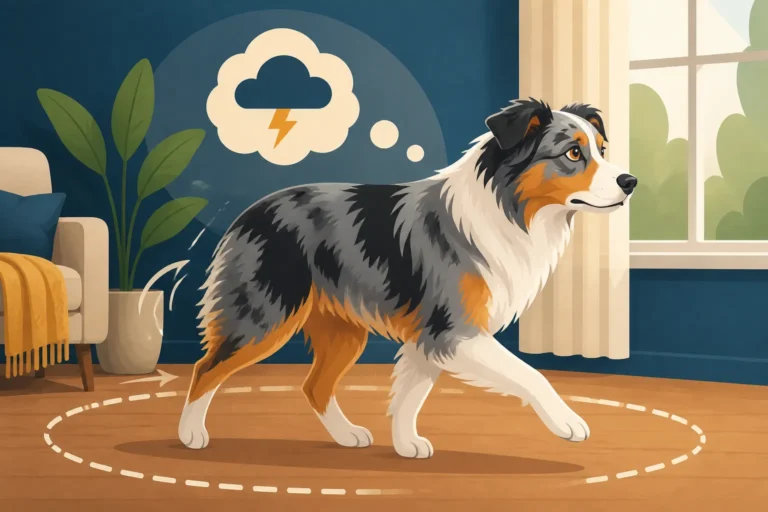
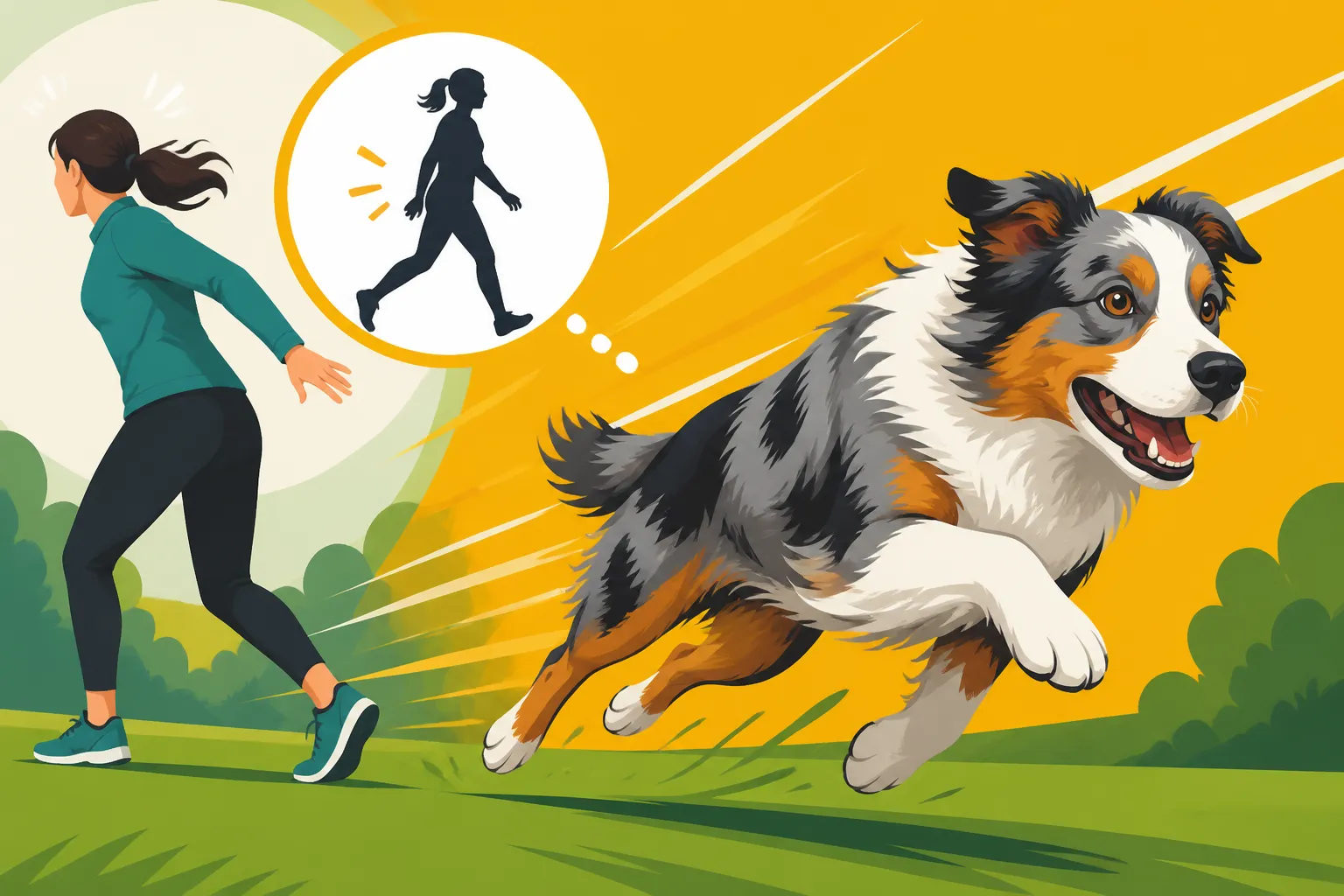
When a bicycle speeds by, a person jogs past, or a leaf blows across the path, it triggers that ancient hardwiring. Their brain registers "movement!" and the instinctual response is to engage with it. It's not about being disobedient; it's about being profoundly dog, specifically a herding dog. They see something move, and their brain says, "That needs to be gathered, that needs to be controlled." This isn't something they choose to do; it's almost a reflex, deeply ingrained in their genetic makeup. You might find it helpful to read more about Why Herding Instinct Is the Aussie Operating System to grasp just how fundamental this is to their nature.
Genetic Hardwiring You Can't "Train Out"
This isn't a behavior problem in the sense that your dog is being naughty; it's a breed characteristic. Many owners get incredibly frustrated, feeling like they've failed because their Aussie still fixates on moving objects despite extensive training. Please know that this isn't a reflection of your training skills or your dog's intelligence. This drive is genetic hardwiring. You cannot "train out" a breed's fundamental instinct, any more than you can train a retriever not to retrieve or a scent hound not to follow a trail.
What we can do, however, is manage it, redirect it, and give them appropriate outlets. The goal isn't to erase the instinct, but to channel it safely and constructively. Imagine trying to tell a fish not to swim. It's simply what they're built to do. Your Aussie is built to respond to movement, and acknowledging that is the first step toward effective management. Understanding this core truth helps alleviate much of the guilt and frustration owners often carry.
Common Triggers and What Bolting Looks Like
Australian Shepherds are incredibly sensitive to their environment, and many things can ignite their inherent desire to control motion. Recognizing these triggers and understanding the manifestation of their bolting behavior is crucial for prevention.
Cars, Bikes, and Other Vehicles
This is often one of the most dangerous and common triggers. The speed, the sound, the sudden appearance – all of these elements combine to create an irresistible lure for an Australian Shepherd. It's not just the sight of the vehicle; the whoosh of a car or the silent glide of a skateboard can be enough to trigger an immediate, powerful reaction. Your Aussie might lunge, bark furiously, or try to dart into the street in a desperate attempt to "head off" or "gather" the moving object.
A typical scenario might be walking along a sidewalk, and a bicycle suddenly passes from behind. Before you can even react, your Aussie might have already launched itself, putting immense strain on the leash and potentially pulling you off your feet. This isn't just a minor annoyance; it's a genuine safety hazard for both your dog and for traffic. The intensity of this reaction can be startling, and it often feels like your dog completely switches off its brain in that moment, focusing solely on the moving target. For some, even parked cars whose occupants suddenly open a door can trigger a quick bolt.
Animals and People in Motion
It’s not just inanimate objects. Other animals and people in motion are prime targets for an Aussie's herding instinct. A squirrel chattering up a tree, a rabbit bolting across a field, another dog running off-leash, or even children playing tag – all can trigger that deep-seated desire to round up.
When an Australian Shepherd "bolts" after these moving targets, it often looks like an intense, focused chase. They might stalk low to the ground, then burst forward with incredible speed. If they catch up, they might try to circle, block, or even gently nip at the heels (especially with people or other dogs, as you might read in Why an Australian Shepherd Nips at Heels). This isn't aggression; it's a deeply rooted instinct to control movement. Picture your Aussie at the dog park, not playing, but constantly circling and trying to "organize" the other dogs. Or imagine your dog fixating on a group of kids playing soccer, then making a beeline to cut off their movement. The article An Australian Shepherd Circling Joggers and Cyclists provides more specific examples of this kind of behavior. The sheer focus they exhibit can be astounding, making it incredibly difficult to break their concentration once they've locked onto a target.
The Adrenaline Rush and Self-Reinforcement
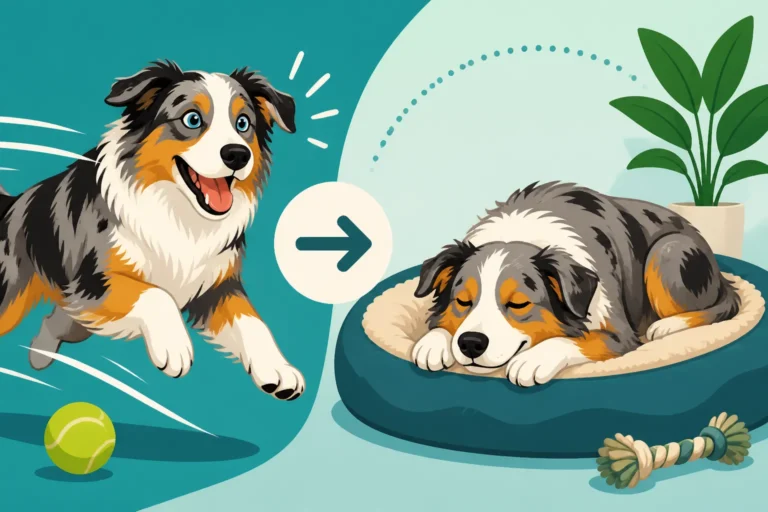
One of the reasons this behavior is so persistent and powerful is because it's incredibly self-reinforcing. Every time your Aussie successfully chases, even for a few steps, they get a powerful shot of adrenaline and dopamine. This feels good to them. It's their natural high, their reward.
This internal reward system means that even if you quickly correct them or pull them back, the brief thrill of the chase has already offered a powerful incentive to do it again. It's like a gambler chasing a win; even small successes can fuel the drive. This is why prevention is so much more effective than correction after the bolt has started. Once your Aussie is in that high-arousal state, their ability to process commands diminishes drastically. They are running on pure instinct, driven by ancient programming and a potent neurochemical reward. Understanding this helps us approach the problem with empathy and strategy, rather than frustration.
Strategies to Manage Bolting Behavior
Managing an Australian Shepherd's instinct to bolt requires a multi-faceted approach, focusing on safety, consistent training, and providing appropriate outlets. It's a journey, not a quick fix, and consistency is your most powerful tool.
Prioritizing Safety Through Management
The absolute first priority is safety. Because the impulse to bolt is so strong, you simply cannot rely solely on training to prevent potentially dangerous situations. Management means creating environments where your Aussie cannot practice the unwanted behavior, or where they can do so safely.
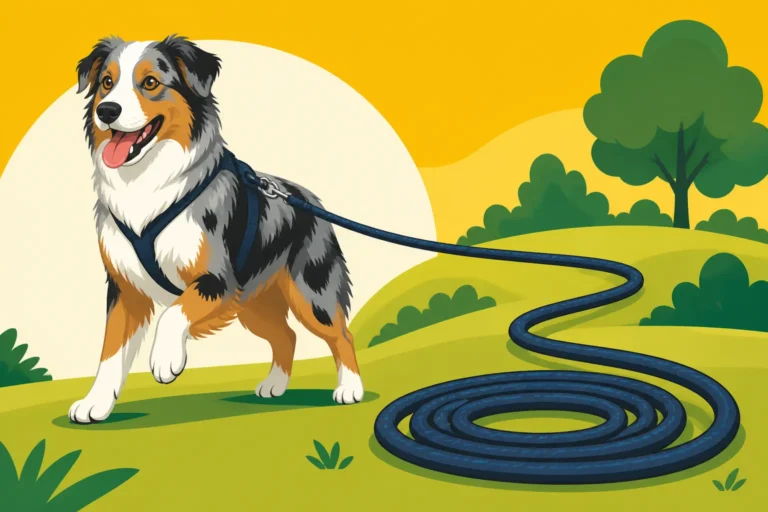
This starts with a reliable leash and harness, every single time you leave a secure, fenced area. Even if your Aussie has a fantastic recall in your backyard, the sheer force of a car or squirrel trigger can override it in a split second on a busy street. A sturdy, well-fitting harness (rather than just a collar) can give you better control and distribute pressure more evenly if your dog lunges. Many owners find front-clip harnesses helpful as they redirect the dog's forward momentum. Products available on Amazon can offer a wide selection of harnesses suitable for an Australian Shepherd's build. For off-leash exercise in an open, safe space, a long line (think 30-50 feet) is invaluable. This allows them to run and explore while you maintain a physical connection and can intervene if a strong trigger appears. You might want to review Long Line Length for an Australian Shepherd for more specific guidance. Additionally, ensuring your home has a secure, escape-proof yard is paramount. Aussies are intelligent and agile, so tall, solid fencing is key; you might even want to look into Fencing Costs for an Aussie That Herds Everything for long-term planning. For extra peace of mind, especially if your Aussie has a strong prey drive and is prone to bolting if they ever get loose, a GPS collar system can be a lifesaver. This technology, like many available on Amazon, can help you quickly locate your dog.
Building a Rock-Solid Emergency Recall
While management is crucial, training a truly bomb-proof emergency recall is your ultimate safety net. This isn't just a "come" cue; it's a life-saving command that means "drop everything, turn around, and come to me right now."
This recall must be associated with the absolute highest value rewards. Think boiled chicken, cheese, hot dogs – something your Aussie would do anything for. Practice it in increasingly distracting environments, starting in your quiet living room, then your yard, then a quiet park, and eventually busier locations. Never use your emergency recall when you know your dog won't respond, as it weakens the command. Save it for when you have a good chance of success and can reward heavily. Introduce a unique word or even a whistle that is only used for this emergency recall, so it doesn't get diluted by everyday "come" commands. Consistency is key here; every single time your Aussie performs this recall, they get a jackpot reward. Building an Emergency Recall Whistle for an Aussie offers more details on how to implement this effectively. Many positive reinforcement training programs, such as those that BAXTER & Bella champion, emphasize building this kind of powerful, positive association with coming when called. It’s about making you the most exciting thing in the environment.
Redirecting and Providing Appropriate Outlets
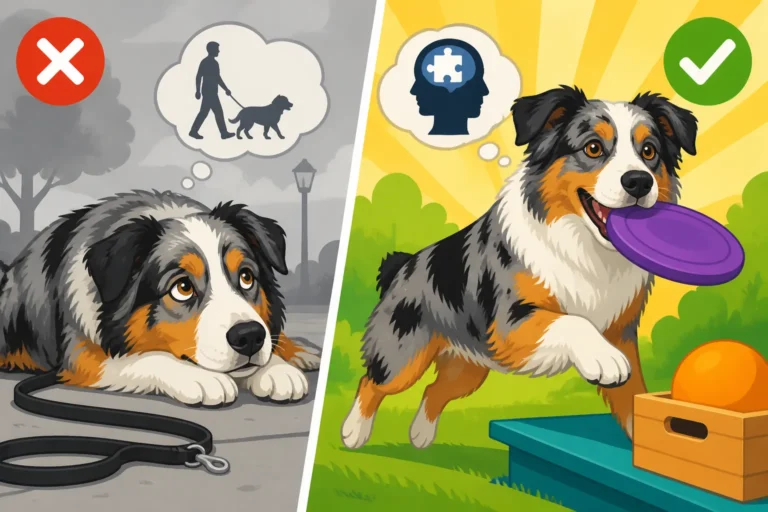
Since you can't eliminate the herding drive, the goal is to redirect it to acceptable activities. This means giving your Aussie "jobs" that satisfy their instinctual needs in a controlled way.
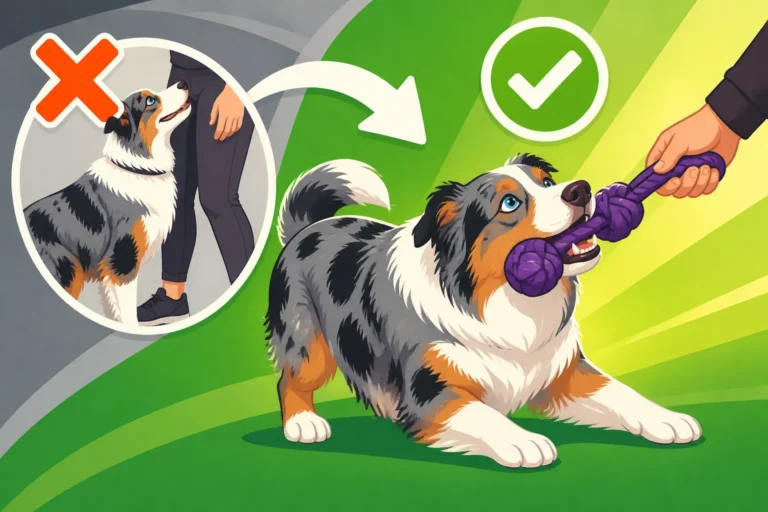
Carry a favorite toy with you on walks – a frisbee, a tug toy, or a herding ball. When you anticipate a trigger (e.g., you see a jogger approaching), preemptively engage your Aussie with their toy. This helps them switch their focus from the potential "prey" to an acceptable interaction with you. Presenting a Toy the Second an Aussie Nips details how redirection can work for impulse control. Dog sports are another fantastic outlet. Herding trials, agility, flyball, disc dog, or even Treibball (where dogs herd large exercise balls) can channel that energy and focus. Treibball as an Aussie Alternative to Sheep is a great article if you're looking for alternative activities. Even urban environments can offer opportunities: playing fetch in a secure park, doing trick training that involves movement, or even just long, sniffy walks that engage their minds. Don't underestimate the power of mental stimulation; puzzle toys from Amazon, scent games, and complex trick training can be just as tiring, if not more so, than physical exercise. Scent Games That Tire an Australian Shepherd provides ideas for this. By giving them appropriate jobs and outlets, you're not denying their nature; you're fulfilling it responsibly.
Comparing Triggers and Management
Here's a quick reference table to help visualize common triggers and immediate management strategies:
| Trigger Type | Example Scenario | Aussie Reaction (Bolting Manifestation) | Immediate Management Strategy |
|---|---|---|---|
| Vehicles | Car, bicycle, skateboard, scooter | Sudden lunge, chase, bark | Firm leash hold, "watch me" cue, high-value treat reward for focus. Move away from curb. |
| Running People | Jogger, child, delivery person | Stalking, circling, heel-nipping, chase | Intercept, redirect with toy/treat, create distance. Practice "leave it." |
| Moving Animals | Squirrel, cat, deer, other dog | Intense stare, bolt, lunge | Emergency recall, high-value treat, engage in alternative activity (e.g., tug). |
| Sudden Noises/Move. | Dropped item, sudden door close | Startle, brief dash, attention shift | Desensitization (if consistent), positive association with sound/movement. |
Professional Help and Long-Term Success
While individual efforts go a long way, sometimes the complexities of an Australian Shepherd's bolting behavior warrant expert guidance. Don't hesitate to seek professional help.
When to Seek a Professional Trainer
If you've implemented all the management and training strategies you can think of, and your Australian Shepherd is still consistently bolting, or if their reactions are becoming increasingly dangerous, it's definitely time to bring in a professional. A qualified dog trainer or behaviorist, especially one experienced with herding breeds, can assess your specific situation, identify subtle triggers you might be missing, and develop a tailored training plan.
It's crucial to seek out trainers who use positive reinforcement and force-free methods. Avoid anyone who recommends harsh corrections or fear-based techniques, as these can actually worsen anxiety and reactivity in an Australian Shepherd and damage your relationship with your dog. A good trainer will help you understand your dog's motivation, teach you advanced leash handling skills, and work on counter-conditioning and desensitization exercises to help your Aussie develop a more neutral response to movement. The article Vetting a Trainer Before Booking an Aussie can offer excellent advice on how to choose the right professional for your dog. They can also help you explore options like dog sports that might be the perfect outlet for your dog's high drive, preventing the problem behaviors by fulfilling their needs.
Consistency and Patience Are Key
Finally, it's vital to remember that managing an Australian Shepherd's deep-seated instinct to bolt after movement is a lifelong commitment. This isn't a problem you "fix" in a few weeks and then forget about. It requires constant vigilance, consistent reinforcement, and endless patience. Every member of your household needs to be on the same page, using the same cues and strategies to ensure your dog receives clear, consistent messages.
There will be good days and bad days. You might have weeks of perfect walks, only for a rogue squirrel to send your Aussie into a bolting frenzy. Don't get discouraged! Celebrate the small victories, like when your Aussie chooses to check in with you instead of fixating on a distant runner. By understanding their nature, implementing robust management, and consistently working on training and redirection, you can help your Australian Shepherd navigate our busy human world safely and happily. Remember, this powerful drive is part of what makes them such intelligent, engaged, and captivating companions. With the right approach, you can channel that energy into a rewarding partnership. The alternative, unfortunately, is often a trip to The Exercise Gap That Sends Aussies to Rescue which nobody wants for their beloved companion.
Disclaimer
This article is for general informational purposes only and does not constitute professional advice. Laws, prices and regulations vary by location and change over time. Consult a qualified professional for guidance on your specific situation.