Senior Australian Shepherd Care After Ten
Your Aussie used to clear the porch steps in one bound, and now you catch them pausing at the bottom, deciding whether it is worth it. That moment hits hard. This guide walks through what changes after an Australian Shepherd turns ten, from joints and eyes to food, exercise, vet visits and the quieter decisions that come later, so you can keep your old herder comfortable and engaged.
What Ten Really Means for an Australian Shepherd
Ten is not a cliff edge. Plenty of Aussies are still pushing sheep or chasing frisbees at that age. But it is the point where small changes start to add up, and where a routine built for a young working dog needs an honest review.
Where Ten Sits in the Aussie Lifespan
Most Australian Shepherds live somewhere in the low to mid teens, with many reaching twelve to fifteen when they stay lean and get good preventive care. That puts a ten year old dog in the last third of its life, but not the final chapter. You likely have several good years ahead if you adjust well. The site’s overview Australian Shepherd Lifespan Across Twelve to Fifteen Years covers what shapes that range.
What makes this age tricky is that Aussies are stoic. A herding dog bred to keep working through bumps and bruises does not advertise discomfort. They will still meet you at the door and still try to follow you up the stairs, even when their hips are complaining. You have to watch for small signals rather than waiting for obvious ones.
Think of a ten year old blue merle named Juniper who still bolts for the truck every morning. Her owner notices she now waits a beat before jumping in, and that she sleeps a little longer after a hike. Nothing dramatic, but those two details are the start of the senior conversation.
The Mind Is Often Younger Than the Body
The hardest part of caring for an older Aussie is that their drive often outlasts their joints. Many still want to work, chase and patrol long after their body can comfortably do it. That gap is where injuries and frustration happen.
Your job shifts from providing outlets to shaping them. The dog still needs a reason to get up in the morning, but the reason can be a gentle scent hunt in the yard rather than forty minutes of ball chasing. When you get this right, older Aussies stay bright and happy even as they slow down.
Some owners feel guilty scaling back activity, as though they are taking something away. In practice, a well chosen lighter routine usually gives the dog more good days, not fewer, because it avoids the flare ups that follow overdoing it.
Joints, Mobility and Pain
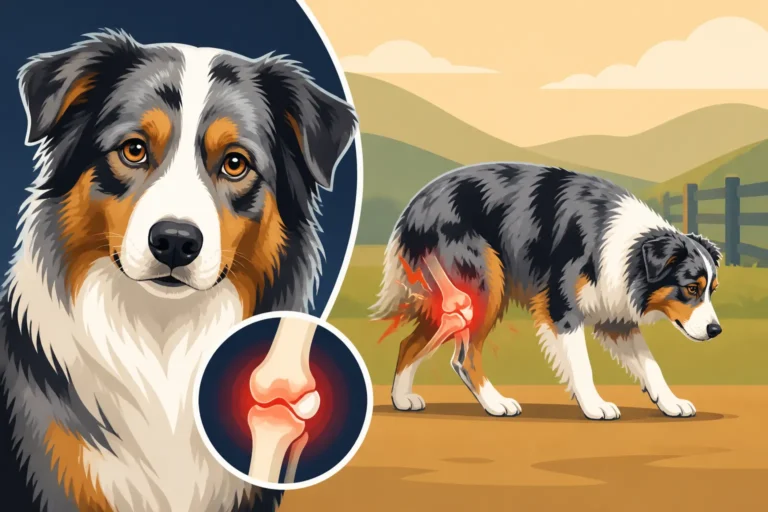
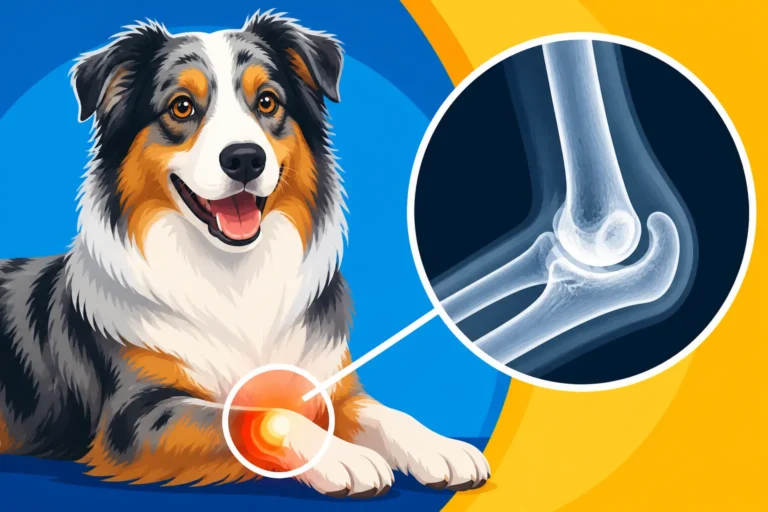
Arthritis is one of the most common issues in senior Aussies. Years of herding, hiking, jumping and sprinting leave their mark, especially in dogs with any degree of hip or elbow dysplasia.
Spotting Arthritis Early
Early arthritis rarely looks like dramatic limping. Instead, you may see stiffness when the dog first gets up, reluctance to jump into the car or onto the couch, slower climbs up stairs or a habit of lagging behind on walks that used to be easy. Some dogs start sitting slightly crooked or shifting weight off one hind leg when standing still.
Watch how your dog lies down and gets up. A healthy dog folds down and pops back up smoothly. An arthritic dog may circle more, lower itself in stages or take a moment to straighten its back legs. Licking at a wrist or knee can also be a sign of joint pain.
If you notice these changes, schedule a vet visit. Your vet can examine the joints, possibly order x rays and talk through pain management. The article Australian Shepherd Arthritis After Years of Work digs deeper into what working wear looks like inside the joint.
Managing Pain and Keeping Muscle
Pain management for an older Aussie is usually a combination approach. Your vet may recommend prescription anti inflammatory medication, additional pain relievers, or newer injectable options for osteoarthritis. Many owners also add joint supplements such as fish oil, though the evidence for each product varies. Always check with your vet before starting anything new, especially if your dog takes other medications.
Muscle is a joint’s best friend. Controlled, steady exercise on soft ground, such as leash walks on grass or dirt trails, short hill climbs and gentle swimming, helps maintain strength. Many rehab vets use exercises like slow figure eights, sit to stand repetitions and walking over low poles to build balance and hind end muscle.
Weight control is critical. Every extra pound adds load to sore joints. Keeping your senior Aussie lean is one of the most powerful things you can do for comfort. The guide Keeping a Working Australian Shepherd Lean explains how to read body condition by touch rather than by the scale alone.
Making the House Easier to Navigate
Small changes at home make a big difference. Add rugs or runners on slick floors so the dog does not slip. Use ramps or steps for cars, beds and couches, or simply discourage jumping onto high surfaces. Provide a thick, supportive orthopedic bed in a quiet, warm spot.
If your Aussie sleeps upstairs, consider whether that is still safe. Many owners eventually move the dog’s bed downstairs to avoid repeated stair climbs. Harnesses with a handle on the back can help you steady your dog on stairs or when getting in and out of the car. For options, see Mobility Aids for an Old Australian Shepherd.
Nail length matters more than people think. Long nails change how the foot lands and make an unsteady dog even less secure on tile or wood. Trimming a little more often in the senior years is an easy win.
Senses, Mind and Behavior
As Aussies age, changes in vision, hearing and cognition can affect how they move through the world and how they respond to you. Many dogs adapt remarkably well, especially when owners adjust their communication.
Eyes and Vision Changes
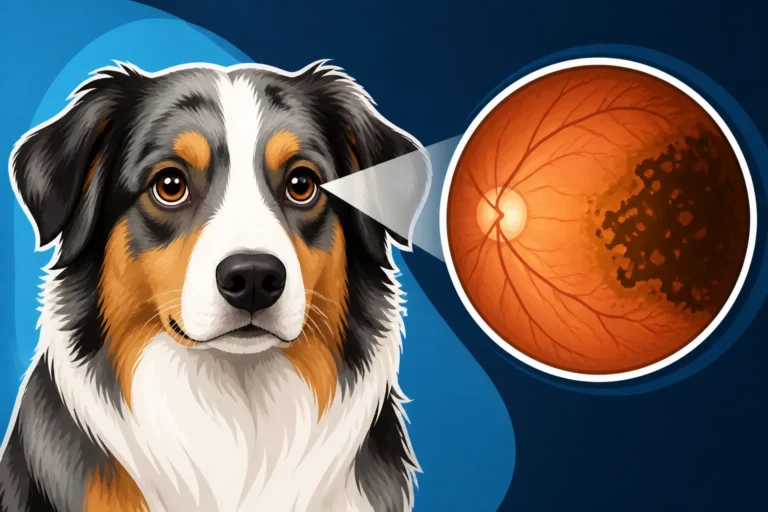
Australian Shepherds carry several inherited eye risks, including cataracts. With age, you may notice cloudiness in the eyes, hesitation in dim light or bumping into objects. Some older dogs develop a normal bluish haze called nuclear sclerosis that does not significantly affect vision, while true cataracts can.
Any sudden vision change, red or painful eye, squinting or discharge should prompt a prompt vet visit. Some conditions, like glaucoma, are emergencies. For dogs with gradual vision loss, keep furniture in the same place, avoid leaving clutter in walkways and use scent markers or textured mats near doors and stairs. The site’s guide An Old Australian Shepherd Losing Its Sight covers adaptation in practical detail.
Many blind or low vision Aussies still enjoy walks, sniffing and gentle play. They rely more on smell and memory, and they do best with a predictable routine.
Hearing Loss and Communication
Hearing often fades gradually in older dogs. You might notice that your Aussie does not wake when you come home, ignores calls from another room or startles when touched while sleeping. Merle Aussies may already have some hearing issues from birth, which can become more obvious with age.
Switching to hand signals, light cues and touch can keep communication strong. Many owners teach visual cues for sit, down, come and wait while the dog can still hear, so the transition is easier later. Always approach a sleeping senior from the front or tap the floor gently to wake them so they are not startled. See Hearing Loss in an Aging Australian Shepherd for more on training around it.
A practical safety step is to keep a deaf senior on leash or in a fenced area whenever you are outside. A dog that cannot hear a car or a recall cue is far more vulnerable near roads.
Cognitive Changes and Night Restlessness
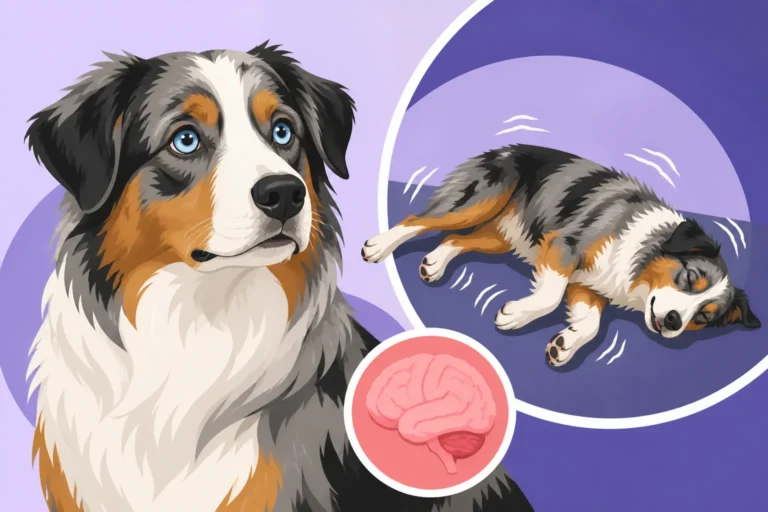
Some older dogs develop canine cognitive dysfunction, a condition similar in some ways to dementia in people. Signs can include getting stuck in corners, staring at walls, pacing at night, forgetting house training or seeming confused in familiar places.
If you see these changes, talk to your vet. They will want to rule out other causes like pain, vision loss or thyroid problems. There are medications and diets that may help some dogs, along with environmental strategies like consistent routines, night lights and short, gentle training sessions to keep the brain active.
Mental exercise is especially important for Aussies, who were bred to think on the job. Puzzle feeders, scent games and simple trick training can keep an aging mind engaged without overtaxing the body.
Feeding a Senior Aussie
Nutrition needs change as Aussies age. Many need fewer calories, while some have dental or medical issues that affect what and how they eat.
Calories, Protein and Body Condition
Most senior Aussies are less active than they were at five, so they need fewer calories. If you keep feeding the same amount, weight gain is almost guaranteed. Monitor body condition regularly by feeling the ribs, looking for a waist from above and checking for a tuck from the side.
Senior diets often provide moderate calories with good quality protein to help maintain muscle. Some dogs do well on an adult maintenance food fed in a slightly smaller amount, while others benefit from a dedicated senior formula. Dogs with kidney disease, liver problems or diabetes may need prescription diets. Your vet can help you choose.
Weigh your dog every few weeks if you can. Unexplained weight loss in a senior dog is as important to report as weight gain, because it can be an early sign of illness.
Teeth, Appetite and Texture
Dental disease is common in older dogs and can make chewing painful. Signs include bad breath, dropping food, chewing on one side or reluctance to eat hard kibble. Regular dental checks, professional cleanings when your vet recommends them and home care such as tooth brushing help keep the mouth healthy. The site’s routine in Brushing an Australian Shepherd’s Teeth Weekly is a good starting point.
If your Aussie is struggling with hard food, you can soften kibble with warm water, mix in canned food or switch to a softer diet. The guide Softening Meals for an Old Aussie explains a few simple methods. Some older dogs also eat better from a slightly raised bowl.
A senior who suddenly leaves food in the bowl deserves attention. Appetite changes can come from pain, nausea, dental problems or more serious disease, so do not write it off as the dog being picky.
Common Senior Feeding Adjustments
The table below summarizes typical feeding changes many owners make for older Aussies. Always tailor this to your own dog with your vet’s input.
| Situation | Common Adjustment | What to Watch |
|---|---|---|
| Less active, gaining weight | Reduce portions and use lower calorie treats | Waist, rib feel, energy |
| Losing weight unexpectedly | Vet check, then possibly a richer or more digestible diet | Appetite, stool, bloodwork |
| Dental pain | Soften food or switch to a wet diet | Chewing side, drooling, breath |
| Arthritis | Lean body condition, omega 3 rich diet if advised | Mobility, stiffness |
| Kidney or liver disease | Prescription diet as directed | Thirst, urination, lab values |
| Picky or low appetite | Warm food, smaller meals more often | Total intake, weight trend |
Exercise and Enrichment After Ten
Most senior Aussies still need daily activity. The trick is choosing the right type and amount so they stay fit without overdoing it.
Adjusting Daily Exercise
Instead of long runs or high impact fetch, think in terms of moderate walks, short jogs on soft ground if your vet approves, swimming and controlled play. Watch your dog the evening and morning after exercise. If they are stiff, sore or reluctant to move, you probably did too much.
Several shorter outings often work better than one long session. For example, two or three twenty minute walks spread through the day may be easier on joints than one hour of continuous activity. Avoid exercising in extreme heat or cold, as older dogs regulate body temperature less efficiently.
Watch the surfaces you choose. Pavement, steep rocky trails and slick boat ramps are all harder on old joints than grass, dirt paths and shallow, gently sloping water.
Mental Work for a Herding Brain
Aussies were bred to solve problems. In the senior years, mental work can carry more of the load. Try scent games, hide and seek with treats, puzzle feeders and gentle trick training. Simple tasks like finding a favorite toy, touching a target with the nose or walking slowly over a ladder on the ground keep the brain busy.
If your Aussie used to herd livestock, you might still let them help with very low key chores under supervision, like accompanying you to check on animals or gently moving a few calm sheep in a small area. Avoid fast, high pressure work that could lead to injury.
A few minutes of focused work often tires an older Aussie more than you would expect. Ten minutes of nose work can leave a senior as content as an hour of running once did.
Signs You Are Pushing Too Hard
Be honest about your dog’s limits. Signs you are asking too much include heavy panting that lasts a long time after exercise, lagging far behind, limping, refusing to jump or climb stairs and stiffness or soreness the next day.
If you see these signs, scale back for a few days and talk to your vet. Sometimes an underlying issue, like a partial ligament tear or a flare of arthritis, needs treatment. Your dog will happily keep trying to please you, so it is your job to protect them from overdoing it.
Vet Care and Monitoring for Older Aussies
Senior dogs benefit from more frequent vet visits and routine screening. Catching problems early gives you more treatment options and helps your dog feel better longer.
How Often to See the Vet
Many vets recommend that dogs over ten have checkups at least twice a year, even if they seem healthy. These visits usually include a physical exam, weight check, dental assessment and discussion of any changes you have noticed at home. The article How Often a Ten Year Old Aussie Needs Checking goes into scheduling in more depth.
Keep a simple journal or notes on your phone. Track appetite, water intake, energy, sleep patterns, any coughing or vomiting and changes in mobility. Bringing these notes to the vet helps them spot trends.
Screening Tests Worth Running
Senior screening often includes bloodwork, urinalysis and blood pressure checks. These tests can reveal early kidney or liver changes, thyroid problems, diabetes and other issues before obvious symptoms appear. The site’s guide Bloodwork Worth Running on a Senior Aussie covers which panels vets commonly suggest.
Depending on your dog’s history and exam findings, your vet may recommend imaging such as x rays or ultrasound, especially if they suspect internal masses, heart disease or arthritis that needs more detailed evaluation.
Lumps and bumps deserve attention too. Many are harmless fatty lumps, but a needle sample is the only way to know. Keep a simple record of where each lump is and roughly how large, so you can tell your vet whether it is growing.
Cancer and Sudden Collapse
Cancer is a significant concern in older Aussies, as in many breeds. One cancer of particular concern is hemangiosarcoma, a tumor of blood vessel cells that can affect the spleen, heart or other organs. It can grow silently and then cause sudden internal bleeding.
Warning signs can include sudden weakness, pale gums, collapse, a swollen belly or fast breathing. Any of these is an emergency. The site’s article Hemangiosarcoma and Sudden Aussie Collapse explains what owners should know. While you cannot prevent every cancer, regular exams and prompt attention to changes give you the best chance of catching problems early.
Insurance and Planning for Costs
Medical costs often rise as dogs age, so it is worth thinking ahead. Some owners rely on pet insurance, while others set money aside in a dedicated savings account. If your Aussie is already insured with a provider like Healthy Paws, review what is covered at senior ages and how premiums are likely to change. Pre-existing conditions are usually excluded, which is one reason many owners enroll younger dogs.
If you are considering insurance for an older Aussie for the first time, compare plans carefully and read the exclusions. Check each insurer’s own site for current enrollment ages and terms, since these change over time. The site’s guide Insuring an Australian Shepherd Past Ten covers the questions worth asking.
Comfort, Quality of Life and Hard Decisions
Caring for a senior Aussie includes thinking about quality of life. That can be hard to face, but planning ahead helps you make calm, loving decisions when the time comes.
Reading Quality of Life
Quality of life for a dog includes comfort, appetite, mobility, mental engagement and the ability to enjoy favorite activities. Many owners find it helpful to keep a calendar and mark good and bad days. If bad days start to outnumber good ones, it may be time to reassess the plan with your vet.
Ask yourself whether your dog can still do the things that make them feel like themselves. Can they walk to the yard, eat with interest, greet you and enjoy some form of play or work? If those core pleasures fade and treatment is not helping, it may be time to focus fully on comfort.
Comfort Care at Home
Comfort care includes good pain control, soft bedding, easy access to water and the yard, help with grooming and plenty of quiet companionship. Some dogs need slings or harnesses to stand. Others benefit from shorter, more frequent potty breaks and a predictable daily rhythm.
Hospice care for pets is available in many areas, either through regular clinics or specialized services. These teams can help with pain plans, home visits and guidance on what to expect.
Grooming becomes part of comfort too. A senior Aussie may not be able to manage long brushing sessions, so short daily sessions that keep the coat free of mats and the rear end clean are kinder than an occasional long ordeal.
Saying Goodbye With Dignity
Eventually, many owners face the decision of euthanasia. While it is never easy, it can be a final act of kindness for a dog whose pain or illness can no longer be managed. Talk with your vet about signs to watch for and options for timing, location and aftercare.
Some families choose to have their dog put to sleep at home, while others prefer a quiet room at the clinic. There is no wrong choice. What matters is that your Aussie feels safe, surrounded by people they love, and free from fear and pain.
A Practical Plan for the Years After Ten
Senior Australian Shepherds bring a special kind of joy. They have spent years watching you, learning your routines and offering their loyalty. With thoughtful care after age ten, you can help them stay comfortable and engaged for as long as possible.
Building a Simple Routine
A steady routine is the backbone of senior care. A workable rhythm for many households looks like this:
- Start the morning with a slow walk on soft ground and a check of how the dog moves.
- Feed measured meals at the same times each day and note appetite.
- Add one short brain game, such as a scent search or puzzle feeder.
- Offer a second gentle walk in the cooler part of the evening.
- Keep a weekly note of weight, mobility and any new lumps or habits.
- Book a vet check every six months and bring your notes.
Staying Observant
Focus on the basics: manage pain and mobility, keep weight in a healthy range, feed a diet that fits their changing needs, adjust exercise and enrichment, and stay on top of vet care. Pay attention to small changes and do not hesitate to ask your vet questions.
Most of all, enjoy the time you have together. A slower Aussie is still your partner, still eager to please and still full of personality. With the right support, their senior years can be some of your most meaningful.
Disclaimer
This article is for general informational purposes only and does not constitute professional advice. Laws, prices and regulations vary by location and change over time. Consult a qualified professional for guidance on your specific situation.