Socializing an Aussie to Traffic and Crowds
It’s a common scenario: you’ve got this brilliant, keen Australian Shepherd, full of potential, and then you try to navigate a busy sidewalk or a local fair. Suddenly, your confident companion might transform into a whirlwind of nervous energy, pulling on the leash, barking at shadows, or trying to herd every person and bicycle in sight. It's frustrating, not just for you but for your Aussie, too, who is simply overwhelmed by the sensory overload. This guide is here to walk you through how to gently and effectively introduce your Australian Shepherd to the hustle and bustle of traffic and crowds, turning those stressful outings into enjoyable adventures.
Understanding Your Aussie's Urban Challenges
Before we dive into the "how," it’s crucial to understand the "why." Australian Shepherds are incredible dogs, but their very nature, which makes them such fantastic working partners and loyal companions, also makes urban environments a real puzzle for them. They weren't exactly bred to chill out at a coffee shop or calmly stroll through a farmers market.
The Herding Dog's Instinctual Response to Movement
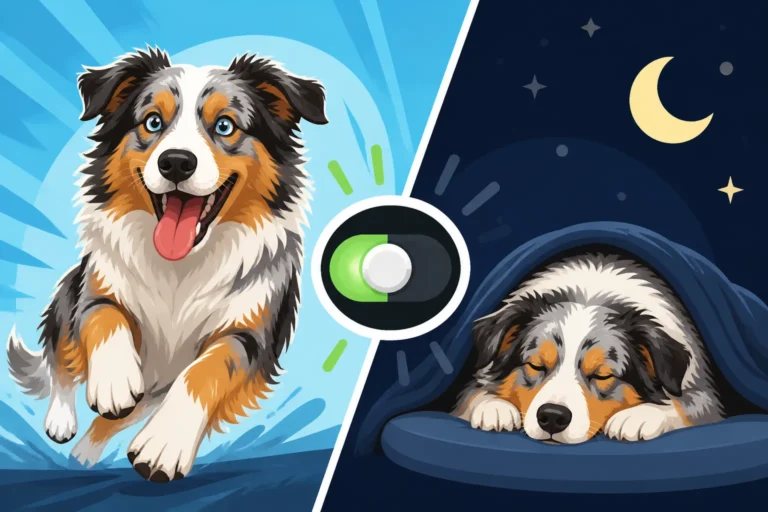
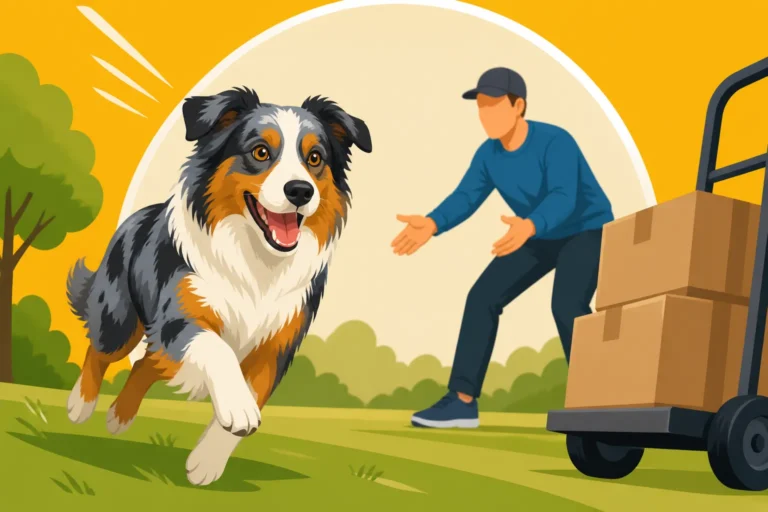
Think about it: Australian Shepherds were developed to work livestock in open spaces. Their job involved intense focus, quick reactions to movement, and a desire to control the flow of animals. Now, take that finely tuned instinct and drop it into a city. Every car, bicycle, jogger, and even person walking quickly past becomes a "sheep" that needs to be managed. This isn't naughtiness; it's instinct. They're seeing a chaotic flock that isn't listening to their cues, and it's incredibly stressful. This innate drive is often why you see them An Australian Shepherd Circling Joggers and Cyclists or An Australian Shepherd Herding Children in the Yard.
Sensitivity to Noise and Novelty
Aussies are also often quite sensitive to their environment. Loud, sudden noises like car horns, sirens, construction sounds, or even just a bus hissing can be genuinely startling for them. Couple this with a natural wariness of strangers, which is a hallmark of many herding breeds, and you have a dog that’s constantly on high alert. Every new face, every unexpected sound, every sudden movement can push them closer to their threshold, leading to barking, lunging, or trying to bolt. It’s not that they’re aggressive; it’s usually an attempt to create distance from something they perceive as threatening or overwhelming.
Strategic Exposure and Building Positive Associations
The key to successful socialization in busy environments isn't to force your Aussie into the deep end, hoping they'll learn to swim. It's about careful, gradual exposure and building strong, positive emotional responses.
Starting Small and Maintaining Distance
You wouldn't ask a child who's afraid of water to jump into the deep end of the pool, right? The same goes for your Australian Shepherd. Begin your "urban adventures" in quiet areas that are near traffic and crowds, but not in them. This might mean sitting on a bench at the edge of a park that borders a moderately busy street, or walking a quiet residential street that occasionally sees a car pass by. The goal is to be close enough for them to notice the activity, but far enough away that they don't feel threatened or overwhelmed.
Observe your dog’s body language constantly. Are their ears relaxed? Tail wagging loosely? Are they taking treats readily? If you see signs of stress—lip licking, yawning (when not tired), tight mouth, tail tucked, stiff posture, pulling towards or away from the stimulus—you're too close, or the exposure is too intense. Retreat to a comfortable distance immediately. The success of this approach relies on making every single exposure a positive one. Short sessions of just 5-10 minutes, where your dog remains calm and takes treats, are far more effective than an hour-long ordeal where they’re constantly stressed. For initial puppy work, refer to The Aussie Puppy Curriculum Month by Month.
High-Value Rewards and Counter-Conditioning
This is where the magic happens! Every time your Aussie notices a car, a person, or a crowd without reacting negatively, immediately reward them with something truly amazing. We're not talking about bland kibble here. Think tiny pieces of cooked chicken, cheese, hot dogs, or whatever makes your dog's eyes light up. The idea is to create a new association: "Oh, a loud truck just went by! Awesome! That means chicken!" This process is called counter-conditioning—changing a negative emotional response into a positive one.
If you are using a treat pouch on walks, you can find many options, along with long lines and durable harnesses, on Amazon. The more consistent you are with this, the faster your Aussie will start to view urban stimuli as cues for good things to happen. Remember, timing is everything; the reward should come within 1-2 seconds of them noticing the trigger calmly.
Essential Tools and Techniques for Urban Socialization
Beyond treats and distance, there are specific tools and training techniques that can make a huge difference in helping your Australian Shepherd navigate busy environments with confidence.
Choosing the Right Gear
For safety and control in urban settings, a well-fitting harness is often preferred over just a collar. A front-clip harness can be particularly useful as it redirects your dog's pulling power to their chest, gently turning them to the side rather than allowing them to lean into the pull. This gives you more control and can make it easier to manage sudden lunges or attempts to herd. Make sure the harness is comfortable and doesn't rub. A standard 6-foot leash (not a retractable one, which offers less control and can be dangerous in crowds) allows for enough freedom while keeping your dog close. Some owners also find a long line useful for practicing recall in more open, but still contained, areas, as described in Long Line Length for an Australian Shepherd.
Building Focus and Engagement
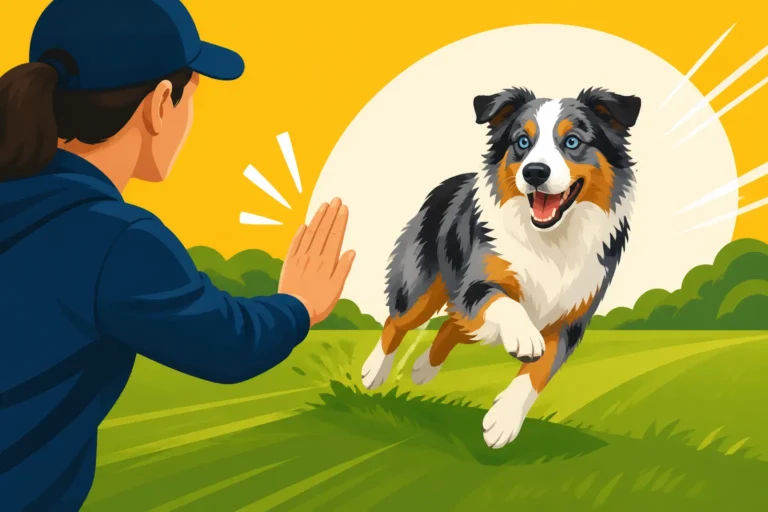
In a distracting environment, you need your Aussie to be able to re-engage with you quickly. Practice "watch me" or hand-targeting exercises in increasingly distracting environments. Start at home, then move to the backyard, a quiet park, and eventually near the edges of busy areas. The goal is for your dog to reliably look at you or touch your hand on cue, regardless of what's happening around them. This focus is your lifeline in a busy street, allowing you to redirect their attention before they become overstimulated. Online training resources, such as those provided by BAXTER & Bella, can offer structured programs for building this kind of foundational engagement.
The "Look at That" Game
This is a fantastic desensitization and counter-conditioning game:
- Spot a trigger: As soon as your Aussie notices a person, car, or other "trigger" (before they react negatively!), say "Look at that!"
- Wait for the glance: The moment your dog looks at the trigger, and then glances back at you (even briefly), mark it with a "Yes!" or a clicker.
- Reward: Immediately follow with a super high-value treat.
Repeat, repeat, repeat. What this does is teach your Aussie: "Oh, seeing that thing means I should look at my human, and then I get a treat!" It changes their emotional response from alert/anxious to "where's my treat?". This game is incredibly helpful for managing An Aussie That Reacts to Skateboards and Bikes or An Australian Shepherd Lunging at Passing Dogs.
Managing Real-World Scenarios and Troubleshooting
Even with the best preparation, real-world situations can be unpredictable. Here's how to manage common urban challenges and know when to call for backup.
Navigating Passing People and Dogs
On crowded sidewalks, your Aussie might feel trapped or compelled to herd. Try to create a little bubble for them. If someone is approaching, you can step off to the side, turn your body to create a barrier, or lure your dog into a "heel" position with a treat, keeping their attention on you as others pass. If your dog is prone to An Australian Shepherd Lunging at Passing Dogs, ensure you have enough space to walk a wide arc around other canines. This respect for their personal space goes a long way.
For meeting people, if your Aussie is reserved, never force interactions. Politely tell well-meaning strangers, "He's not really a greeter," or "We're in training." The goal isn't necessarily for your Aussie to love every person, but to tolerate their presence calmly. Teaching an Aussie to Ignore People on Walks is a more realistic and often safer goal.
Handling Sudden Loud Noises
Sudden noises are a huge challenge for many Aussies. You can't prevent every siren or backfiring car, but you can change your dog's response. If a loud noise occurs, try to act as if it's no big deal. Stay calm, give a happy "Good dog!" and immediately offer a treat. This helps to counter-condition their fear. If your Aussie has severe Australian Shepherd Noise Sensitivity and Startle, working with a professional trainer on a structured sound desensitization program can be very beneficial. Building Sound Confidence in an Aussie Puppy from a young age is crucial.
Overcoming Crowded Sidewalks and Tight Spaces
When you find yourself on a truly crowded sidewalk, it can be overwhelming for both of you. If possible, avoid peak times. When you can't, use your body to gently guide your Aussie, staying close to a wall or building if that makes them feel more secure. Practicing a tight "heel" where your dog walks precisely by your side can be a lifesaver. If the crowd is too dense or your dog is clearly panicking, don't hesitate to make a U-turn and find a quieter route or simply step into a doorway for a moment until the worst of the crowd passes.
Car Rides and Public Transport
Socializing to traffic isn't just about walking alongside it; it's also about riding in it. Start with very short, pleasant car rides to fun places like the park or a friend's house. Gradually increase the duration and the busyness of the destinations. Always ensure your Aussie is safely secured in the car, either in a crate or with a safety harness and seatbelt. If your Aussie is prone to car sickness or extreme anxiety in the car, talk to your vet. For city dwellers, if public transport is a necessity, start with very brief exposures during off-peak hours, rewarding calm behavior heavily.
Knowing When to Seek Professional Help
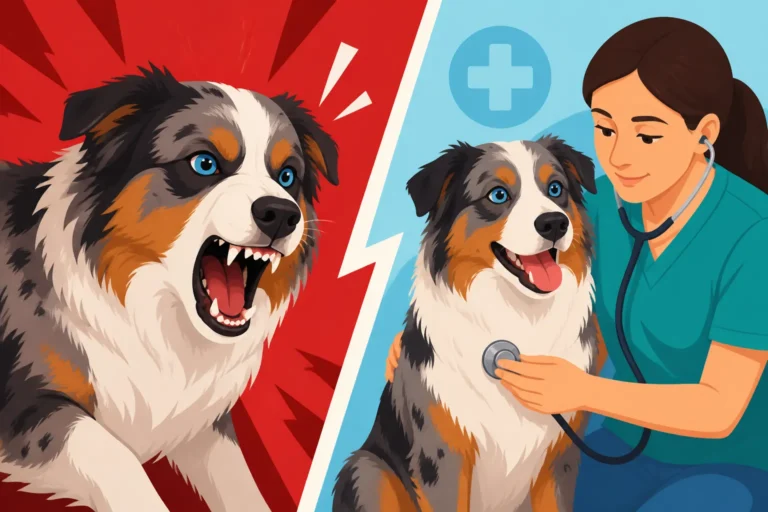
While this guide offers many strategies, some Australian Shepherds have deeply ingrained fears, significant reactivity, or even aggression in response to urban stimuli. If your dog is consistently showing severe stress, panic attacks, or aggressive displays (growling, snapping, lunging that is not easily redirected), it's time to bring in the big guns. A certified professional dog trainer or a veterinary behaviorist can assess your dog's specific needs and create a tailored training plan. They can help with Australian Shepherd Reactivity and Overarousal or Working a Reactive Aussie Under Threshold to ensure both you and your Aussie feel safe and confident. Don't feel like a failure; sometimes, an expert eye makes all the difference for these complex dogs.
Disclaimer
This article is for general informational purposes only and does not constitute professional advice. Laws, prices and regulations vary by location and change over time. Consult a qualified professional for guidance on your specific situation.