An Australian Shepherd That Will Not Stop Fetching
It’s a familiar scene for many Australian Shepherd owners: you throw the ball, your Aussie brings it back with unmatched enthusiasm, drops it, and stares, tail wagging, absolutely demanding you throw it again. And again. And again. It feels like an endless loop, and while their dedication is admirable, you’re left wondering if your arm will ever recover or if your dog knows there’s more to life than chasing a tennis ball. This guide is all about understanding why your Australian Shepherd seems to have an insatiable appetite for fetch and, more importantly, how you can help them develop an "off switch" so you can both enjoy a more balanced life.
The Deep Roots of the Fetch Obsession in Australian Shepherds
It's not just "being a dog" when an Australian Shepherd fixates on fetch; there's a profound evolutionary and breed-specific reason behind it. These aren't just pets; they're descendants of highly intelligent, driven working dogs. Understanding this helps us approach the problem with empathy and effective strategies, rather than just frustration.
Herding Drive and Prey Drive: A Powerful Combination
Australian Shepherds were bred for generations to work livestock. This means they possess an incredibly strong herding instinct – the desire to gather, control, and move things. When a ball or a frisbee is thrown, it mimics a fleeing animal. The chase, the capture, the return, the anticipation of the next throw – it all taps into that deep-seated herding and prey drive. They aren't just playing; they're "working" in their minds, fulfilling a primal urge. This drive is so strong that it can easily become a default behavior, especially if it's the most consistent and rewarding outlet they have. For many Aussies, that ball becomes their "flock," and they are determined to manage it. You'll often see them circle the ball, stalk it, and then rush in, much like they would a stray sheep.
This isn't something you can simply train out of an Aussie. Why Herding Instinct Is the Aussie Operating System delves deeper into this fundamental aspect of their being. Instead, we have to acknowledge it and find appropriate outlets. When an Aussie can't express this drive in a constructive way, it can manifest as nipping at heels, circling people, or, yes, obsessive fetching. It’s their brain saying, "I have a job to do!"
The Handler's Role in Reinforcing the Cycle
Let's be honest, sometimes we inadvertently create or reinforce the very behaviors we want to change. When your Aussie brings the ball back and drops it at your feet with those pleading eyes, it's hard to resist. Every single throw is a massive reward for them. It's exhilarating, it's engaging, and it means they're getting your undivided attention. They learn very quickly that persistence pays off. If they drop the ball, stare, maybe give a little bark, and you eventually throw it, you’ve just taught them that this sequence works.
This isn't to say fetch is bad – far from it! It’s a fantastic way to bond and burn energy. But without boundaries, it can escalate into a constant demand. Think about it from their perspective: if every time they bring the ball, you throw it, why would they ever stop? The game has no end conditions. This leads to an over-aroused state, where their adrenaline is pumping, and their brain struggles to downshift. They become so focused on the object and the game that everything else fades away.
Recognizing the "Too Much Fetch" Problem and Its Impact
It's easy to just think, "Oh, my dog loves fetch! That's great!" But there's a line where healthy enthusiasm can tip into unhealthy obsession or even compulsive behavior. Identifying these signs early is crucial for your Aussie's overall well-being and your peace of mind.
Signs Your Aussie Is Over-Aroused or Obsessed
An Aussie that "will not stop fetching" often displays a range of behaviors that indicate they’re operating in an over-aroused state. They're not just excited; they're wound up, often past the point of being able to listen or relax. You might notice:
- Pacing and Panting: Even after a long session, they might continue to pace restlessly, pant heavily, or whine, unable to settle down. Their breathing might be shallow and quick, indicating a high level of stress or excitement, not just physical exertion.
- Fixated Staring: Their eyes will be locked onto you or the ball, often with dilated pupils. They might ignore their name, other cues, or even tempting treats. This laser focus means they're not really present in the moment beyond the game.
- Refusal to Engage in Other Activities: If bringing out a different toy, offering a walk in a new area, or trying to do some training yields no interest because they’re still fixated on the ball, it's a sign. They might even guard the ball, not wanting you to put it away.
- Frustration Barking or Nipping: If you don't throw the ball immediately, they might bark incessantly, nudge you with their nose, or even give light nips to your hand or leg to demand attention. This isn't aggression; it's intense frustration at not getting their primary desire met.
- Difficulty Settling Indoors: After a fetch session, they might struggle to lie down, chew a bone, or simply nap. Their body might be physically tired, but their mind is still racing, constantly scanning for the next opportunity to play. This can look like anxiety or hyperactivity. An Australian Shepherd That Cannot Switch Off details this exact challenge.
The Detrimental Effects on Physical and Mental Health
Constant, high-impact fetching isn't just mentally draining for you; it can take a significant toll on your Aussie's body and mind.
- Joint Strain and Injury: Australian Shepherds are prone to conditions like hip and elbow dysplasia, even with excellent breeding. Repetitive, high-speed starts, stops, and jumps put immense stress on their joints, ligaments, and tendons. Over time, this can exacerbate existing issues or lead to new injuries, like cruciate tears. Imagine a human athlete training relentlessly without proper rest or varied exercise – the body breaks down. An Aussie that is constantly fetching is essentially a canine athlete operating without a proper off-season. Australian Shepherd Hip Dysplasia and Working Joints and Aussie Cruciate Tears From Sharp Turns highlight the vulnerability of their working joints.
- Overheating: With their dense double coats, intense fetch sessions, especially in warm weather, can quickly lead to overheating. Their enthusiasm often overrides their natural instinct to slow down.
- Cortisol Levels and Stress: Prolonged periods of high arousal release cortisol, the stress hormone. While short bursts are fine, consistently elevated cortisol can have negative impacts on their immune system, digestion, and overall behavior, making them more prone to anxiety or reactivity in other situations. They can literally become addicted to the adrenaline rush.
- Lack of Other Skills/Engagement: If fetch is their only outlet, they might miss out on developing other crucial life skills like self-control, problem-solving, or calm relaxation. Their world shrinks to just the ball, and they might struggle to cope with situations that don't involve it. Why Physical Exercise Alone Never Settles an Aussie reinforces that mental engagement is just as, if not more, important than physical exertion for these intelligent dogs.
Teaching an Australian Shepherd an "Off Switch"
So, how do you gently but firmly guide your fetch-obsessed Aussie towards a more balanced approach to play? It's about setting clear boundaries, managing arousal, and introducing new forms of enrichment.
Establishing Clear Start and End Cues for Fetch Sessions
The first step is to redefine fetch as a structured activity with a beginning and an end, rather than an endless free-for-all.
- "Get the Ball!" (Start Cue): Before you throw the ball, give a clear verbal cue like "Get the ball!" This signals to your Aussie that the game is about to begin. They learn that the game doesn't start until you say so, not when they demand it.
- Timed Sessions: Instead of playing until your arm gives out, set a timer for 5-10 minutes. When the timer goes off, the game is over, regardless of how much energy they seem to have left. Consistency is key here.
- "All Done!" (End Cue): When the timer rings, pick up all the balls and say "All done!" in a cheerful but firm voice. Put the balls away out of sight immediately. Do not engage with begging or nudging. It’s tough at first, but they will learn. You can even use a specific basket or toy box on, say, Amazon, that they know the balls go into when the game is finished.
- Mandatory Downtime: After the session ends, enforce a calm activity. This could be a Crate Training an Aussie That Protests session in their crate with a chew toy, or a mat-settle exercise. The goal is to transition them from high arousal to calm. Teaching an Aussie to Take a Break is a vital concept here.
Varying the Game and Introducing New Rules
Fetch doesn't always have to be a flat-out sprint. You can modify the game to reduce intensity and build impulse control.
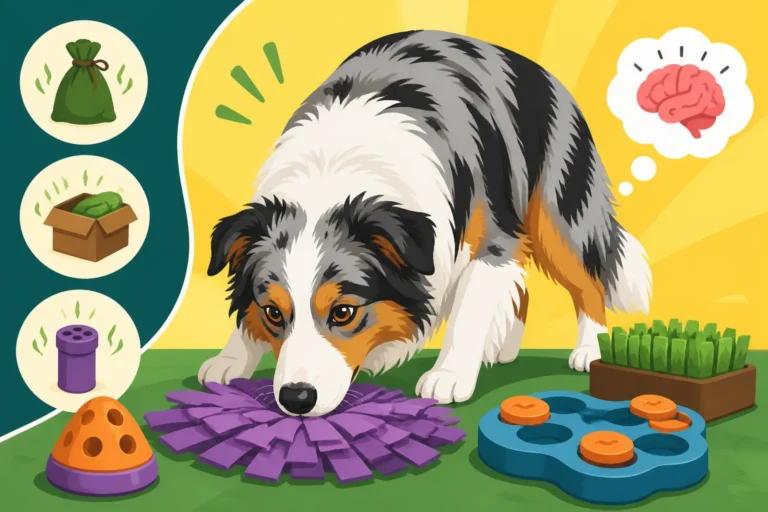
- Hidden Ball: Instead of throwing, hide the ball in tall grass, behind a bush, or even inside the house. Tell your Aussie "find it!" This transforms fetch into a scent-work game, engaging their nose and brain more than just their legs.
- Retrieve from a Standstill: Ask for a sit-stay, throw the ball a short distance, and then release them to retrieve. Once they bring it back, ask for another sit-stay before the next throw. This builds impulse control and patience.
- "Wait" and "Take It": Before throwing, ask your Aussie to "wait" while you place the ball. Then, after a few seconds, give them a "take it" cue. This teaches them to control their impulse to immediately grab the object. Australian Shepherd Impulse Control With Moving Toys explores this further.
- Two-Ball Game: This can be a great way to manage drive and practice "drop it." Throw one ball, and as your Aussie retrieves it, show them the second ball. When they drop the first one for the second, reward and throw the second. This teaches them that dropping one ball leads to another exciting opportunity, rather than the end of the game.
Utilizing Training for Self-Regulation
Training isn't just about commands; it's about teaching your dog how to navigate their world calmly.
- Mat Work/Place Training: Teach your Aussie to go to a mat or a designated "place" and relax there. Start with short durations and gradually increase. Reward calm behavior with quiet praise or a long-lasting chew. This gives them a default "chill out" spot. Many online training platforms, such as BAXTER & Bella, offer excellent modules on teaching a solid "place" command, which is invaluable for high-drive dogs.
- "Settle" Command: Teach a specific verbal cue, "settle," that means to lie down and relax. Practice this in various environments, gradually increasing distractions.
- Engage Other Senses: Introduce activities that engage their powerful sense of smell. Scent work, like nose work classes or simply hiding treats around the house or yard, is incredibly tiring for an Aussie's brain. Scent Games That Tire an Australian Shepherd offers great ideas.
- Puzzle Toys: When you need a break, offer a puzzle feeder or a Kong filled with frozen peanut butter. This engages their problem-solving skills and provides a calm, solo activity. You can find a huge variety of these on Amazon, often at very reasonable prices. Puzzle Feeders That Slow an Australian Shepherd is another great resource for ideas.
Enrichment Beyond Endless Fetch
An Aussie's intelligence and drive demand more than just physical exercise. If fetch is their primary outlet, they're probably not getting enough mental stimulation, which can lead to behavioral issues and an over-reliance on that one activity.
Mental Stimulation: Tiring the Brain, Not Just the Body
For an Australian Shepherd, a tired mind is often more effective than a tired body in creating a calm, well-adjusted dog. Think of it like this: you can run a marathon, but if you then immediately have to take a complex exam, your brain is probably still sharp enough. If you spend hours on that exam, both your body and mind will feel drained.
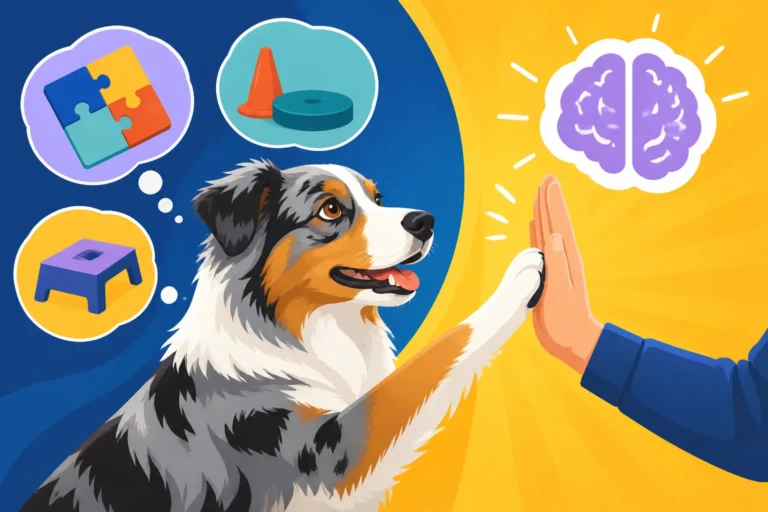
- Trick Training: Aussies love to learn! Teaching them new tricks – from "wave" to "spin" to "play dead" – engages their mind and strengthens your bond. It's a low-impact way to keep them engaged. Trick Training as Aussie Mental Work explains how effective this can be.
- Scent Work and Nose Games: As mentioned, using their nose is incredibly enriching. Hide treats, play "find me" games, or even enroll in local nose work classes. A 15-minute scent session can be as tiring as a 45-minute walk for an Aussie.
- Interactive Puzzle Toys and Chew Toys: These are fantastic for independent mental engagement. Load a sturdy Kong with wet food and freeze it, or get a durable puzzle toy that dispenses kibble. This keeps them occupied and thinking. Consider brands available on Amazon known for durability, as Aussies can be quite determined!
- Obedience and Rally: Formal obedience or rally classes provide structure and mental challenges. Learning precision heeling, stays, and retrieves in a distracting environment requires immense focus.
Structured Exercise and Variety
While we're talking about reducing obsessive fetch, it doesn't mean no fetch at all. It means integrating it into a broader, more varied exercise routine.
- Varying Physical Outlets: Instead of always fetch, incorporate different activities. Hiking on varied terrain, swimming, long walks with plenty of sniffing opportunities, or even controlled runs where they learn to stay beside you. This provides different forms of physical exertion and sensory input.
- Short Bursts of Intense Play: Rather than one long, over-the-top fetch session, break it into two or three shorter, controlled bursts throughout the day. This helps manage their arousal levels.
- Integrating Walks with Training: Turn a simple walk into a training opportunity. Practice loose-leash walking, recalls around distractions, and "leave it" commands. Australian Shepherd Recall Around Moving Things is a good read for developing a reliable recall in a distracting environment.
- Dog Sports: If your Aussie genuinely thrives on focused activity, explore organized dog sports like agility, flyball, or herding. These activities channel their natural drives into productive, structured outlets. Many dog trainers, like those found through BAXTER & Bella's resources, specialize in helping high-drive dogs excel in these areas.
The Power of Calm: Reinforcing Relaxation
It's not enough to just stop the fetch; you also need to actively teach and reward calm behavior.
- Capture Calmness: Whenever your Aussie voluntarily settles down, quietly reward them with a treat or gentle praise. Don't make a big fuss that might excite them again; just a calm acknowledgment.
- Relaxation Protocol Training: There are specific relaxation protocols (like Dr. Karen Overall's protocol) that guide you through systematically teaching your dog to relax in various situations. This often involves lying on a mat for increasing durations while distractions are gradually introduced.
- Scheduled Downtime: Just like you schedule play, schedule downtime. After an activity, make sure your Aussie has a quiet space to decompress. Their crate can be an invaluable tool for this, providing a safe den where they can truly switch off. The Crate a Fifty Pound Aussie Needs offers guidance on appropriate crate sizing.
By diversifying their activities, setting clear boundaries for high-arousal games like fetch, and actively teaching them how to relax, you can help your Australian Shepherd become a more well-rounded, calmer companion. It’s a journey that requires patience and consistency, but the rewards—a happy, balanced dog and a less frazzled owner—are absolutely worth it.
| Strategy | Purpose | Example Activity | Benefits |
|---|---|---|---|
| Structured Fetch | Control arousal, define play limits | Timed 10-minute sessions with "All Done!" cue | Prevents obsession, reduces physical strain |
| Mental Games | Engage brain, reduce reliance on physical | "Find It" with hidden treats, puzzle feeders | Tiring without high impact, builds problem-solving |
| Impulse Control | Teach patience, self-regulation | "Wait" before release to retrieve, two-ball game | Reduces frustration, improves listening skills |
| Relaxation Training | Teach active calm, provide "off switch" | Mat work, "Settle" command, quiet chew time | Lowers stress, improves home demeanor |
| Varied Exercise | Broaden physical outlets, prevent overuse | Hiking, swimming, long sniffing walks | Develops different muscles, prevents boredom |
Disclaimer
This article is for general informational purposes only and does not constitute professional advice. Laws, prices and regulations vary by location and change over time. Consult a qualified professional for guidance on your specific situation.