Which Basque Dogs Went Into the Australian Shepherd
It’s a common head-scratcher: the Australian Shepherd, with its unmistakable name, is actually an American creation. This often leaves new owners and even seasoned enthusiasts wondering, if not Australia, then where did these incredible dogs truly come from? And, more specifically, what were the foundational dogs that contributed to their unique genetics and powerful herding instincts? This guide will dive deep into the fascinating, albeit somewhat hazy, origins of the Australian Shepherd, tracing the crucial role of Basque sheepherders and their loyal canine companions in shaping the breed we know and love today.
Understanding the true ancestry of your Australian Shepherd isn't just a fun historical tidbit; it helps you appreciate the deep-seated instincts and traits that make them who they are. When you grasp where their drive comes from, you can better meet their needs, whether that's channeling their energy into productive tasks or choosing the right supplies, perhaps even finding durable toys and nutritious food on sites like Chewy that cater to an active breed.
The Sheepherder's Journey: Why Basque Dogs Came to America
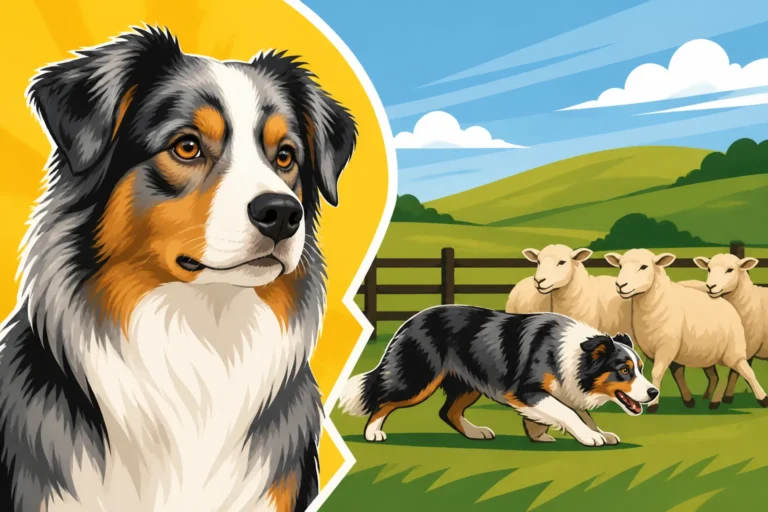
To understand the origins of the Australian Shepherd, we first have to step back in time and cross an ocean. Forget kangaroos and koalas for a moment; our story begins not in the land down under, but in the rugged mountains of the Basque Country, straddling the borders of Spain and France. For centuries, the Basque people have been renowned for their exceptional sheepherding skills and the intelligent, tenacious dogs that assisted them. When opportunity called, many of these experienced shepherds packed their bags, and their dogs, for a new life.
The Gold Rush and the Wool Boom: Demand for Herding Dogs
The mid-19th century was a time of immense migration to America, driven by the California Gold Rush. But not everyone struck it rich panning for gold. Many immigrants, particularly those with a background in agriculture, recognized another booming industry: wool. The burgeoning population needed food and clothing, and sheep provided both. Vast tracts of land in the American West were perfect for grazing, but managing large flocks across open ranges was no easy feat. This created an immediate and significant demand for skilled shepherds and, crucially, their skilled herding dogs. It was a perfect storm, drawing in experienced Basque shepherds who understood this way of life better than most.
These shepherds brought with them generations of knowledge about caring for livestock, navigating challenging terrain, and, most importantly, working with dogs that could handle immense responsibility. Imagine the chaos of trying to move hundreds, if not thousands, of sheep without reliable canine partners. It would have been an impossible task. The dogs were not just pets; they were essential tools, partners in survival and livelihood. This period laid the groundwork for the development of new herding breeds in America, adapting to the unique demands of the Western landscape and ranching practices.
Transatlantic Travels: How Basque Shepherds Migrated
The journey for these Basque shepherds and their dogs was often circuitous. Many first sailed to Australia or New Zealand, drawn by similar wool booms in those regions. They worked there for a time, sometimes years, honing their skills and perhaps even breeding their dogs with local working stock. This is where the "Australian" part of the name likely originates—not because the dogs themselves were from Australia, but because the shepherds and their sheep (which were often Merino sheep from Australia) arrived in America from Australia. Why the Australian Shepherd Is Not From Australia delves into this naming mystery further. It was a common shorthand: "the dogs of the Basque shepherds who came from Australia."
When these shepherds eventually made their way to the American West, particularly California, Nevada, and other western states, they brought their accumulated experience and their adaptable, intelligent dogs. These dogs were already proven workers, capable of handling large flocks and diverse environments. They were tough, resilient, and possessed the innate herding drive that would become a hallmark of the Australian Shepherd. It's a testament to the hardy nature of these animals that they could endure such long and arduous voyages, often under difficult conditions, and then immediately get to work in a completely new setting.
The Dogs They Brought: Unsung Heroes of the Flock
The specific breeds these Basque shepherds brought were not formally recognized breeds as we might think of them today. They were primarily landrace working dogs, selectively bred for generations based purely on their ability to herd sheep effectively. There wasn't a "breed standard" in the modern sense; what mattered was their aptitude for the job. These dogs were typically medium-sized, agile, intelligent, and possessed an intense desire to control and move livestock. The Basque Shepherds Behind the Australian Shepherd further explores the cultural context of these working partnerships.
These were dogs built for endurance, quick thinking, and independence, often working far from their shepherd's immediate commands. They needed keen eyesight, a strong nose, and the stamina to cover many miles a day across varied terrain, from arid plains to rocky mountains. Their coats were likely robust, offering protection from the elements, and their temperaments were loyal but often reserved with strangers – traits still seen in many Australian Shepherds today. They were invaluable assets, ensuring the safety and movement of the flock, and their arrival in America sparked the lineage that would become the Aussie.
Pinpointing the Ancestors: What Kinds of Dogs?
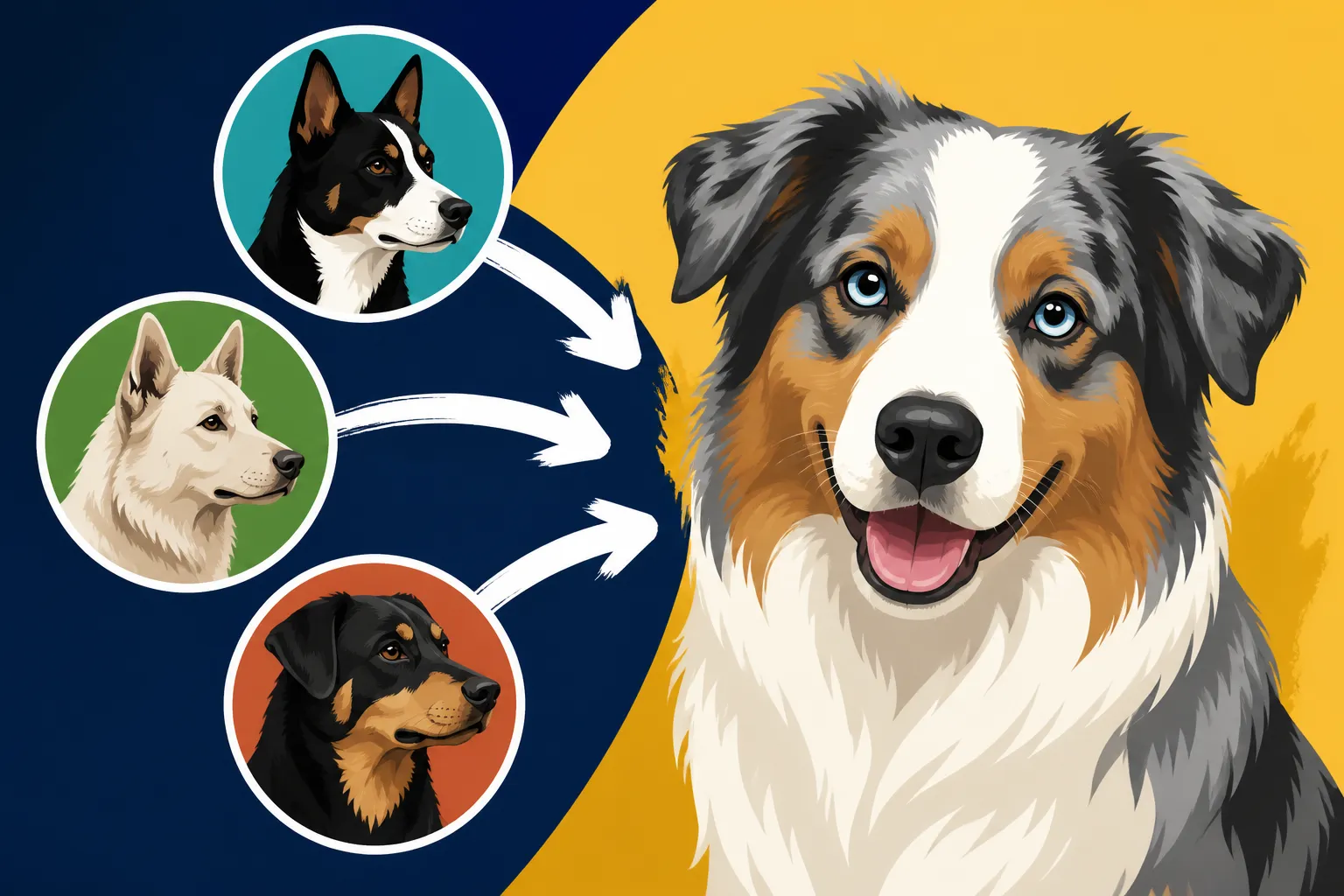
While exact genetic records are scarce from that era, we can infer a great deal about the types of dogs that contributed to the Australian Shepherd through historical accounts, breed characteristics, and a bit of educated guesswork. The core requirement was a proficient herding dog, and several European pastoral breeds fit the bill.
The Pyrenean Shepherd Connection: A Strong Candidate
One of the most frequently cited ancestral breeds is the Pyrenean Shepherd. Originating from the Pyrenees mountains, these dogs are known for their intelligence, agility, and tireless work ethic. They come in various coat types and sizes, but all share that intense herding drive and a keen, watchful demeanor. Many early "Basque dogs" arriving in America would have had strong Pyrenean Shepherd lineage, or at least shared a common ancestry with them, given the geographical proximity of the Basque Country to the Pyrenees. Pyrenean Shepherds in the Australian Shepherd Line dives deeper into this specific connection.
The Pyrenean Shepherd's traits — its quickness, its natural gathering instincts, and its often reserved-to-strangers temperament — are clearly visible in the modern Australian Shepherd. They are nimble, able to turn quickly with sheep, and possess a natural intelligence that makes them highly trainable for complex tasks. It's not a stretch to imagine these dogs forming the backbone of the Australian Shepherd's working abilities. Their ability to manage sheep in rough, mountainous terrain would have translated well to the varied landscapes of the American West.
Other European Herding Influences: A Blend of Working Traits
It's important to remember that the development of the Australian Shepherd wasn't a pristine, controlled breeding program. It was a pragmatic evolution driven by utility. As such, it's highly probable that other European herding dogs, or even various types of "collies" from the British Isles, also contributed to the gene pool. Collie Blood in the Australian Shepherd further discusses these other influences. These could have included various types of working Border Collies, Smithfield Collies, or other local sheepdogs that arrived with different waves of immigrants.
The goal was always the same: a dog that could work sheep. Ranchers in the American West were likely less concerned with "purebred" lineage and more interested in demonstrated working ability. They would have bred together the best working dogs they could find, regardless of their precise ancestry, leading to a diverse genetic foundation. This melting pot of European herding bloodlines, all converging in the American West, created a uniquely adaptable and versatile working dog. Each contribution would have added a piece to the puzzle, leading to the robust and intelligent Australian Shepherd we know.
Looking at Modern Aussie Traits: Clues from the Past
When we look at the Australian Shepherd today, many of its defining characteristics echo those of its ancestral working dogs. The intense herding instinct, the desire to work, the athleticism, and even certain physical features like eye color and coat patterns can be traced back to these foundational breeds.
| Trait / Characteristic | Potential Ancestral Influence | How it Appears in Australian Shepherds |
|---|---|---|
| Herding Drive | Pyrenean Shepherd, Collies | Strong desire to gather, circle, "eye" |
| Intelligence | Pyrenean Shepherd, Collies | Quick learners, problem-solvers |
| Agility/Stamina | Pyrenean Shepherd, Farm Dogs | Athletic, able to work long hours |
| Reserved Temperament | Pyrenean Shepherd | Wary of strangers, loyal to family |
| Moderate Size | Diverse working dogs | Ideal for varied terrain, nimble |
| Robust Double Coat | Pyrenean Shepherd, Mountain Dogs | Protection from elements, temperature regulation |
This table illustrates how the functionality-driven breeding of the past has left an indelible mark on the Australian Shepherd. The traits that made their ancestors invaluable on the sheep trails are precisely what make Aussies excel in dog sports, service work, and active family companionship today. Their boundless energy and intelligence, for instance, mean they thrive on mental stimulation and physical activity, and owners often turn to retailers like Chewy for puzzle toys and durable outdoor gear to keep them engaged.
Forging a New Breed: The American West Influence
Once these diverse European herding dogs arrived in America, they didn't just maintain their original forms. They began to evolve, shaped by the unique demands of the American ranching environment and the practical breeding choices of Western pioneers. The term "Australian Shepherd" emerged during this period, solidifying the breed's identity, even if its name was a geographical misnomer.
Local Rancher Selection: Breeding for American Conditions
The American West presented different challenges than the mountain pastures of the Pyrenees or the rolling hills of Scotland. Vast, open ranges, often with scattered cattle alongside sheep, required dogs that were incredibly versatile. Ranchers weren't necessarily looking for show ring champions; they were looking for efficient, hardy workers who could handle the heat of summer, the snow of winter, and the rough terrain. They bred dogs based purely on their working ability, temperament, and stamina. This informal, utility-driven breeding led to a rapid adaptation of the gene pool. Where Aussie Ancestors Worked in California gives a glimpse into these early environments.
This selection process favored dogs that were intelligent enough to work independently when needed, yet biddable enough to take direction. Dogs that were prone to overheating or couldn't cover long distances simply wouldn't last. Over time, these consistent, practical breeding choices began to solidify a distinct "type" of dog: the early Australian Shepherd. This focus on functionality meant that genetic health and a strong working drive were prioritized, laying the groundwork for the robust breed we know today.
The "Australian" Misnomer: Tracing the Name
As mentioned, the name "Australian Shepherd" can be a bit confusing. The most widely accepted theory attributes the name to the fact that many of the Basque shepherds (and their sheep) who settled in the American West had spent time in Australia before migrating to the U.S. As they arrived with their highly effective dogs and their Australian Merino sheep, locals began to refer to the dogs as "Australian Shepherds." It was a simple, descriptive tag that stuck. The dogs were associated with the "Australian sheep" and the "Australian sheepherders," even if their own origins were European.
This historical anecdote highlights how informal circumstances can shape a breed's identity. There was no grand council that decided on the name; it simply evolved from common usage among the ranchers who depended on these dogs daily. The name served its purpose, clearly identifying a specific type of working dog, even if it didn't accurately reflect its ultimate geographic birthplace. For more on this, check out The Enigma Behind the Australian Shepherd Name.
The Unwritten History: Why Specifics Are Hard to Find
One of the biggest frustrations for those trying to trace the Australian Shepherd's ancestry with precise detail is the lack of formal written records from its early days. These were working dogs on working ranches. Few shepherds were meticulously documenting pedigrees or breeding choices in a way that modern breed clubs do. Their focus was on survival and productivity, not establishing a written lineage. This means much of the early history is passed down through oral tradition, anecdotal evidence, and observation of the dogs' performance.
The "breed" as we know it today truly began to take more formal shape in the mid-20th century, particularly after World War II, when their intelligence and athleticism caught the eye of rodeo performers. This era saw increased interest in their versatility beyond just herding, leading to more deliberate breeding and the eventual establishment of breed clubs and standards. How Aussie Type Settled by the 1950s provides more context on this period of solidification. Before then, it was a dynamic, evolving lineage, a true testament to natural selection guided by human need.
The Lasting Legacy: Basque Traits in Today's Aussie
The legacy of these foundational Basque and other European herding dogs is vividly present in every Australian Shepherd today. Their unique blend of intelligence, drive, and devotion can be seen in backyard companions, dog sport champions, and working farm dogs alike.
The Instinct to Gather: Herding Drive as a Core Trait
Perhaps the most prominent trait inherited from these ancestral dogs is the incredibly strong herding drive. Australian Shepherds possess an innate desire to gather, control, and move anything that disperses — be it sheep, children, other pets, or even inanimate objects. This isn't something that's taught; it's hardwired into their DNA, a direct inheritance from generations of selective breeding for herding aptitude. The Australian Shepherd Herding Drive You Cannot Train Out explains how deeply ingrained this instinct truly is.
For modern Aussie owners, understanding this drive is paramount. It means that your Aussie isn't just "playing" when they try to circle your kids or nip gently at heels; they are exhibiting a core behavioral pattern that served their ancestors well. Recognizing and redirecting this instinct into appropriate outlets, like herding balls or organized dog sports, is crucial for a happy, well-adjusted Australian Shepherd. Many owners find durable herding toys on Chewy to satisfy this innate need.
Resilience and Adaptability: Built for Hard Work
The sheer journey and subsequent working life of the early Australian Shepherds instilled a deep sense of resilience and adaptability in the breed. These were dogs that had to cope with long migrations, new climates, and diverse working conditions. They were bred to be tough, capable of withstanding harsh weather and long hours of strenuous activity. This explains why Australian Shepherds today are generally robust, healthy dogs with incredible stamina.
This historical demand for resilience means Aussies thrive when they have a purpose and ample opportunities for both physical and mental exercise. They are not content to be couch potatoes; they need to engage their bodies and minds. This adaptability also makes them excellent candidates for a wide range of activities, from agility and obedience to therapy work and search and rescue. Their ancestors would certainly be proud of how their descendants continue to work and excel.
A Nod to History: Appreciating the Ancestral Contribution
Ultimately, the Australian Shepherd stands as a living testament to the powerful bond between humans and working dogs, and the incredible impact of dedicated, practical breeding. While we may not have every precise detail of their lineage, the spirit of those tireless Basque dogs, those unsung heroes of the American West, undeniably lives on. Every time an Aussie intently "eyes" a flock, makes a lightning-fast turn, or devotedly sticks by its human's side, it's echoing the traditions forged by those early shepherds and their indispensable canine partners. Why Herding Instinct Is the Aussie Operating System further clarifies this deep-seated aspect of their personality. Appreciating this rich history helps us understand our Aussies better, allowing us to provide them with the challenging, engaging lives they were bred for.
Disclaimer
This article is for general informational purposes only and does not constitute professional advice. Laws, prices and regulations vary by location and change over time. Consult a qualified professional for guidance on your specific situation.