Australian Shepherd Movement in the Ring
Walking into an Australian Shepherd conformation ring, you might feel a pang of nervousness, wondering exactly what the judge is looking for as your beautiful Aussie moves. It's not just about a pretty face or a thick coat; the movement of your Australian Shepherd is absolutely critical, reflecting its ability to do the job it was originally bred for. This guide will help you understand the nuances of how an Aussie should move in the show ring, what judges are scrutinizing, and how you can best prepare your dog for that all-important gait examination.
Why Movement Matters in the Australian Shepherd Show Ring
For anyone new to the world of dog shows, it might seem like a lot of fuss over how a dog walks or trots. But for a working breed like the Australian Shepherd, movement isn't just about aesthetics; it's a fundamental aspect of their functional design. Imagine an Aussie needing to spend a full day herding livestock across varied terrain – a clumsy, inefficient gait wouldn't cut it. This functional requirement is deeply embedded in the breed standard, making movement a cornerstone of evaluation in the show ring.
The Australian Shepherd's Original Purpose Reflected in Gait
The Australian Shepherd, despite its name, was developed right here in the American West, by Basque shepherds and ranchers who needed an agile, enduring partner to manage their flocks and herds. This historical purpose means that every aspect of the breed, from its intelligence to its physical structure, is geared towards efficient, tireless work. When a judge evaluates movement, they are essentially looking for evidence of this working heritage. They want to see a dog that could realistically perform its duties without breaking down.
A proper Aussie gait should demonstrate endurance, agility, and balance. It's not about speed, but about efficiency. Think of a marathon runner: they don't sprint, but they maintain a steady, ground-covering pace that allows them to conserve energy over long distances. Similarly, an Australian Shepherd's movement should show that it can cover a lot of ground with minimal effort, making quick turns, and maintaining its balance, even on uneven footing. This inherent drive to move with purpose is why breeders carefully select for sound structure. You can read more about what judges are looking for in general in The Australian Shepherd Standard and What Judges Want.
How Judges Evaluate Movement: Form and Function
Judges don't just watch a dog trot around the ring; they dissect every aspect of its movement, looking at how the front and rear assemblies work together, the reach and drive, and the stability of the topline. They're assessing both form and function. Is the dog moving efficiently? Are there any signs of lameness or discomfort? Does the movement match the breed's intended purpose?
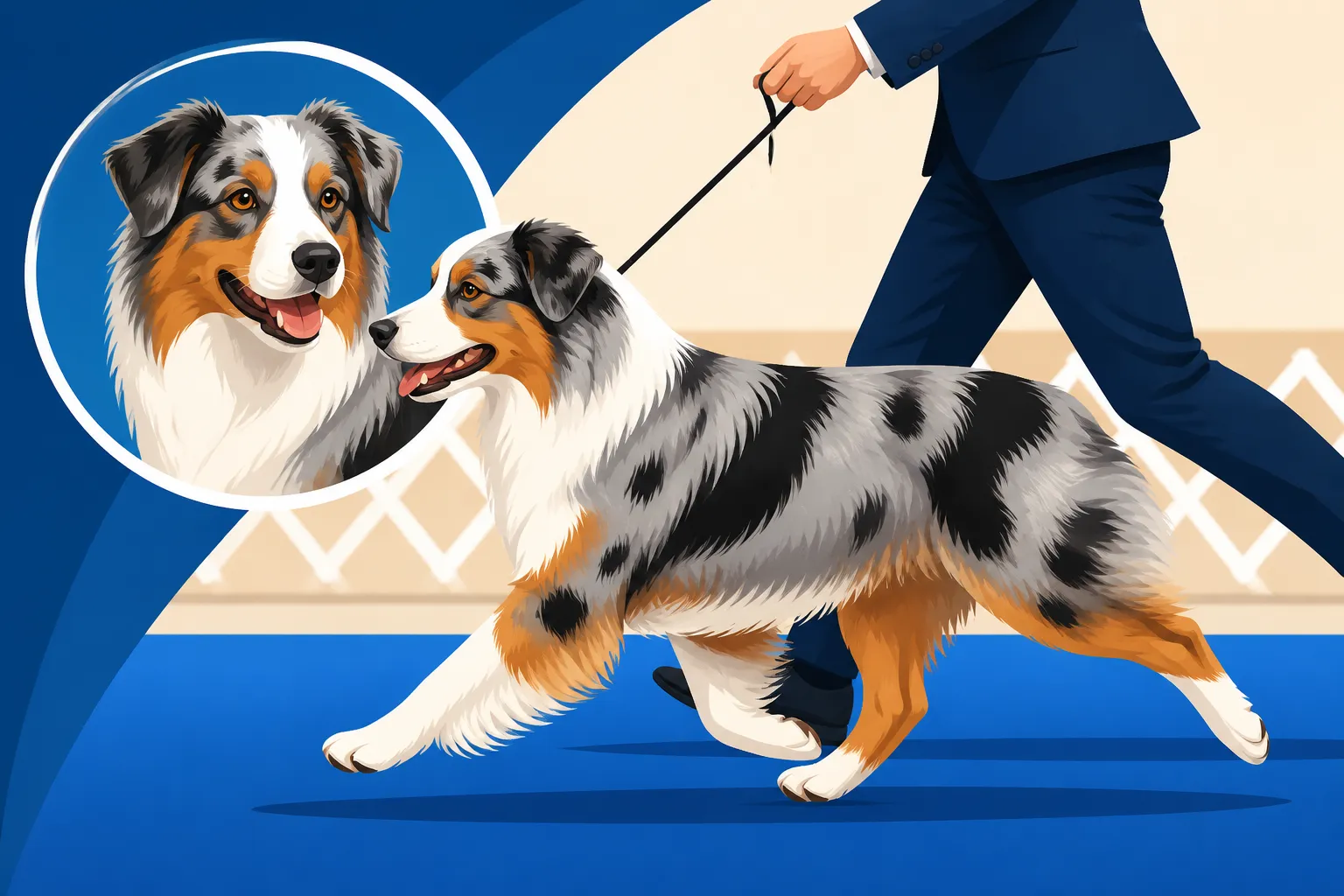
They typically ask exhibitors to move their dogs in a "down and back" pattern, where the dog moves away from the judge, turns, and moves back towards them, and then in a triangular pattern. This allows the judge to see the dog coming, going, and from the side, giving them a comprehensive view of the dog's gait. They are looking for symmetry, power, and coordination. For instance, weak rear drive or short front reach can indicate structural issues that would hinder a working dog. A dog that moves with a strong, coordinated gait is not only more beautiful in the ring but also more capable in the field. This keen eye for detail is why proper conformation is so important.
Understanding the Ideal Australian Shepherd Gait
The ideal Australian Shepherd gait is a thing of beauty – fluid, balanced, and seemingly effortless. It speaks to years of careful breeding for function and soundness. When your Aussie moves correctly, it's a testament to its sound structure and inherent athletic ability. It's the hallmark of a true working dog, even if its "work" these days is primarily charming its humans and excelling in dog sports.
The Balanced, Effortless Trot
At its core, the Australian Shepherd should exhibit a balanced, effortless trot. This means that the dog moves with a smooth, ground-covering gait, where the front and rear legs move in perfect synchronicity. The standard describes it as "smooth, free and easy, exhibiting agility and balance." This isn't a stiff, choppy movement, nor is it overly exaggerated; it's a powerful yet graceful stride.
Imagine your Aussie moving alongside you, head held proudly, tail (if it has one) acting as a natural rudder. There should be no wasted motion. The steps should be clean and straight, without any crossing over or winging out of the feet. When viewed from the side, the dog should appear to flow, rather than stomp. The body should remain level, with the topline staying firm and steady, indicating strong core muscles and a well-knit structure. This consistent, flowing movement is what separates an average mover from an exceptional one.
Reach, Drive, and Topline Stability
Breaking down the effortless trot further, judges pay close attention to three critical elements: reach, drive, and topline stability.
-
Reach: This refers to how far forward the front legs extend. An Australian Shepherd should have good front reach, meaning its front paws extend well forward, almost appearing to skim the ground. This indicates proper angulation in the shoulder and forequarters. Poor reach can make a dog look short-strided or "stuck."
-
Drive: This is the power coming from the rear. The hind legs should push off strongly, propelling the dog forward with purpose. Good drive means the rear paws extend well behind the body, providing powerful propulsion. Together, sufficient reach and drive allow the dog to cover maximum ground with minimal steps, conserving energy. Australian Shepherd Proportions in the Standard outlines how body structure directly influences these aspects.
-
Topline Stability: As the dog moves, its topline – the line from the shoulders to the tail – should remain level and firm. There should be no excessive bounce, roll, or sway. A stable topline indicates a strong back, good muscle tone, and a correctly proportioned body. A weak or roached topline can signify structural problems or lack of conditioning. All these elements combine to create the picture of a sound, efficient, and powerful Australian Shepherd.
Common Movement Faults in the Australian Shepherd Ring
No dog is perfect, and even the best Australian Shepherds might exhibit minor movement quirks. However, some faults are significant enough to penalize a dog in the show ring because they detract from the breed's functional purpose and overall soundness. Recognizing these issues can help you understand a judge's decisions and even guide your own dog's conditioning and training. Sometimes, issues that appear to be purely aesthetic on the surface are actually indicators of deeper structural problems.
Identifying Specific Issues Like Crabbing or Pacing
Judges are trained to spot a variety of common movement faults. Here are some of the frequent ones you might hear discussed:
-
Crabbing (or Sidewinding): This is when a dog moves with its body slightly angled, rather than straight, with its hindquarters offset to one side. It often looks like the dog is trying to prevent its hind legs from interfering with its front legs. Crabbing is a sign of structural imbalance, an attempt by the dog to find a comfortable way to move despite its conformation. It's not efficient and indicates a fault in structure.
-
Pacing: In a pace, both legs on the same side move forward at the same time (e.g., left front and left rear move together, then right front and right rear). While some dogs naturally pace at slower speeds, it's not the desired show gait for an Aussie. A true trot is diagonal (left front and right rear move together, then right front and left rear). Pacing is considered inefficient and often indicates a lack of balance or poor conditioning.
-
Hackneying: This is an exaggerated, high-stepping front action, where the front legs lift too high. It's often seen in breeds like the Hackney Pony, but it's not appropriate for an Australian Shepherd, as it wastes energy and reduces ground coverage.
-
Winging In/Out: This describes when the feet, particularly the front ones, either "wing in" (toe in) or "wing out" (toe out) as the dog moves. This indicates a structural problem in the pasterns, wrists, or shoulders.
-
Elbows Out/Loose: If the elbows turn out as the dog moves, it can indicate loose shoulders or poor bone structure. Aussie Elbow Dysplasia From Hard Turning covers one of the more serious implications of elbow issues.
-
Cow Hocks: This is a fault where the hocks (ankles) turn inward, causing the rear feet to turn outward. When viewed from the rear, the hocks appear to converge. This often affects rear drive and stability.
It's helpful to watch videos of dogs with these faults to learn to identify them. A quick search on Chewy or other online resources might even provide diagrams or visual aids to help you understand these nuances.
The Impact of Structure on Movement Problems
It’s crucial to understand that most movement problems are not behavioral issues; they are structural ones. A dog’s skeletal frame and muscle attachments dictate how it moves. For instance, a dog with insufficient angulation in its rear quarters will struggle to achieve strong rear drive, regardless of how much it's trained. Similarly, a dog with an incorrect shoulder layback might always have restricted front reach.
Issues like Australian Shepherd Hip Dysplasia and OFA Scoring or Aussie Elbow Dysplasia From Hard Turning can severely impact a dog's ability to move correctly and comfortably, even if the condition is mild. Responsible breeders test for these hereditary conditions to minimize their prevalence. Sometimes, what looks like awkward movement might actually be a dog trying to compensate for pain or discomfort, so a thorough veterinary check-up is always wise if you notice a sudden change in your dog's gait. An Aussie showing discomfort might also exhibit other signs like being An Aussie Stiff After a Career in Agility. Proper structure, as detailed in discussions about Australian Shepherd Height and Weight, is the foundation for sound movement.
Preparing Your Australian Shepherd for the Movement Exam
So, you've got a beautifully conformed Australian Shepherd, and you understand what the judges are looking for. Now comes the practical part: preparing your dog to show off that gorgeous movement in the ring. This involves a combination of consistent training, physical conditioning, and ring practice to ensure your Aussie presents its best self.
Training for a Confident, Coordinated Performance
Training for the show ring is more than just teaching your dog to walk on a leash. It's about teaching them to stack (stand still in a posed position) and, crucially, to gait at a consistent, ideal trot beside you.
-
Practice Gaiting: Start by practicing gaiting in a straight line, then incorporate "down and backs" and triangles. Use a comfortable show lead and collar. Your goal is for your dog to trot fluidly at your side without pulling, lagging, or breaking pace. Many people use a small, enticing treat from a brand like Chewy to keep their dog engaged and focused on them, maintaining that forward momentum and a cheerful expression.
-
Consistent Speed: Find the speed at which your Aussie looks its best – the speed where its gait is most balanced and efficient. This might take some experimentation. You don't want to go too fast, which can cause pacing or a messy gait, nor too slow, which can make the dog look sluggish.
-
Ring Presence: A confident dog makes a better impression. Work on making the show ring a fun, positive experience. Practice in different environments with distractions to help your Aussie focus on you, even amidst other dogs and people. This also includes teaching them to stand for examination by a stranger, as the judge will need to physically assess their structure.
-
Handling Class: Attending handling classes with an experienced instructor is invaluable. They can offer personalized feedback on your dog's movement, your handling technique, and help you fine-tune your presentation. Vetting a Trainer Before Booking an Aussie is a crucial step to ensure you find someone who understands the breed's specific needs.
Maintaining Peak Physical Condition
Even the most structurally sound Australian Shepherd won't move optimally if it's out of condition. Physical fitness plays a huge role in movement quality, endurance, and injury prevention.
-
Regular Exercise: This is non-negotiable for an Australian Shepherd. Daily, varied exercise helps build and maintain muscle tone, stamina, and flexibility. This isn't just about long walks; it includes controlled trotting, swimming, and mental engagement. However, be mindful of Exercise Limits for a Growing Australian Shepherd for puppies to protect their developing joints.
-
Balanced Nutrition: A high-quality diet provides the necessary fuel for muscle development and energy. Ensure your dog is at its ideal weight; an overweight dog will struggle to move efficiently and will put unnecessary strain on its joints. You can find many excellent Australian Shepherd-appropriate foods on Chewy.
-
Joint Support: For active Aussies, especially as they mature, considering joint supplements might be beneficial. Talk to your vet about whether Starting Joint Support on a Young Working Aussie is appropriate for your dog's activity level. Good joint health is crucial for sustained, sound movement and can help prevent issues that might lead to An Aussie Stiff After a Career in Agility.
-
Veterinary Care: Regular vet check-ups are essential to catch any underlying health issues that could affect movement. Pain or discomfort can drastically alter a dog's gait. Being proactive about their health helps ensure they're always ready to show off their best movement. This vigilance is also important for issues like Whether Sports Wear Out an Aussie's Joints.
A well-conditioned Australian Shepherd not only looks better in the ring but also feels better, leading to a more confident and coordinated performance.
| Movement Aspect | Ideal Australian Shepherd Gait | Common Faults |
|---|---|---|
| Overall Flow | Smooth, free, easy, balanced, and ground-covering. Appears effortless and tireless. | Choppy, stiff, exaggerated, or clumsy movement. |
| Front Reach | Good extension, front paw extends well forward, appears to skim the ground. | Short reach, dog appears to "mince" or have restricted movement. |
| Rear Drive | Powerful push-off from hindquarters, good extension behind the body. Propels dog forward with purpose. | Weak drive, dog "drags" rear, lack of propulsion. |
| Topline | Level, firm, and stable during movement. No excessive bounce, sway, or roll. | Bouncy, rolling, or roached topline. Indicates weak back or poor conditioning. |
| Foot Placement | Feet track straight and true, no crossing over or winging out. | Crabbing (sidewinding), pacing, hackneying, winging in/out, cow hocks. |
| Balance | Coordinated use of all four limbs, maintains balance throughout the stride. | Appears off-balance, clumsy, or struggles with turns. |
Disclaimer
This article is for general informational purposes only and does not constitute professional advice. Laws, prices and regulations vary by location and change over time. Consult a qualified professional for guidance on your specific situation.