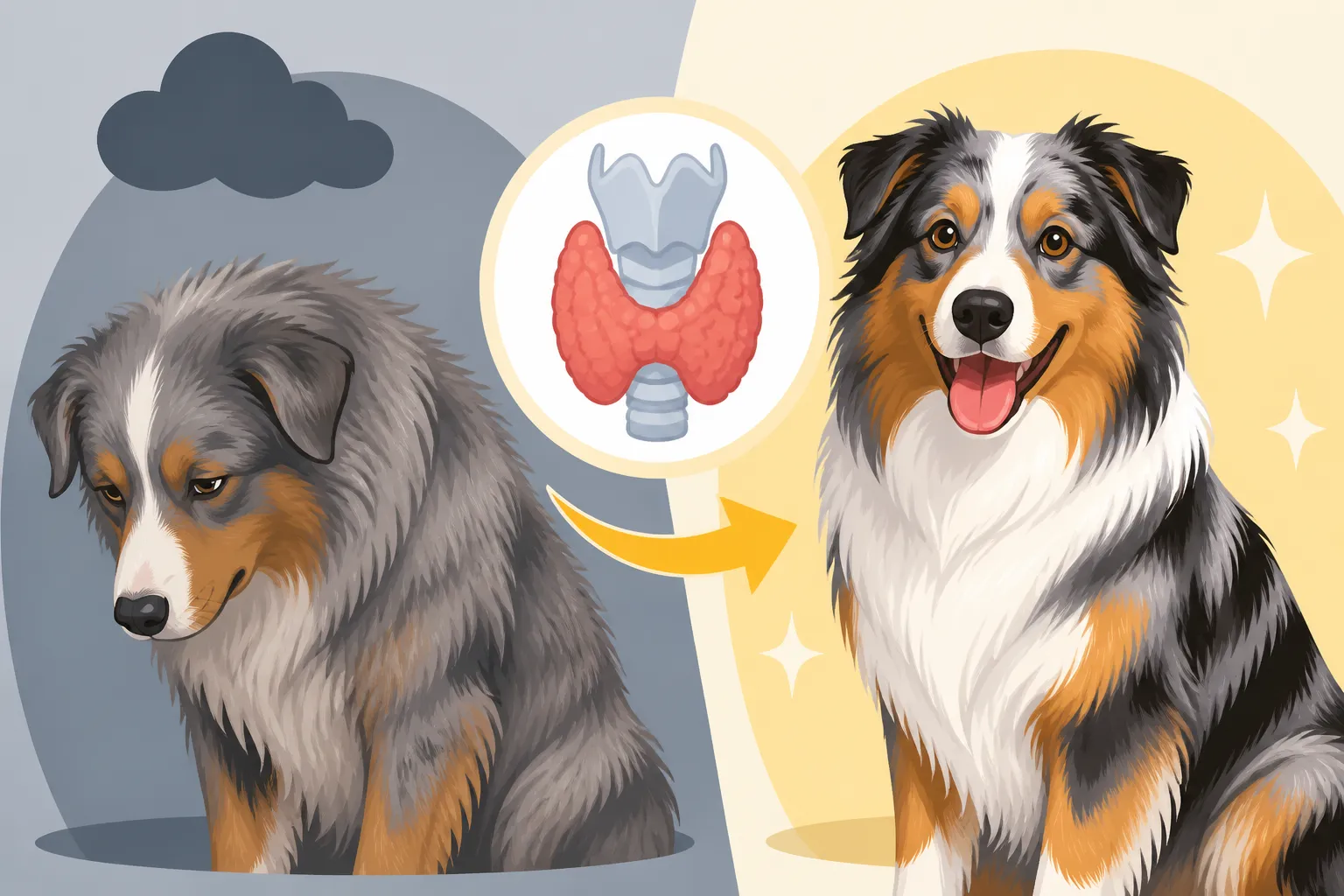
Hypothyroidism and a Dull Australian Shepherd Coat
It's incredibly frustrating when you notice your active, vibrant Australian Shepherd’s beautiful coat, once a source of pride and joy, starts to look dull, dry, and even sparse. You might try different shampoos, brush more often, or even change their diet, only to see no real improvement. This isn't just a cosmetic issue; it's often a tell-tale sign that something deeper is going on with their health. This guide is here to unravel the mystery of hypothyroidism, a common endocrine disorder in Aussies, and how it can directly impact their coat's health, helping you understand the signs and steps to get your furry friend back to their shiny, happy self.
When Your Aussie's Coat Just Isn't Right: Recognizing the Signs
Your Australian Shepherd's coat is more than just beautiful; it's a window into their overall health. When something's off internally, often the first place you'll see it is on their skin and fur. A dull, dry coat, patchy hair loss, or even persistent dandruff can be incredibly concerning, especially when you're doing everything right with grooming and nutrition. It's disheartening to feel like you're failing your dog, but these visible changes often point to an underlying medical condition like hypothyroidism.
More Than Just a Dull Finish: Visual Clues
The hallmark of a healthy Australian Shepherd coat is its lustrous sheen and vibrant color. If your Aussie's coat has lost its natural shine, appearing flat or lifeless, it's definitely something to pay attention to. This isn't just about aesthetics; it often indicates that the hair follicles aren't receiving the proper nutrients or hormonal signals to produce healthy, strong hair shafts. You might notice the colors seem less rich, almost faded, especially in the merle patterns or the deep black and red of a tri-color Aussie. The hair itself can become brittle, breaking easily, which then contributes to a thinner-looking coat overall. This can be particularly noticeable on the trunk, flanks, and the bridge of the nose.
It's common for owners to initially attribute these changes to seasonal shedding or dietary deficiencies, trying various supplements or switching to premium kibble. While diet and proper Brushing an Australian Shepherd Through Coat Blow are crucial, persistent dullness despite these efforts should raise a red flag. Your Aussie might also start to look generally unkempt, even right after a good brushing, as the unhealthy hair refuses to lie smoothly. Sometimes, what seems like excessive shedding isn't just "coat blow," but actually hair falling out due to poor follicular health.
The Texture Tells a Story: Dryness and Thinning
Beyond the visual dullness, the texture of your Australian Shepherd’s coat can change dramatically with hypothyroidism. Instead of feeling soft and pliable, it might become coarse, brittle, or even straw-like to the touch. This dryness isn't limited to the hair itself; the underlying skin can also suffer, becoming dry, flaky, and sometimes greasy in certain areas. You might see a noticeable increase in dandruff, which can be particularly irritating for your dog and for you, as it sheds everywhere.
Hair loss, known as alopecia, is another significant symptom. Unlike normal shedding, which is evenly distributed, hypothyroid-related hair loss often presents symmetrically, meaning it happens in the same spots on both sides of the body. Common areas include the flanks, the chest, the back of the thighs, and the tail. The hair might thin out gradually, or you could find bald patches developing, especially on friction points. Some Aussies develop what's called a "rat tail" or "fat tail," where the hair on the tail becomes sparse, resembling an opossum's tail, and it may even feel thickened or swollen due to fluid retention. This hair loss usually isn't itchy, which differentiates it from many allergic skin conditions, though secondary infections can cause itching. It’s important to remember that these coat changes are just one piece of a larger puzzle, and often accompany other, more subtle shifts in your dog's demeanor and physical well-being. Keeping an eye on these cues can prompt an earlier conversation with your veterinarian. If you have pet insurance, perhaps through a provider like Healthy Paws, addressing these concerns promptly can help with early diagnosis and potentially reduce long-term treatment costs.
Unpacking Hypothyroidism: What's Happening Inside
Hypothyroidism is an endocrine disorder where the thyroid gland, located in your dog's neck, doesn't produce enough thyroid hormones. These hormones are absolutely critical for regulating metabolism in every cell of the body, including those responsible for skin and hair health. When the system slows down, everything from energy levels to hair growth takes a hit. It's a condition that can often be managed effectively, but recognizing its roots is the first step.
The Thyroid's Crucial Role in Canine Health
Think of your Australian Shepherd’s thyroid gland as the body’s main thermostat and energy regulator. The hormones it produces, primarily thyroxine (T4) and triiodothyronine (T3), control metabolic rate across virtually all tissues. This means they influence how quickly cells use energy, impacting everything from heart rate and body temperature to digestion and, yes, hair growth cycles. When the thyroid gland isn't functioning correctly, the entire system slows down. For Aussies, the most common cause of hypothyroidism is autoimmune thyroiditis, a condition where the dog's immune system mistakenly attacks and destroys the thyroid gland itself. Another, less common cause is idiopathic thyroid atrophy, where the gland simply shrinks for unknown reasons. Regardless of the cause, the result is the same: insufficient thyroid hormone production, leading to a cascade of symptoms. Understanding these mechanisms is part of the broader discussion of Australian Shepherd Autoimmune Thyroiditis, which highlights the specific immune-mediated nature of the disease in many dogs.
Because these hormones are so fundamental, a deficiency can manifest in a wide array of symptoms that extend far beyond just skin and coat issues. You might notice your once energetic Aussie becoming lethargic, gaining weight despite no change in diet, or developing a lower tolerance for cold temperatures. Their mental sharpness might even seem diminished, appearing less engaged or slower to respond. All these seemingly unrelated symptoms are connected by the thyroid's pervasive influence on bodily functions. It truly underscores how one small gland can have such a profound impact on your dog's entire system.
How an Underactive Thyroid Affects Skin and Fur
Now, let's zero in on why an underactive thyroid wreaks such havoc on your Australian Shepherd's coat. The thyroid hormones play a vital role in initiating and regulating the growth cycle of hair follicles. Each hair on your Aussie's body goes through stages: growth (anagen), regression (catagen), and rest (telogen), followed by shedding and new growth. When thyroid hormone levels drop, these cycles get disrupted. Hair follicles spend too much time in the resting phase and are slow to enter the growth phase. This leads to the hair becoming thin, brittle, and eventually falling out without being properly replaced. The result is the diffuse hair loss and thinning we discussed earlier.
Furthermore, thyroid hormones are important for maintaining healthy skin. A deficiency can cause the skin to become dry, flaky, and sometimes thickened, especially in areas where hair loss is prominent. This dry skin can lead to increased dandruff. In some cases, the skin can also become hyperpigmented, turning darker, and may even develop secondary bacterial or yeast infections due to the compromised skin barrier and immune function. The classic "puppy coat" that never sheds or is replaced by adult hair can also be a sign in younger, affected Aussies, as the body struggles to transition from juvenile to mature hair cycles. So, while you might be focused on Australian Shepherd Skin, Coat and Allergy Problems that seem external, the root cause could be internal and hormonal, explaining why topical treatments alone aren't cutting it. It's a complex interplay, but recognizing these specific changes in texture and growth patterns is a strong indicator that a thyroid issue might be at play.
Getting to the Bottom of It: Diagnosis and Treatment
If you're seeing those tell-tale signs in your Australian Shepherd's coat and demeanor, the next step is a trip to the vet. It's easy to get overwhelmed by all the possibilities, but a systematic approach to diagnosis and a clear treatment plan can make all the difference. The good news is that hypothyroidism is highly treatable once identified.
The Vet Visit: What to Expect and Ask For
When you take your Aussie to the vet with concerns about their coat or other symptoms, be prepared to provide a detailed history. Your veterinarian will want to know when you first noticed the changes, if there have been any other symptoms (lethargy, weight gain, cold intolerance), and what their diet and exercise routine looks like. They'll conduct a thorough physical examination, paying close attention to your dog's skin, coat, weight, and general alertness. This initial exam helps them rule out other conditions that might present with similar symptoms, like allergies or nutritional deficiencies.
The definitive diagnosis of hypothyroidism relies on blood tests. Your vet will typically recommend a comprehensive thyroid panel. This usually includes measuring total T4 (the main thyroid hormone) and often free T4 (the unbound, active form), along with TSH (thyroid-stimulating hormone). High TSH levels coupled with low T4 and free T4 are classic indicators of primary hypothyroidism. Sometimes, additional tests like thyroid autoantibody testing (TgAA) may be run to confirm Australian Shepherd Autoimmune Thyroiditis as the cause. It's a good idea to discuss the full scope of The Genetic Panel Every Australian Shepherd Needs with your vet, as some panels include thyroid markers. Don't hesitate to ask questions about the tests being performed, what the results mean, and what the next steps will be. Early diagnosis is key, and if you have pet insurance like Healthy Paws, understanding the diagnostic process can also help you navigate potential claims.
Lifelong Management and What It Means for Your Aussie
Once hypothyroidism is confirmed, your Australian Shepherd will typically be prescribed a synthetic thyroid hormone replacement medication, usually levothyroxine. This medication is given orally, usually once or twice a day, for the rest of their lives. It's critical to follow your vet's dosing instructions precisely, as getting the dosage right is vital for their well-being. Missing doses or giving incorrect amounts can hinder treatment progress and prevent your Aussie from feeling their best.
Within a few weeks of starting medication, you should begin to see improvements in your Aussie's energy levels and demeanor. Their lethargy will likely decrease, and they might seem more engaged and playful. Coat changes take a bit longer to manifest, often several months, as it takes time for new, healthy hair to grow in and replace the old, damaged fur. Regular follow-up blood tests are essential to monitor your Aussie's thyroid hormone levels and ensure the medication dosage is appropriate. Initially, these might be every few weeks, then usually every 6-12 months once a stable dose is found. While it's a lifelong commitment, managing hypothyroidism is generally straightforward, and with proper treatment, your Australian Shepherd can lead a full, normal, and happy life, often with their beautiful coat returning to its former glory. This commitment is similar to other ongoing health needs, like regular Australian Shepherd Dental Care or monitoring for other age-related conditions.
Holistic Health: Beyond the Coat
While the coat changes are often the most visible symptom, hypothyroidism is a systemic condition that impacts much more than just external appearance. Paying attention to your Australian Shepherd's overall health and well-being, including subtle shifts in behavior and energy, is crucial for a complete picture.
Subtle Behavioral and Energy Shifts
One of the most common non-coat-related symptoms of hypothyroidism in Australian Shepherds is a noticeable drop in energy levels and a general dullness in their demeanor. Your usually bouncy, enthusiastic Aussie might become lethargic, spending more time sleeping or simply lying around. They might be less keen on their usual walks or playtime, showing reduced stamina and enthusiasm for activities they once loved. This isn't just "slowing down with age"; it's a distinct change in their typical energy. You might also notice they seem less mentally sharp, perhaps a bit confused or slower to learn new commands. This can be especially frustrating for an Australian Shepherd, a breed known for its intelligence and eagerness to work.
Furthermore, many hypothyroid Aussies develop an intolerance to cold, seeking out warm spots or shivering more easily, even indoors. They may also gain weight despite no increase in food intake or decrease in Feeding an Australian Shepherd That Works All Day. This weight gain can be stubborn and difficult to shed, even with exercise, because their metabolism is simply running too slowly. These subtle changes can sometimes be misattributed to old age or a shift in personality, which is why it's so important to connect all the dots and communicate every symptom to your veterinarian. These are key factors to consider during annual check-ups, especially as your Aussie approaches their senior years, tying into comprehensive Senior Australian Shepherd Care After Ten.
Supporting Your Aussie's Overall Well-being
Managing hypothyroidism effectively means more than just administering medication; it involves a holistic approach to your Australian Shepherd's overall health and happiness. While medication addresses the hormone deficiency, supporting their general well-being can help them thrive. This includes maintaining a balanced diet appropriate for their activity level and age. If they’ve gained weight due to the condition, your vet might recommend a controlled diet to help them reach a healthy weight once their metabolism is regulated. Regular, appropriate exercise is still vital, even if their energy levels are initially low. Start with shorter, gentle activities and gradually increase as their stamina improves.
Beyond diet and exercise, regular veterinary check-ups are paramount, not just for monitoring thyroid levels, but for their general health. As Aussies age, they can face various health challenges, and conditions like hypothyroidism can sometimes mask or exacerbate others. For instance, the lethargy might be attributed solely to thyroid issues, when in fact Australian Shepherd Arthritis After Years of Work might also be contributing to their reduced activity. Discussing a thorough blood panel, including a Bloodwork Worth Running on a Senior Aussie, with your vet at their annual exam is always a good idea. This proactive approach ensures that any emerging issues are caught early. Investing in preventative care and having a pet insurance plan like Healthy Paws can be incredibly beneficial for managing the costs associated with chronic conditions and routine monitoring, allowing you to focus on your Aussie's quality of life without undue financial stress. By keeping all aspects of their health in mind, you can help your Australian Shepherd live their best life, shiny coat and all.
| Symptom Category | Potential Hypothyroidism Signs | Other Common Causes to Consider |
|---|---|---|
| Coat & Skin | Dull, dry, brittle coat, hair loss (symmetrical), thinning, dandruff, thickened skin, "rat tail" | Allergies, nutritional deficiencies, parasites (fleas, mites), fungal infections, Cushing's disease |
| Energy & Behavior | Lethargy, reduced activity, excessive sleeping, mental dullness, disinterest | Arthritis, pain, heart disease, kidney disease, depression, normal aging |
| Weight & Metabolism | Weight gain despite normal food intake, difficulty losing weight | Overfeeding, lack of exercise, other endocrine disorders (e.g., Cushing's) |
| Temperature | Intolerance to cold, seeking warm spots, shivering | Arthritis, pain, anxiety, anemia |
Disclaimer
The information provided in this article is for educational purposes only and is not intended to be a substitute for professional veterinary advice, diagnosis, or treatment. Always seek the advice of your veterinarian or other qualified animal health provider with any questions you may have regarding a medical condition.