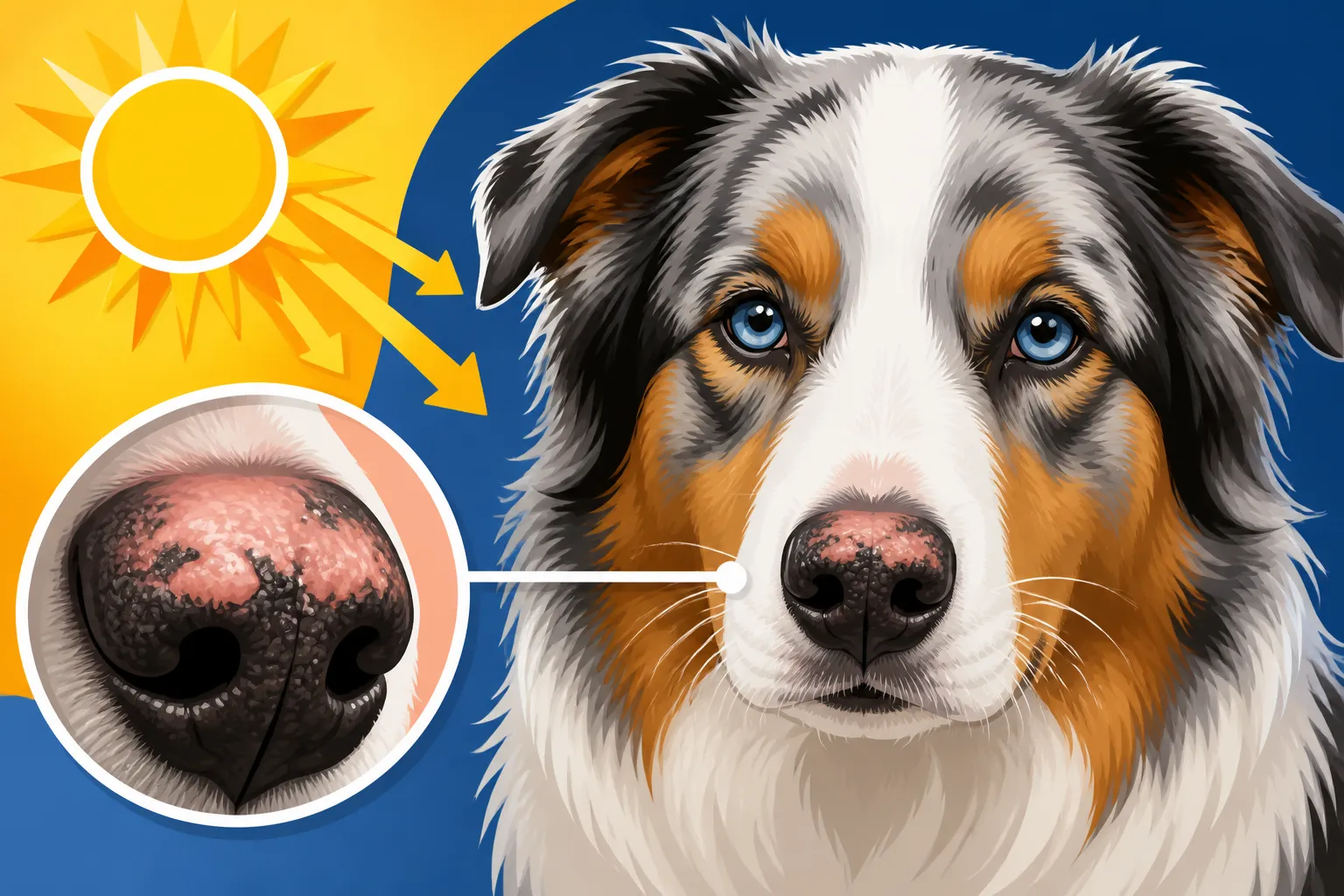
Nasal Solar Dermatitis on an Aussie Nose
It’s truly disheartening to see your beloved Australian Shepherd develop what looks like a rough, crusty patch on their beautiful nose, especially if it seems to be getting worse with sun exposure. You spend so much time making sure they're happy and healthy, so when something like this crops up, it's natural to feel worried and maybe a little frustrated, wondering what’s going on and how to make it better. This guide is here to walk you through understanding, identifying, and managing nasal solar dermatitis, a surprisingly common but often misunderstood condition in our sun-loving Aussies.
Understanding Nasal Solar Dermatitis in Australian Shepherds
Nasal solar dermatitis, often colloquially referred to as "Collie Nose" due to its prevalence in related breeds, is essentially a chronic sunburn or photosensitivity reaction that affects the hairless part of a dog's nose (the planum nasale) and sometimes the surrounding skin. While all dogs can get sunburned, certain breeds, like Australian Shepherds, are particularly susceptible, especially those with lighter pigmentation on their noses. It's not just about a simple sunburn; it's a persistent inflammatory response to UV radiation that, if left unchecked, can lead to serious complications.
Why Aussies Are Uniquely Susceptible
Australian Shepherds, with their incredible diversity in coat and eye color, also come with a wide range of nose pigmentations. Many Aussies, particularly those with merle patterns or lighter coats, can have noses that aren't solidly black. Sometimes they're liver-colored, pink, or even mottled with pink areas. These lighter pigmented areas, much like fair skin on a human, lack the melanin needed to protect against the sun's powerful ultraviolet (UV) rays. This genetic predisposition, combined with their active, outdoor-loving nature, puts them squarely in the high-risk category for developing nasal solar dermatitis. It’s a cruel irony that a breed so geared towards outdoor activity is also so vulnerable to the very elements they thrive in. You might notice that dogs with extensive white markings on their faces, or those with blue eyes that often accompany the merle gene, seem to be more commonly affected, though any Aussie with insufficient nose pigment can develop it.
The Frustrating Early Signs You Might Miss
Catching nasal solar dermatitis early can make a huge difference, but the initial signs can be incredibly subtle, easily mistaken for a dry nose or a minor scrape. You might first notice a slight reddening around the edges of the nose, particularly where the hair meets the hairless skin. This might be accompanied by a very fine scaling or flaking, almost like dry skin. Owners often attribute this to their dog pushing their nose through dirt or having a temporary allergy. As the condition progresses, the skin can become more noticeably inflamed, crusty, and even thickened. You might see small erosions or ulcers, which can sometimes bleed.
One of the most frustrating aspects is the cyclical nature of the condition. It often improves during winter months when sun exposure is less intense, only to flare up again in spring and summer. This pattern can lead owners to believe it’s a seasonal allergy or just a recurring dry patch, delaying a proper diagnosis. It’s crucial to pay attention to any changes in your Aussie's nose, especially after they've spent a significant amount of time outdoors. Even overcast days allow UV rays to penetrate, so it's not just about direct, scorching sunlight.
How Sun Exposure Triggers and Worsens the Condition
The mechanism behind nasal solar dermatitis is quite straightforward: UV radiation damages the cells in the exposed skin, leading to inflammation and a breakdown of the protective barrier. Think of it like a persistent, low-grade burn that never truly heals because the trigger (sunlight) is constantly present. The initial damage can cause cell death and an inflammatory cascade. Over time, this chronic inflammation can lead to changes in the skin's structure. The protective keratin layer can become damaged, making the nose even more vulnerable.
For an Australian Shepherd whose routine involves long walks, hikes, or time spent in a sunny yard, the cumulative effect of daily sun exposure can be significant. Even if you don't see a severe sunburn after a single day, the ongoing exposure builds up, chipping away at the skin's defenses. This relentless assault prevents the nose from healing properly, leading to the chronic crusting, thickening, and potential for more severe lesions. It's not just the intensity of the sun, but the duration of exposure that matters most, turning a mild irritation into a persistent problem that requires careful management. For dogs with a genetic predisposition, even moderate sun exposure can be enough to kickstart or exacerbate the condition.
Diagnosing and Differentiating Nasal Solar Dermatitis
When you notice something unusual with your Australian Shepherd's nose, the first step is always a trip to the vet. It’s easy to jump to conclusions, but self-diagnosing can delay effective treatment or miss a more serious underlying issue. Your vet has the expertise to not only identify nasal solar dermatitis but also to rule out other conditions that might look similar.
When to See the Vet and What to Expect During Diagnosis
You should make an appointment with your veterinarian as soon as you observe any persistent redness, scaling, crusting, or ulceration on your Aussie’s nose, especially if these symptoms seem to worsen after outdoor activity. Don't wait for it to become severe or bleed. Early intervention is key to managing this condition effectively and preventing discomfort for your dog.
During the visit, your vet will perform a thorough physical examination, paying close attention to your Aussie's nose. They'll ask you detailed questions about when you first noticed the symptoms, how they've progressed, what your dog's daily routine looks like, and how much time they spend in the sun. It's helpful to be prepared with answers to questions like:
- Does it seem worse in summer or winter?
- Do you notice any changes after long walks or time in the yard?
- Has your dog been scratching or rubbing their nose?
- Are there any other skin issues elsewhere on their body?
Your vet might take a small skin scraping to check for mites or fungal infections. They might also suggest a biopsy, which involves taking a small tissue sample from the affected area under local anesthesia or sedation. This is often the most definitive way to diagnose nasal solar dermatitis and, critically, to rule out other conditions. While a biopsy sounds daunting, it's a routine procedure that provides invaluable information for accurate diagnosis and treatment planning.
Other Conditions That Mimic Sun Damage on an Aussie's Nose
This is where things can get a bit tricky, because several other conditions can present with similar symptoms on an Australian Shepherd's nose, and some of them are far more serious. Your vet will want to rule these out before settling on a diagnosis of nasal solar dermatitis.
Here are a few common look-alikes:
- Pemphigus Foliaceus: This is an autoimmune skin disease where the immune system attacks the cells that hold the skin layers together. It often causes crusting and scaling, particularly on the face, nose, and paw pads. It can be quite painful and requires specific immunosuppressive treatments.
- Discoid Lupus Erythematosus (DLE): Another autoimmune disease, DLE specifically targets the skin, often beginning on the nose and potentially spreading to other facial areas. It can cause depigmentation, scaling, erosions, and crusting, and it is also often exacerbated by sun exposure. The clinical signs can look strikingly similar to nasal solar dermatitis, making a biopsy essential for differentiation.
- Systemic Lupus Erythematosus (SLE): While DLE is primarily skin-focused, SLE is a more generalized autoimmune disease that can affect multiple organ systems, including the skin.
- Fungal Infections: Certain fungal infections can cause crusting and inflammation on the nose. These are usually diagnosed with skin scrapings or fungal cultures.
- Zinc-Responsive Dermatosis: This nutritional deficiency can cause crusting and scaling around the eyes, mouth, and nose. It's more common in northern breeds but can affect any dog with poor zinc absorption.
- Squamous Cell Carcinoma: This is a type of skin cancer that can develop from chronic sun exposure, especially in light-skinned or sparsely haired areas like the nose. It can appear as a non-healing sore, crust, or nodule, and it's a serious concern that must be ruled out, especially in older dogs or cases that don't respond to typical dermatitis treatment. This is a big reason why a biopsy is so important.
The Importance of Ruling Out More Serious Issues
Given the list above, you can see why rushing to assume it's "just a sunburn" can be dangerous. Autoimmune diseases like Pemphigus or Lupus require entirely different and often more aggressive treatments than simple sun protection. Missing a diagnosis of Australian Shepherd Autoimmune Disease can lead to prolonged suffering for your dog and more extensive damage that's harder to manage later on. Even more critically, the possibility of skin cancer, such as squamous cell carcinoma, is a genuine concern. Untreated, this can become invasive and life-threatening. The diagnostic process, which may involve a biopsy and other tests, might feel like a lot to put your dog through, and it certainly adds to the vet bill. This is where pet insurance, like a plan from Healthy Paws, can be an absolute lifesaver. Covering a significant portion of diagnostic tests and ongoing treatments for chronic conditions means you can make decisions based on what's best for your Aussie, not just your wallet. It provides immense peace of mind when facing potentially serious health issues.
Managing and Treating Nasal Solar Dermatitis
Once a definitive diagnosis of nasal solar dermatitis is made, the good news is that it's a manageable condition. The key is a multi-faceted approach focusing on sun protection and, when necessary, veterinary-prescribed treatments to heal the existing lesions and prevent new ones. It truly requires a commitment from you, the owner, to adjust your daily routines and stay vigilant.
Practical Steps for Sun Protection and Prevention
This is the cornerstone of managing nasal solar dermatitis. Without diligent sun protection, other treatments will only offer temporary relief.
- Limit Sun Exposure During Peak Hours: The most effective way to protect your Aussie's nose is to keep them indoors during the strongest sun hours, typically between 10 AM and 4 PM. If they need to go out for potty breaks, make them quick dashes. This might mean adjusting your walking schedule to early mornings or late evenings.
- Dog-Specific Sunscreen: Yes, sunscreen for dogs exists! It's vital to use a product specifically formulated for pets, as human sunscreens can contain ingredients (like zinc oxide or para-aminobenzoic acid/PABA) that are toxic if ingested. Look for broad-spectrum, waterproof sunscreens with an SPF of 15 or higher. Apply a thick layer to your Aussie's nose, especially the pink or lightly pigmented areas, about 20-30 minutes before going outside. Reapply frequently, particularly if they're licking their nose, swimming, or running around a lot. Brands like Epi-Pet or My Dog Nose It! are popular choices.
- Protective Gear: This might sound a bit silly at first, but for dogs with severe sensitivity or those who spend unavoidable time outdoors, protective gear can be a game-changer.
- Doggles/Visors: Some dogs can tolerate wearing a visor or Doggles (dog sunglasses) that provide shade for their face and nose. This takes some getting used to and positive reinforcement training.
- Nose Shades/Hats: Products specifically designed to shade the nose are also available. These often attach to their collar or harness.
- Create Shady Outdoor Spaces: If your Aussie spends time in the yard, ensure there are ample shaded areas. This could be natural tree cover, a patio umbrella, or a dog house that provides relief from direct sunlight.
- Awareness of Reflective Surfaces: Remember that UV rays can reflect off surfaces like water, snow, and concrete, intensifying exposure. A day at the beach or a walk in a snowy landscape can still pose a risk, even if the sun doesn't feel overly strong.
Implementing these steps takes consistency. It's not a one-time fix but a lifestyle adjustment that becomes part of your regular Australian Shepherd care routine.
Topical and Systemic Treatments Prescribed by Your Vet
While sun protection is primary, your vet will likely prescribe treatments to help heal the existing lesions and reduce inflammation.
- Topical Steroids: For localized inflammation and redness, a mild topical corticosteroid cream might be prescribed. These help to reduce swelling and itching, promoting healing. It's crucial to use these strictly as directed by your vet, as overuse can thin the skin.
- Topical Tacrolimus: This is an immunomodulating ointment that works by suppressing the local immune response without being a steroid. It's often very effective for nasal solar dermatitis and DLE, and it can be a good long-term solution because it doesn't have the same side effects as steroids when used chronically.
- Antibiotics (Oral or Topical): If secondary bacterial infections have developed in the raw or ulcerated areas, your vet may prescribe oral antibiotics or a topical antibiotic ointment. These infections are common because the damaged skin barrier makes it easier for bacteria to take hold.
- Vitamin E Supplements: Some vets recommend Vitamin E as an antioxidant that can support skin health and aid in healing. Discuss this with your vet before adding any supplements to your Aussie’s diet.
- Systemic Medications (in severe cases): For very severe or persistent cases, or if there's an underlying autoimmune component, your vet might consider oral corticosteroids or other immunosuppressants. These are usually reserved for more challenging situations due to potential side effects but can be very effective at getting a severe flare-up under control.
The goal is to find the minimum effective treatment that keeps your Aussie comfortable and their nose healthy, minimizing reliance on strong medications wherever possible.
Long-Term Care and Lifestyle Adjustments
Living with nasal solar dermatitis means integrating sun protection and vigilant monitoring into your everyday life with your Australian Shepherd. This isn't a condition that "goes away"; it's managed indefinitely.
You'll need to remain committed to applying sunscreen daily, especially during warmer months, and being mindful of peak sun hours. This might mean adjusting your weekend hiking plans or rethinking dog park visits to ensure your Aussie isn't overexposed. Regular check-ups with your vet will also be important to monitor the condition, adjust medications if needed, and ensure no more serious complications are arising. If your Aussie is prone to Australian Shepherd skin, coat and allergy problems in general, managing this condition might require an even more holistic approach to their overall skin health.
Consider incorporating products designed to soothe and protect the nose, such as specialized balms for dry, cracked paws and noses. While these aren't a substitute for vet-prescribed treatments or sunscreen, they can help maintain skin moisture and comfort. Always choose products without harsh chemicals or fragrances.
Living with Nasal Solar Dermatitis: A Long-Term Perspective
Bringing an Australian Shepherd into your life means committing to their well-being for their entire Australian Shepherd lifespan across twelve to fifteen years. When a chronic condition like nasal solar dermatitis enters the picture, that commitment deepens, requiring ongoing vigilance and adaptation. It's a journey, not a sprint, and understanding the long-term implications helps you prepare for what's ahead.
The Impact on Your Aussie's Quality of Life
While nasal solar dermatitis is often manageable, it can certainly impact your Australian Shepherd's comfort and quality of life if not properly controlled. At its mildest, it might just be a cosmetic issue, a slightly pinker or flakier nose. But as it progresses, the constant irritation can lead to itching, rubbing, and even pain. Imagine having a perpetually chapped, sunburned nose; it's uncomfortable and distracting.
When the nose develops erosions or ulcers, these can be quite painful, potentially affecting your Aussie's desire to play, explore, or even eat comfortably if the lesions are severe enough to make touching food to their nose unpleasant. Secondary bacterial infections can add to the discomfort, leading to pus, swelling, and a generally miserable dog. The constant need for applying creams or sunscreen might also be a source of mild stress for some dogs, though most quickly adapt with positive reinforcement. Ultimately, with consistent management and attention, the goal is to keep these impacts minimal, allowing your Aussie to live a full, happy life without constant discomfort.
How to Create a Sun-Safe Routine
Creating a truly sun-safe routine for an active Australian Shepherd involves more than just slathering on sunscreen. It requires a thoughtful re-evaluation of your daily habits and an understanding of how your dog interacts with their environment.
Here’s a practical breakdown:
- Morning Patrol: Plan your longest walk or exercise session for the early morning, before 9 or 10 AM. This gives your Aussie plenty of time to burn off energy when the UV index is lowest. This is a great time to practice things like Australian Shepherd recall around moving things in a shaded park or trail.
- Midday Sanctuary: During peak sun hours (10 AM to 4 PM), your Aussie should be indoors. If they have access to a yard, ensure it has substantial shade coverage from mature trees or purpose-built structures like pergolas or shade sails. A small, lightweight dog house or a raised cot under a tarp can provide a cool, dark retreat.
- Afternoon Activities: As the sun dips lower in the late afternoon, you can resume outdoor play or shorter walks. This might be a perfect time for some mental enrichment, like a scent work game in the shade, or even just some quiet time on a Mat Settle Training for a Restless Aussie indoors.
- Sunscreen Application: Make applying dog-specific sunscreen a routine, just like brushing their teeth or giving them a treat. A pea-sized amount rubbed gently onto the nose can protect it. If your Aussie has particularly sparse hair around the eyes or on the ear tips, those areas might also benefit from a thin layer.
- Monitoring and Maintenance: Make it a habit to visually inspect your Aussie's nose daily. Look for any new redness, scaling, or signs of irritation. If you're out and about, carry a small tube of sunscreen for reapplication. Consider if areas like their paw pads, if they're particularly pink, might also be susceptible to sun damage, as Australian Shepherd Paw Injuries From Hard Running can be exacerbated by environmental factors.
By making these adjustments, you can significantly reduce the risk of flare-ups and ensure your Aussie stays as comfortable as possible.
The Ongoing Commitment of Care
Caring for an Australian Shepherd with nasal solar dermatitis is a marathon, not a sprint. This isn't a condition with a cure, but rather one that requires consistent, proactive management throughout your dog's life. The commitment means:
- Regular Vet Visits: Even after diagnosis and initial treatment, regular follow-up appointments with your veterinarian are crucial. They can monitor the effectiveness of your sun protection efforts, check for any progression of the condition, screen for secondary infections, or evaluate for the development of any more serious issues, such as skin cancer.
- Financial Planning: While the cost of sunscreen or topical ointments might seem minor, ongoing vet visits, potential biopsies, and the occasional need for prescription medications can add up. Being prepared financially is important. This is where comprehensive pet insurance like Healthy Paws truly shines. Having a robust plan in place can help cover the costs associated with chronic conditions, allowing you to focus solely on your Aussie's health without the added stress of unexpected bills. It’s an investment in their long-term well-being and your peace of mind.
- Patience and Persistence: There might be days when you forget the sunscreen, or your Aussie sneaks out for an extra sunbath. Don't beat yourself up. Just refocus and recommit to the routine. Flare-ups can happen, and they don't mean you've failed; they mean the condition is still present and needs renewed attention. Your Australian Shepherd depends on your diligence and love to keep them healthy and happy, especially when facing a condition that requires such consistent care.
| Aspect | Description | Key Actions |
|---|---|---|
| What It Is | Chronic inflammatory skin condition on the nose (planum nasale) triggered by UV radiation, often seen in light-pigmented Aussies. | Recognize early signs: redness, scaling, flaking, crusting, erosion on the nose. |
| Why Aussies Are Susceptible | Lighter nose pigmentation (pink, mottled), active outdoor lifestyle, genetic predisposition. | Understand that not all black-nosed Aussies are immune, but lighter noses are at higher risk. |
| Diagnosis | Vet exam, detailed history, skin scrapings, possibly a biopsy to confirm and rule out look-alikes. | See vet immediately for persistent symptoms. Discuss daily routine, sun exposure, and progression. Be prepared for diagnostic tests. |
| Differential Diagnoses | Pemphigus Foliaceus, Discoid Lupus Erythematosus (DLE), Systemic Lupus Erythematosus (SLE), fungal infections, squamous cell carcinoma. | Emphasize ruling out serious autoimmune diseases and cancers; biopsy is often critical. |
| Sun Protection | Limit peak sun exposure, use dog-specific sunscreen, provide shade, consider protective gear (visors, Doggles). | Adjust walk times (early morning/late evening). Apply pet-safe SPF 15+ sunscreen 20-30 min before going out; reapply often. Ensure shaded areas in the yard. |
| Medical Treatment | Topical steroids, topical tacrolimus, antibiotics (if infection), Vitamin E, systemic medications (severe cases). | Follow vet's prescription strictly. Use topical treatments as directed. Address secondary infections promptly. Discuss supplements with your vet. |
| Long-Term Management | Consistent sun protection, daily nose checks, regular vet follow-ups, lifestyle adjustments, financial preparedness. | Integrate sun-safe habits into daily life. Monitor nose for changes. Budget for ongoing vet care and potentially medication; consider pet insurance like Healthy Paws for financial support with chronic conditions. Remain patient and persistent with care. |
Disclaimer
The information provided in this article is for general informational purposes only and is not a substitute for professional veterinary advice. Always consult with a qualified veterinarian for any health concerns or before making any decisions related to your Australian Shepherd's medical care.