Teaching an Australian Shepherd an Off Switch
One of the biggest struggles Australian Shepherd parents face isn't just how to keep their brilliant, high-energy dogs busy, but how to get them to stop being busy when it's time to settle down. It’s like they have an 'on' switch permanently jammed. This guide is here to help you navigate the challenge of teaching your Australian Shepherd how to truly relax, offering practical strategies and a deep understanding of their unique needs.
Understanding the Aussie's Natural Drive
Before we can even talk about teaching an "off switch," we have to really grasp what makes an Australian Shepherd tick. These aren't your average lap dogs; they were bred for intense work, often in demanding environments. That inherent drive isn't a flaw; it's a feature, but it can certainly feel like a challenge in a modern home.
The Herding Instinct as a Foundation
Your Australian Shepherd's desire to constantly move, observe, and, well, herd everything from dust bunnies to your children, stems from generations of selective breeding. Their ancestors were livestock guardians and herders, tasked with moving sheep and cattle across vast landscapes. This required not just physical stamina, but incredible mental acuity – an always-on awareness of their surroundings, anticipating movement, and problem-solving on the fly. It's why they might stalk the cat, nip at your heels, or try to gather all the toys into one pile. This isn't naughtiness; it's instinct.
This deeply ingrained herding drive is often the root cause of their inability to just "chill out." Their brains are constantly scanning, processing, and looking for a job to do. If there isn't a flock of sheep, they'll invent one from your family members, your neighbor's kids, or even the cars passing by the window. Understanding this genetic blueprint is the first step toward managing it effectively. You can’t train out a hardwired instinct, but you can certainly redirect and manage it. For a deeper dive into this, check out The Australian Shepherd Herding Drive You Cannot Train Out.
The Desire for Constant Engagement
Beyond pure herding, Aussies crave engagement. They are problem-solvers, strategists, and partners. They thrive on having a purpose, whether that's learning complex agility sequences, excelling at obedience, or simply being involved in every single thing you do around the house. When they don't have enough appropriate outlets for this mental and physical energy, it often manifests as restlessness, destructive behaviors, or that incessant "shadowing" where they follow you from room to room, never quite settling.
This desire for engagement means they often struggle with downtime. For them, "doing nothing" feels unnatural, almost like a punishment. They might pace, whine, or bring you toy after toy, trying to solicit interaction. It's not that they don't want to rest; it's that their internal programming makes it genuinely difficult for them to switch off their active, engaged brains without explicit guidance and practice from us. This is where we, as their human companions, need to step in and teach them how to exist in a calmer state.
Why an "Off Switch" Isn't Innate for Aussies
Many new Aussie owners are surprised to find that their brilliant, athletic dog struggles with something as seemingly simple as relaxing. They might burn off energy for hours, only to come inside and pace, chew, or demand attention as if they haven't done a thing. This isn't laziness on our part, nor stubbornness on theirs. It's fundamentally how they're built.
The Working Dog Mentality
Think about the environment an Australian Shepherd was developed for: vast ranches, long days, unpredictable livestock. There was no "off season" or "nap time" on the job. They needed to be alert, responsive, and ready to spring into action at a moment's notice. This created a dog with high arousal thresholds, meaning it takes a lot to truly tire them out, and a natural state of readiness. When they're not actively working, their minds are still often in a state of high vigilance, observing and processing.
This working mentality means their default setting isn't "relax" but "be ready." Our job is to help them learn that sometimes, "ready" means calmly waiting, observing without reacting, and conserving energy. It's a skill they have to be taught, much like "sit" or "stay," but it’s a more profound lesson about emotional regulation and environmental awareness. Many owners find that Why Physical Exercise Alone Never Settles an Aussie really hits home, as it explains this constant mental state.
The Challenge of Modern Lifestyles
In today's world, most Australian Shepherds aren't working cattle on a ranch. They're family pets, living in suburban homes, apartments, or smaller properties. The kind of sustained, natural work they were bred for is rarely available. We try to compensate with walks, fetch, and dog park visits, but these often stimulate their senses and heighten their arousal without truly engaging their minds in a way that leads to sustained calmness. The mismatch between their genetic predisposition and our domestic lives is a major factor in their inability to switch off.
This is where the "off switch" becomes crucial. Without a natural job, we have to engineer opportunities for them to use their brains and bodies constructively, and explicitly teach them how to transition from high energy to low energy. We can't just expect them to figure it out. It requires intentional training, a predictable routine, and sometimes, a little help from specific calming techniques. If your Aussie still seems wired after hours of activity, it's not a failure on your part, but rather a sign that their deep-seated drive needs a different kind of outlet. An Aussie That Cannot Be Left With Nothing to Do explores this challenge further.
Creating a Structured Routine for Calmness
For a dog that thrives on predictability and purpose, a structured routine is your best friend when trying to cultivate an "off switch." It helps them understand when it's time to be active and when it's time to settle, reducing anxiety and overstimulation.
Integrating Active Periods with Downtime
The biggest mistake many well-meaning Aussie owners make is providing endless, unstructured activity, thinking that exhaustion will lead to calmness. Often, it just leads to an over-tired, over-stimulated dog that struggles even more to settle. Instead, design your day to have clear, distinct phases: high-energy mental and physical work, followed by forced downtime. For example, a morning training session or a brisk walk with scent work could be followed by an hour in a crate with a long-lasting chew.
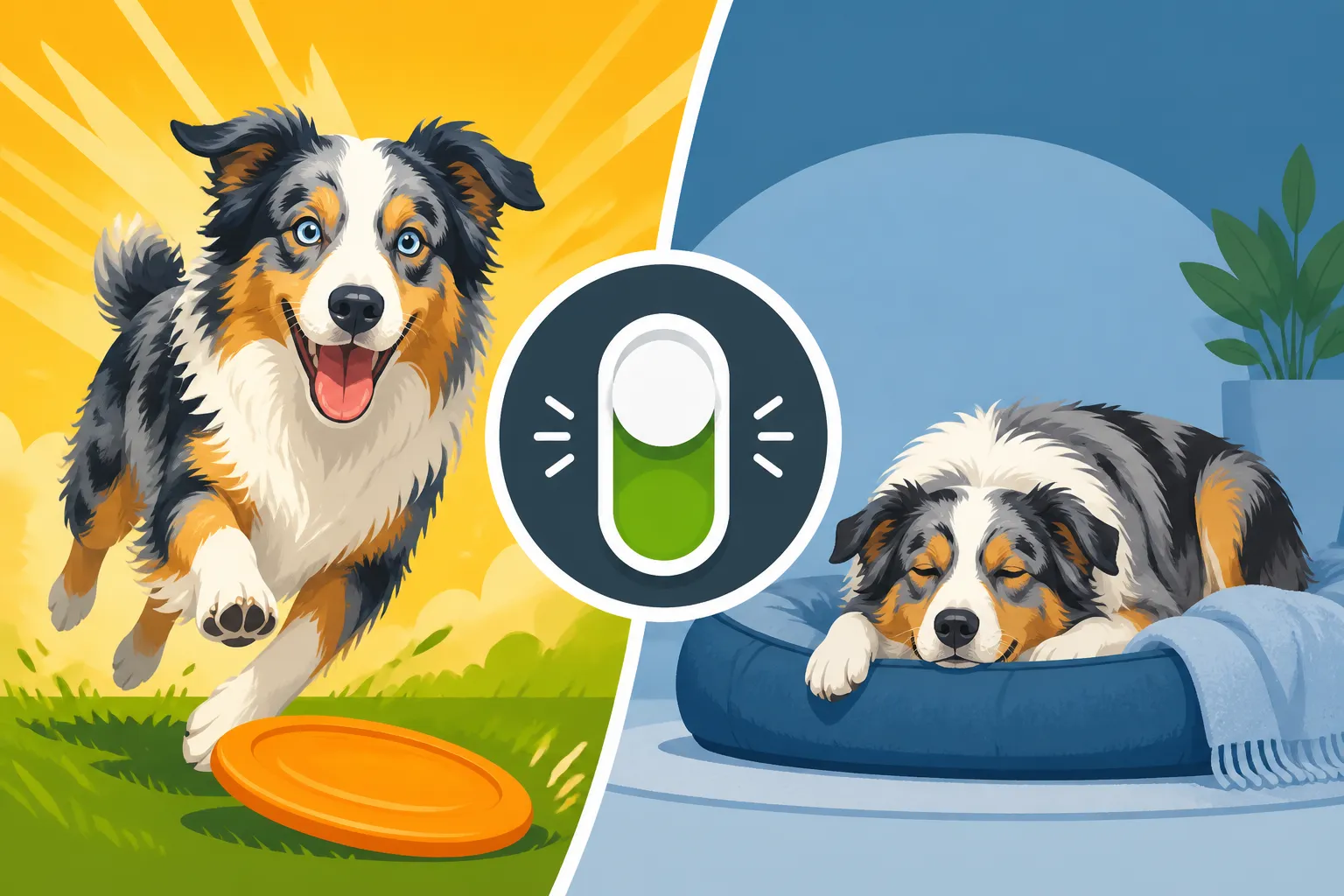
Think of it like this: your Aussie has a battery. Instead of constantly charging and discharging it with erratic bursts of activity, you want to charge it fully with quality engagement, then allow it to slowly deplete during a period of enforced rest. This helps them learn to regulate their energy levels. After an intense session of disc or agility, don't immediately release them into free play indoors. Instead, guide them to a designated "calm" spot. This teaches them the important rhythm of work and rest.
The Power of the "Place" Command
The "place" command is arguably one of the most powerful tools in an Aussie owner's arsenal for building an off switch. It teaches your dog to go to a specific spot (a mat, a dog bed, a raised cot) and remain there calmly until released. This isn't just about obedience; it's about teaching them to be still and quiet in the midst of household activity. Start in a low-distraction environment and gradually increase the duration and distractions. Reward heavily for calm demeanor, not just for staying on the mat.
Practicing "place" during dinner prep, while watching TV, or when guests arrive, helps your Aussie understand that they don't need to be involved in everything. It gives them a job – the job of relaxing – which satisfies their inherent need for purpose in a constructive, calming way. Many owners find online training resources helpful for this, like those from BAXTER & Bella, which often emphasize foundational commands like "place" for building self-control. This command is a foundational building block for their ability to self-regulate and manage their own arousal levels. For more on calm training, refer to Mat Settle Training for a Restless Aussie.
Enforced Relaxation Protocols
Sometimes, even with "place," an Aussie might still be buzzing with energy, demand barking, or finding small ways to stay "on." This is where enforced relaxation protocols come in. This often involves scheduled crate time, especially after intense activity. The crate, when introduced positively, becomes their quiet den, a place where the expectation is rest and sleep. It removes them from environmental stimuli that might keep their brains whirring.
Another protocol involves simply tethering them to you (on a short leash) while you work or relax, but ignoring any attempts to solicit attention. They learn that being near you doesn't always mean interaction. This forces them to find internal calm. During these enforced downtimes, provide appropriate, long-lasting chews or puzzle toys to engage them mildly, but avoid high-energy toys. This teaches them to settle, even when they might prefer to be chasing a ball. For practical advice on managing overtired puppies, Enforced Naps for an Overtired Aussie Puppy is an excellent resource.
Tools and Techniques for Promoting Relaxation
Beyond structured training, there are specific tools and techniques that can aid in helping your Australian Shepherd develop their off switch. These aren't magic bullets, but they can support your efforts and make the process smoother for both of you.
Calming Aids and Enrichment Toys
Sometimes, an Aussie just needs a little extra help to decompress. Calming aids, like thunder shirts or gentle compression wraps, can provide a sense of security for some dogs. Natural calming supplements, often containing ingredients like L-Theanine or chamomile, might be discussed with your vet as an adjunct, especially for dogs with high baseline anxiety. However, these are supportive, not replacements for training.
Enrichment toys, particularly those that involve licking or chewing, are incredibly calming for dogs. Lick mats with peanut butter or yogurt, KONGs stuffed with frozen treats, and bully sticks or similar long-lasting chews can keep them quietly engaged for significant periods. These activities release endorphins, which have a natural calming effect. Stock up on a variety of these on Amazon, so you always have something new to offer when you need your Aussie to settle. Puzzle Feeders and Enrichment Gear for an Australian Shepherd offers more ideas for engaging toys.
| Type of Tool/Technique | Description | Benefits for Aussie's Off Switch | Considerations |
|---|---|---|---|
| "Place" Command | Dog goes to and stays on a designated mat/bed. | Teaches self-control, creates a safe space for calm. | Requires consistent training; start in low distraction. |
| Enforced Crate Time | Scheduled periods of rest in a comfortable crate. | Removes visual/auditory stimuli, promotes sleep. | Crate must be a positive space; gradual introduction. |
| Lick Mats/Stuffed KONGs | Food-filled toys requiring licking/chewing. | Calming endorphin release, mental engagement without arousal. | Choose appropriate size/durability; can be messy. |
| Tethering | Dog is leashed to you, ignored unless calm. | Teaches passive presence; no attention for demand behaviors. | Requires handler patience; ensure dog is comfortable. |
| Calming Supplements | Natural ingredients like L-Theanine or chamomile. | May reduce anxiety, support relaxation. | Consult vet first; not a substitute for training. |
Leash Pressure and Boundary Training
Effective leash training goes hand-in-hand with teaching an off switch. A loose-leash walk isn't just about manners; it's about teaching your Aussie to walk calmly beside you, ignoring distractions and regulating their pace. Consistent, gentle leash pressure can be used to communicate "slow down" or "don't pull," which extends to their general energy regulation. This physical connection helps ground them and keeps their focus on you, rather than the stimulating world around them.
Boundary training, whether it's teaching them to stay behind a certain line in the house or using baby gates, also helps define acceptable spaces for their energy. When they understand that the kitchen is your space while you cook, and their bed is their space for quiet time, it reduces the constant push-and-pull for attention and involvement. This kind of clear communication, combined with positive reinforcement, helps them learn where and when their high energy is welcome, and where and when calmness is expected. This also helps with issues like Australian Shepherd Reactivity and Overarousal by managing their environment.
Managing Overarousal and Frustration
Australian Shepherds are incredibly sensitive and intelligent, which means they can quickly become overaroused or frustrated if their needs aren't met or if they're constantly exposed to high-stimulus environments without breaks. Learning to recognize these states and proactively manage them is crucial for fostering an off switch.
Recognizing the Signs of Overstimulation
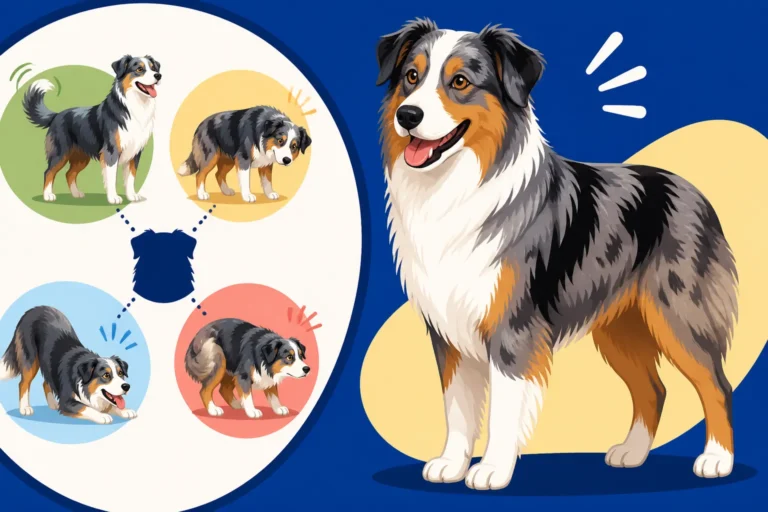
It's easy to mistake an overstimulated Aussie for one that's just "being an Aussie." However, there are subtle (and not-so-subtle) signs that your dog is reaching their limit. These might include:
- Excessive panting when not hot or exercising.
- Zoomies that seem uncontrolled or frantic.
- Excessive mouthing or nipping, even if gentle.
- Increased demand barking or whining.
- Difficulty focusing on known commands.
- Hyper-vigilance, constantly scanning the environment.
- A heightened startle response to normal sounds.
- Frantic sniffing or pacing.
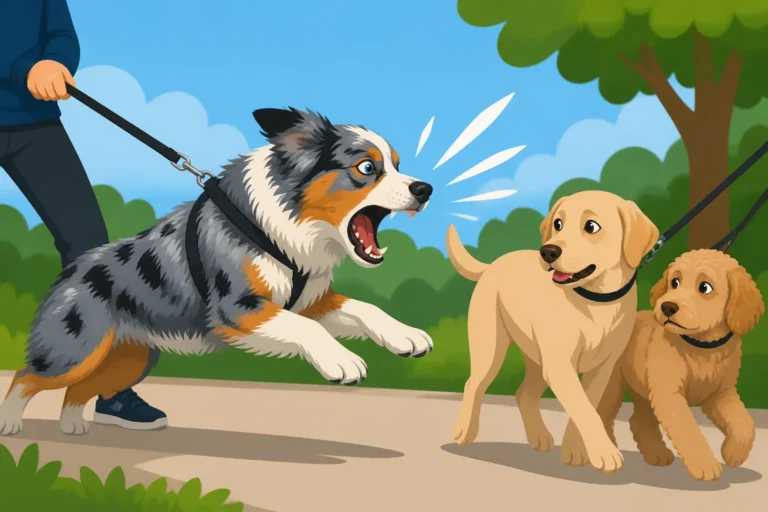
If you notice these signs, it's not the time for more fetch or a run. It's time for a forced break. Trying to push through or add more stimulation will only make it harder for them to switch off later. Think of it as hitting the "reset" button before they completely meltdown. Early intervention prevents them from practicing being over-the-top. Many Australian Shepherd owners report The Aussie Traits Owners Mention Most often include this tendency for overarousal.
Redirection and De-escalation Strategies
Once you recognize the signs of overarousal, your goal is to de-escalate the situation. The first step is often to change the environment. If you're in a busy park, move to a quieter area or head home. If they're over-the-top indoors, lead them gently to their crate or "place" with a calming chew. The key is to redirect their intense energy into a calm activity, rather than fighting against it.
Avoid engaging in tug-of-war or fetch if they're already too hyped up, as this can reinforce the high-arousal state. Instead, offer a lick mat, a sniff puzzle, or a slow-feeding bowl. Sometimes, simply putting a leash on them and walking them to their "place" can help, as the physical act of moving to a specific spot for quiet time becomes a learned cue for relaxation. Consistency in these strategies will eventually teach your Aussie that when things get too much, there's a predictable path back to calm.
The Long-Term Commitment to an Off Switch
Teaching an Australian Shepherd an off switch isn't a weekend project; it's a marathon. Their natural inclinations are strong, and while they are incredibly intelligent, changing deeply ingrained behaviors requires patience, consistency, and a willingness to adapt your approach over time.
Consistency is Key
Just like teaching any other command, the "off switch" needs daily reinforcement. It means consistently applying your routine, always asking for calm in certain situations, and never letting their antics slide "just this once." Every time you allow your Aussie to demand bark for attention, or pace incessantly without redirection, you're reinforcing the idea that these behaviors work. It's not about being harsh; it's about being clear and unwavering in your expectations for calm.
Think of it as building a new habit for your dog. It takes repetition, positive reinforcement for the desired behavior (calmness), and gentle but firm redirection away from unwanted behaviors. All members of the household need to be on the same page. A well-structured training program, such as the kind offered by BAXTER & Bella, can provide a consistent framework and ongoing support for teaching these vital life skills. Remember, your Aussie thrives on consistency, so the more predictable you are, the faster they'll learn.
Adjusting as Your Aussie Ages
An Australian Shepherd's energy levels and capacity for self-regulation can change throughout their life. A puppy might need frequent enforced naps and shorter, more intense training bursts. Adolescents (typically between 8 months and 2 years) often experience a "teenage rebellion" phase where their off switch seems to vanish entirely, despite previous training. This is a normal part of development and requires renewed patience and consistency.
As your Aussie moves into adulthood and then their senior years, their physical energy might decrease, but their mental drive often remains strong. You might need to adjust their exercise routine to focus more on mental enrichment and less on strenuous physical activity that could strain aging joints. However, the need for a well-practiced off switch will always be there. Continue to reinforce their "place" command, provide calming chews, and maintain a predictable routine. Learning to relax is a lifelong skill that benefits both you and your wonderful, hardworking Australian Shepherd. For guidance on senior care, consider Senior Australian Shepherd Care After Ten.
Disclaimer
This article is for general informational purposes only and does not constitute professional advice. Laws, prices and regulations vary by location and change over time. Consult a qualified professional for guidance on your specific situation.