Australian Shepherd Noise Sensitivity and Startle
One of the most common, yet often misunderstood, challenges Australian Shepherd owners face is their dog's profound noise sensitivity and tendency to startle at unexpected sounds. If your brilliant Aussie jumps at every distant siren, cowers from thunder, or barks furiously at the neighbor's leaf blower, you're not alone in feeling frustrated and a bit helpless. This guide will walk you through why your sensitive herder reacts this way and offer practical, empathetic strategies to help your Australian Shepherd find more peace in a noisy world.
Understanding Australian Shepherd Noise Sensitivity
It’s easy to dismiss a dog’s reaction to noise as just being "scaredy-cat," but for Australian Shepherds, their heightened awareness to sound is deeply ingrained in their very nature. It's not a flaw; it's often a byproduct of traits that make them such exceptional working dogs.
The Root of the Problem: Herding Instinct and Alertness
Australian Shepherds were bred for generations to be vigilant guardians and precise herders. On a ranch, their keen senses were essential. They needed to hear the faintest bleat of a lamb, the distant approach of a predator, or the crack of a branch to perform their duties effectively. This hyper-awareness of their environment, including auditory cues, is a survival mechanism. They are always "on," constantly processing sensory input to ensure the safety of their flock and territory.
This deep-seated herding instinct means they are predisposed to be exceptionally observant. Every shift in the environment, every new sound, is evaluated for potential meaning – Is it a threat? Is it something I need to manage? This constant evaluation can be exhausting and, in a human world full of unpredictable noises, overwhelming. What seems like a minor, everyday sound to us, like a car backfiring or a child screaming playfully, can trigger their ingrained alert system, leading to an immediate and often exaggerated startle response. It's a fundamental part of Why Herding Instinct Is the Aussie Operating System.
Common Noise Triggers for Aussies
The list of sounds that can trigger an Australian Shepherd's sensitivity is vast and highly individual. While some dogs might be unfazed by fireworks, others might be terrified of the kitchen blender. However, there are some common culprits that tend to send many Aussies into a spiral of anxiety or alert barking.
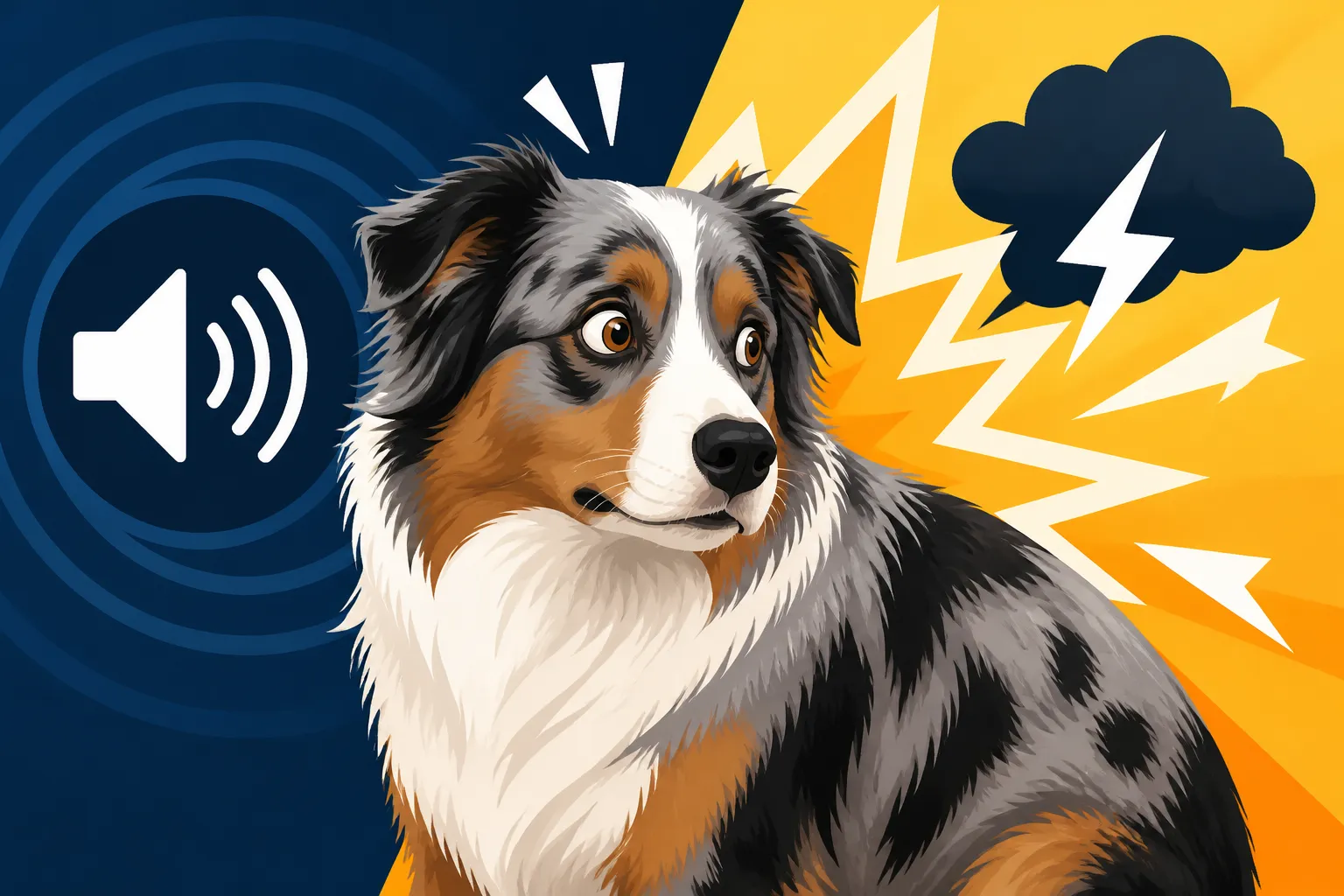
Loud, sudden noises are almost universally problematic. Think thunderstorms, fireworks, gunshots, or even a dropped pan. These abrupt sounds can mimic danger signals they would instinctively respond to. But it's not just volume; frequency and unpredictability play a huge role. Things like construction noises – jackhammers, saws, heavy machinery – can be a constant, grinding source of stress. The whirring of a vacuum cleaner, the rumble of a passing truck, or even the distinct tone of a doorbell can become a trigger. For some Aussies, it's specific frequencies or patterns, like the high-pitched squeal of children playing or the rhythmic beat of certain music. The constant barrage of urban sounds, from sirens to garbage trucks, means many pet Aussies are living in a perpetual state of low-level stress, always waiting for the next "threat" sound.
Recognizing the Signs of Fear and Stress
Understanding your Aussie's body language is critical when dealing with noise sensitivity. It's not always obvious, and sometimes subtle cues can escalate quickly. An Aussie experiencing stress or fear due to noise might exhibit a range of behaviors, from mild anxiety to full-blown panic.
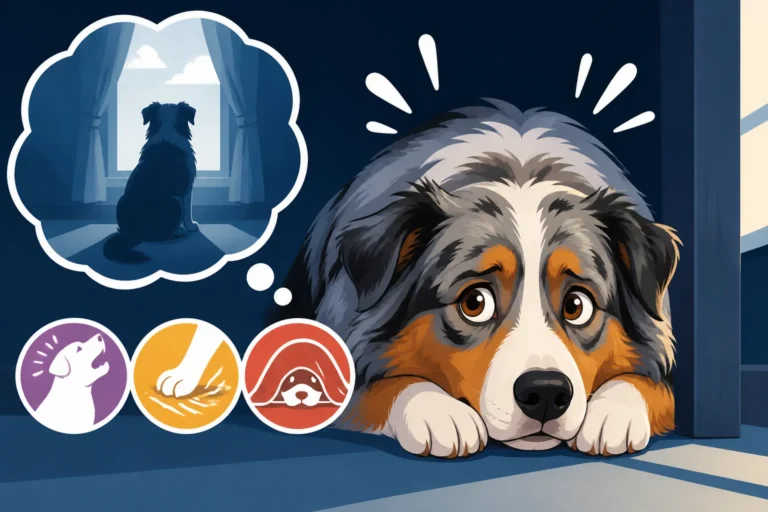
Initially, you might see subtle signs: ears swiveling constantly, head turning towards the sound source, a slight stiffening of the body, or rapid eye movements. They might lick their lips, yawn excessively, or try to hide under furniture or behind you. As the stress intensifies, you could observe panting, drooling, pacing, whining, or shaking. Some Aussies will resort to destructive chewing or house-soiling. In extreme cases, they might try to bolt and escape, potentially injuring themselves, or they could become defensive, growling or even snapping if cornered and unable to flee. It’s important to distinguish between simple curiosity and genuine fear; curiosity often involves relaxed body language, whereas fear cues will be tense and avoidant. Recognizing these early warning signs allows you to intervene before the fear escalates into a full-blown panic attack.
Why Aussies Are Prone to Startle and Reactivity
Beyond their herding lineage, several factors contribute to an Australian Shepherd's tendency to startle and react intensely to noise. It's a complex interplay of genetics, early life experiences, and how they perceive their environment.
Hyper-Vigilance and Environmental Awareness
The same traits that make an Australian Shepherd an outstanding working partner can lead to challenges in a pet home. Their hyper-vigilance means they are constantly scanning, listening, and assessing their surroundings. This isn't just about big, obvious threats; it's about every subtle change in their environment. Imagine constantly feeling like you need to be on guard, picking up every shift in air pressure, every flicker of light, and every distant whisper. That's often what it's like for a hyper-vigilant Aussie.
This heightened environmental awareness means they process more sensory information than many other breeds. While this makes them incredibly smart and adaptable in a controlled working environment, it can be overwhelming in a chaotic human household or a busy urban setting. Their brains are working overtime, trying to make sense of a world that is often too loud and unpredictable. This constant state of alert can lead to overarousal and, eventually, a quick startle response when a new, unexpected sound breaks through their already high level of sensory input. This can easily manifest as Australian Shepherd Overarousal and Frustration.
The Impact of Early Experiences and Genetics
Just like people, a dog's early life experiences play a massive role in shaping their temperament and reactions to the world. A puppy raised in a quiet, isolated environment might be more prone to startle later in life because they weren't adequately exposed to a variety of sounds in a positive way during their critical socialization period (roughly 3 to 16 weeks). Imagine a puppy that never heard a vacuum cleaner or a fire truck until it was six months old – the first encounter could be terrifying. Proper Socializing an Aussie Puppy Off the Farm is crucial for building resilience.
Genetics also plays a significant part. Anxiety, including noise phobias, can have a hereditary component. If an Aussie's parents or grandparents were particularly anxious about sounds, there's a higher chance their offspring will inherit that predisposition. A responsible breeder will often screen for temperament, but even with the best intentions, some genetic predispositions can surface. It's why inquiring about the temperament of a puppy's lineage is so important when choosing a breeder.
How Noise Phobia Develops Over Time
Noise sensitivity isn't always something an Aussie is born with fully formed. It often develops and intensifies over time, sometimes subtly at first, then growing into a debilitating phobia. What might start as a mild startle response to a distant firework can, with repeated negative experiences, morph into a full-blown panic attack at the sight of rain clouds (because rain often precedes thunder).
Each time an Aussie has a fearful reaction to a sound, it reinforces that sound as a threat in their mind. The brain creates stronger associations: loud bang = danger. This process is called classical conditioning. If the dog is also unable to escape or cope with the sound, the anxiety can generalize, meaning they start reacting to similar sounds or even precursors to the sound. For example, the scent of smoke might trigger fear of fireworks, or the dimming light before a storm might induce panic. Without intervention, these fear responses become ingrained habits, incredibly difficult to reverse, and can significantly impact the dog's quality of life. The severity of noise phobias can vary widely, from mild discomfort to extreme terror that requires significant management.
Strategies for Managing Noise Sensitivity
Managing an Australian Shepherd's noise sensitivity requires a multi-faceted approach, combining environmental management with gradual desensitization and counter-conditioning. It’s about being proactive and creating a supportive environment.
Creating a Safe and Quiet Space
One of the most immediate and impactful things you can do for a noise-sensitive Aussie is to provide them with a designated safe space where they can retreat when sounds become overwhelming. This isn't about punishment; it's about sanctuary.
This safe space should be a den-like area, perhaps a crate covered with a blanket, a small room, or a quiet corner under a desk. The key is that it's a place where they feel secure and can dampen external sounds. Introduce this space positively, making it comfortable with soft bedding, favorite toys, and high-value treats. Never force them into it. During anticipated noisy events (like a fireworks display or a storm), guide them to their safe haven. You can further help by using white noise machines, fans, or calming music to mask disruptive sounds. Some owners even use specialized calming beds or covered crates from brands found on Amazon designed to create a sense of security. The goal is to give your Aussie an "off switch" from the constant sensory input, a place where they know they can relax and feel protected.
Desensitization and Counter-Conditioning Techniques
These are the cornerstones of long-term behavioral modification for noise phobias. The goal is to gradually expose your Aussie to their trigger sounds at a very low intensity, while simultaneously creating a positive association with those sounds.
Desensitization means slowly increasing exposure. Start with recordings of the trigger sound played at an almost imperceptible volume. Play it so quietly that your Aussie doesn't even react. Over days or weeks, very, very slowly increase the volume, making sure your dog remains relaxed. If they show any signs of stress, you've gone too far, too fast, and need to reduce the volume again. This is a marathon, not a sprint.
Counter-conditioning involves changing your dog's emotional response. While playing the soft trigger sound, give your Aussie high-value treats or engage them in a favorite game. The idea is to pair the once-feared sound with something wonderful. So, when they hear the sound, they think "Oh, good things happen!" instead of "Danger!" Consistency is key here. You are literally rewiring their brain's emotional response. Think of it as Building Sound Confidence in an Aussie Puppy but for an adult dog. This technique can be tricky and may require patience and careful observation.
Using Environmental Aids and Tools
Beyond creating a safe space and structured training, there are various tools and aids that can help support your noise-sensitive Australian Shepherd. These aren't magic bullets, but they can be valuable components of a comprehensive management plan.
Calming pheromone diffusers or sprays can release synthetic appeasing pheromones that mimic those produced by a lactating mother dog, often having a calming effect. Compression garments, like ThunderShirts, apply gentle, constant pressure, which can have an anti-anxiety effect similar to swaddling a baby. You can find many of these calming products on Amazon. For some dogs, specialized ear protection, like Mutt Muffs, can help significantly reduce the intensity of sounds, though getting an Aussie comfortable wearing them takes time and positive association. Enrichment toys, especially puzzle feeders, can help distract an Aussie during mild noise events by engaging their brain in a positive activity. Providing Puzzle Feeders and Enrichment Gear for an Aussie can shift their focus away from external sounds. Remember to introduce any new tool gradually and positively so your Aussie associates it with comfort, not further stress.
| Aid/Tool | Purpose | Best Use Case | Introduction Strategy |
|---|---|---|---|
| Covered Crate/Safe Space | Physical refuge, sound dampening | Anticipated noisy events (storms, fireworks) | Positive association with treats/toys, never force |
| White Noise Machine/Fan | Masks harsh sounds, creates consistent hum | Ongoing environmental noise (traffic, neighbors) | Turn on quietly, increase volume gradually |
| Calming Pheromone Diffuser | Chemical calming signals | General anxiety, new environments, anticipated stress | Plug in beforehand, allow time to work |
| Compression Garment | Gentle pressure for security | Acute anxiety (storms, vet visits) | Wear for short periods, pair with treats, increase duration |
| Ear Protection (e.g., Mutt Muffs) | Reduces sound intensity | Loudest events (gunfire, concerts) | Introduce slowly with treats, make it a positive experience |
| Puzzle Feeders | Mental distraction, positive association | Mild noise, general anxiety management | Offer favorite treats/meals during calm times, then during mild noise |
Training and Behavior Modifications for Noise Startle
While environmental management provides immediate relief, long-term success often lies in teaching your Australian Shepherd coping mechanisms and building their overall confidence. This is where targeted training comes in.
Building Confidence Through Positive Reinforcement
A confident dog is often a less reactive dog. When an Aussie feels secure in their abilities and their environment, they are less likely to be overwhelmed by external stimuli like loud noises. Positive reinforcement training is crucial for fostering this confidence.
Focus on teaching and rewarding basic obedience commands in various environments, gradually increasing distractions. Commands like "sit," "stay," "down," and "come" provide structure and give your Aussie a sense of control, which can reduce anxiety. Teach them "settle" on a mat or bed, rewarding calm behavior generously. This gives them an active way to de-stress. Incorporate fun, engaging activities like Australian Shepherd Agility and Disc Sports or Australian Shepherd Scent Work Titles. These activities tap into their natural intelligence and drive, providing mental and physical stimulation that builds self-assurance. Every successful training session, every trick learned, reinforces their sense of capability and strengthens their bond with you, making them feel more secure in the world.
Teaching an Aussie to "Look" or "Settle"
Specific commands can be invaluable tools for diverting your Aussie's attention away from a looming noise trigger and helping them regain composure. Two particularly useful commands are "Look" (or "Watch Me") and "Settle."
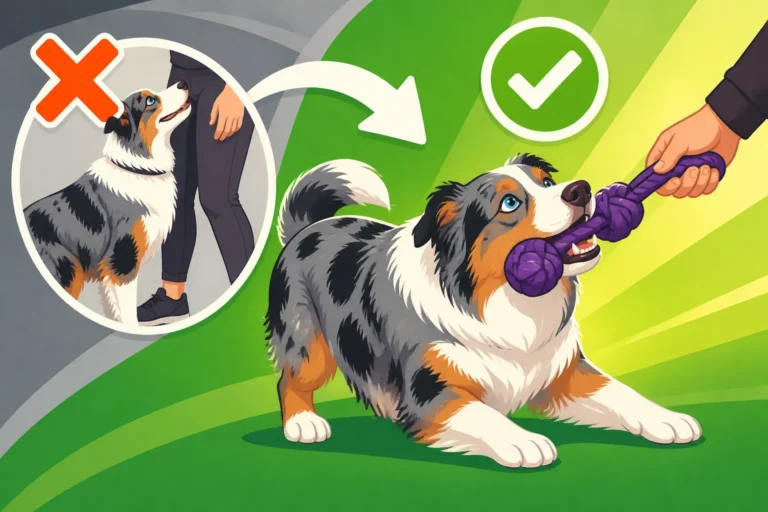
"Look" or "Watch Me": This command teaches your dog to make eye contact with you on cue, regardless of distractions. Start in a quiet environment, holding a treat near your eye. Say "Look" or "Watch Me," and when your dog makes eye contact, immediately reward them. Practice this frequently, gradually adding minor distractions, then louder sounds. The goal is that when a sound startles them, you can say "Look," and they immediately turn their attention to you, breaking their focus on the trigger. This gives you a precious moment to re-engage them or move them to a safer space.
"Settle": This command teaches your Aussie to calmly lie down and relax in a designated spot, even amidst mild distractions. Again, start in a quiet area. Lure your dog into a down position on a mat or bed, then reward them for remaining calm. Gradually extend the duration and introduce very low-level sounds. The idea is to give them a coping mechanism: "When things get noisy, I go to my spot and settle, and good things happen." This is about giving them agency and a predictable response to unpredictable stressors. BAXTER & Bella offers excellent online resources that walk you through step-by-step training for commands like "settle," focusing on positive, confidence-building methods, which can be a huge asset for owners of noise-sensitive dogs.
Working with a Professional Trainer
While many strategies can be implemented at home, some Australian Shepherds with severe noise sensitivity or phobias will benefit immensely from the guidance of a qualified professional trainer or a veterinary behaviorist.
These experts have specialized knowledge in canine behavior and can offer tailored strategies that might be too complex for a novice owner to implement alone. A professional can accurately assess the root cause of your Aussie's fear, identify specific triggers you might have missed, and design a precise desensitization and counter-conditioning plan. They can also teach you advanced handling techniques, help you improve your observation skills, and provide support when you encounter setbacks. Look for trainers who use positive reinforcement methods and have experience with fear-based reactivity. A certified professional can be found through organizations like the Certification Council for Professional Dog Trainers (CCPDT). Don't hesitate to seek professional help; it's an investment in your Aussie's well-being and your peace of mind. Remember, Finding a Trainer Who Understands an Aussie is paramount, as general obedience trainers may not grasp the unique nuances of herding breed temperament.
When to Seek Veterinary Advice
Sometimes, noise sensitivity goes beyond behavioral quirks and requires medical evaluation. It's important to know when to consult your veterinarian or a veterinary behaviorist.
Identifying Extreme Anxiety and Phobias
If your Australian Shepherd's reactions to noise are severe – involving uncontrolled shaking, profuse drooling, house-soiling, destructive behavior, frantic attempts to escape, or complete shutdown – it's likely they are experiencing extreme anxiety or a true phobia. These are not behaviors they can simply "snap out of." A dog in a phobic state is in genuine terror, and repeated exposure to such stress can have serious long-term health implications, including chronic stress, weakened immune system, and exacerbation of other behavioral issues.
If you observe these extreme reactions, a visit to your veterinarian is crucial. They can help differentiate between common anxiety and a clinical phobia, which may require a more intensive approach than just behavioral modification. They might also suggest working with a board-certified veterinary behaviorist, who is a veterinarian with advanced training in animal behavior. These specialists can offer comprehensive diagnostic and treatment plans, often integrating both behavioral therapies and, when appropriate, medication. Ignoring extreme anxiety can worsen the problem and severely impact your Aussie's quality of life.
Discussing Medication Options with Your Vet
For Australian Shepherds suffering from severe noise phobias, behavioral modification alone might not be enough, or it might be too difficult to implement effectively if the dog is constantly on the brink of panic. In such cases, your veterinarian might discuss medication as part of a holistic treatment plan.
Medications are not a "cure-all" but can be incredibly helpful in reducing your Aussie's anxiety to a level where behavioral techniques become more effective. There are several types of medications available, ranging from short-acting anxiolytics given specifically for anticipated events (like storms or fireworks) to daily anti-anxiety medications that help manage chronic stress. Your vet will consider your dog's overall health, the severity of their symptoms, and any other medications they might be taking (especially if your Aussie has The MDR1 Mutation Half of Australian Shepherds Carry, as certain drugs need careful consideration). The goal is often to use medication to lower the dog's baseline anxiety, making them more receptive to learning new, calmer responses through desensitization and counter-conditioning. It’s a tool to facilitate training, not replace it.
Ruling Out Underlying Medical Conditions
Before attributing all noise sensitivity to behavioral issues, it's vital to rule out any underlying medical conditions that could be contributing to or exacerbating your Australian Shepherd's reactions. Sometimes, a physical problem can manifest as behavioral changes.
Pain, for example, can make a dog more irritable, fearful, and less tolerant of startling noises. An Aussie with joint pain from Australian Shepherd Hip Dysplasia and Working Joints might startle more easily if a loud noise causes them to tense up and experience increased discomfort. Neurological issues, even subtle ones, can also affect how a dog processes sensory information and reacts to stimuli. Rarely, an undetected ear infection or other ear condition could make certain sounds painful, leading to a strong avoidance reaction. Your vet will perform a thorough physical examination, and potentially recommend blood work or other diagnostics to ensure there isn't a medical reason behind the heightened sensitivity. It’s always best to address any potential physical ailments first, as resolving them might significantly improve your Aussie's comfort and reduce their noise-related stress.
Disclaimer
This article is for general informational purposes only and does not constitute professional advice. Laws, prices and regulations vary by location and change over time. Consult a qualified professional for guidance on your specific situation.