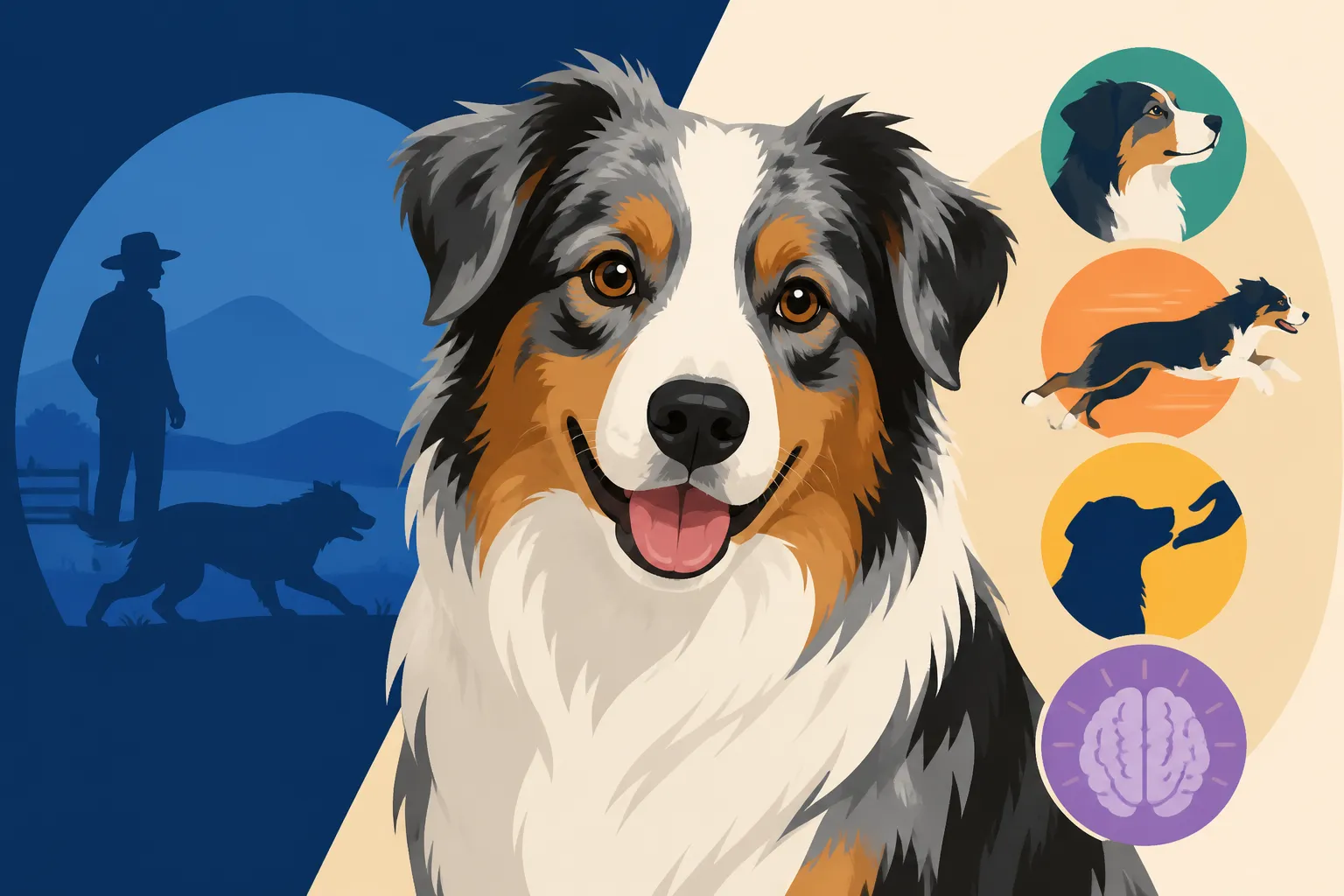
What the Standard Says About Aussie Temperament
It's easy to be charmed by the striking eyes and beautiful coats of an Australian Shepherd and imagine them as a calm, easygoing companion. However, many new owners quickly find themselves overwhelmed when their gorgeous dog turns out to be a whirlwind of energy with an insistent personality. This guide will dive deep into the official Australian Shepherd breed standard, specifically what it says about their temperament, helping you understand the true nature of these intelligent, driven dogs before you bring one into your life.
Understanding the Australian Shepherd Temperament Standard: A Foundation
When we talk about a breed standard, we're not just discussing pretty pictures of dogs. It's a comprehensive document that describes the ideal characteristics of a breed, covering everything from their physical appearance to their movement and, critically, their temperament. For the Australian Shepherd, this standard, typically set by organizations like the Australian Shepherd Club of America (ASCA) or the American Kennel Club (AKC), is a blueprint for what a true Aussie should be. It outlines the mental and emotional makeup that allows them to excel in their historical role as working herding dogs.
Many people only skim the physical descriptions, focusing on coat color or eye markings, but the temperament section is arguably the most vital. It tells you exactly what kind of canine partner you're getting, revealing the instincts, intelligence, and energy levels that are inherent to the breed. Ignoring this part of the standard can lead to significant mismatches between owner expectations and the dog's reality, often resulting in frustrated dogs and owners. Understanding this foundational temperament is the first step in providing a fulfilling life for your Aussie.
Why Temperament is Crucial for the Working Breed
The Australian Shepherd was developed to be a highly functional working dog, often spending long days herding livestock in diverse environments. This isn't a breed that was created for lounging on a couch all day, though they can certainly enjoy downtime after their needs are met. Their very purpose required a specific set of mental and emotional attributes: intelligence, an eagerness to please, attentiveness, and a certain level of independence to make decisions in the field. They needed to be resilient, quick-thinking, and courageous, but also amenable to direction from their handler.
Think about a ranch setting: an Aussie might be asked to gather a scattered flock, drive stubborn cattle, or keep an eye on perimeter fences. These tasks demand intense focus, problem-solving skills, and stamina, both physical and mental. The breed standard, therefore, prioritizes these qualities. It's why they are described as intelligent and eager to please, often demonstrating a strong desire to have a job. When these innate drives aren't channeled appropriately, they don't just disappear; they manifest in ways that can be challenging for a pet owner, like herding children, nipping at heels, or finding "jobs" like reorganizing your sock drawer. This is why you'll often hear that The Australian Shepherd Herding Drive You Cannot Train Out is a core part of their identity.
Avoiding Common Misinterpretations
It's easy to misinterpret sections of the breed standard if you're not familiar with the nuances of working dog language. For instance, the standard often describes Aussies as "reserved with strangers." To a new owner, this might sound like a calm, quiet dog who will politely ignore guests. However, in an Aussie, "reserved" is far from aloof or shy. It means they are often discerning and take time to assess new people and situations rather than being instantly effusive or overly friendly. They are observant and protective of their family and territory, which means they might be wary or watchful rather than indifferent.
This reservation can sometimes be mistaken for shyness or even aggression if not properly understood or managed. A truly shy or aggressive Aussie is considered a fault under the standard because it hinders their ability to work effectively. An ideal Aussie should be confident and self-possessed, even if they aren't greeting every new person with an open paw. They should be approachable without being overly exuberant. Understanding this distinction is key to socializing your Aussie properly and setting realistic expectations for their interactions with the world. You might find that Why an Australian Shepherd Reserves Itself With Strangers provides more insight into this specific trait.
Key Traits Defined by the Standard: What to Expect
The Australian Shepherd breed standard lays out a clear picture of what constitutes a desirable temperament. It emphasizes intelligence, a strong work ethic, and a balanced disposition. These aren't just buzzwords; they represent the genetic blueprint that defines an Aussie's personality and how they interact with their environment. If you're considering bringing an Australian Shepherd into your home, understanding these core traits is paramount for a harmonious relationship.
Intelligence and Eagerness to Please
The standard consistently highlights the Australian Shepherd's intelligence. These aren't dogs that are content with simply existing; they thrive on mental stimulation and learning. They are quick to pick up new commands and problem-solve, often appearing to anticipate your next move. This high intelligence is coupled with a deep "eagerness to please" their handler. They want to work with you, to understand what you want, and to execute it. This combination makes them highly trainable, but it's a double-edged sword. An intelligent dog who wants to please will find a way to use their brain and energy, even if you don't provide a constructive outlet.
This means that training an Aussie is less about if they can learn and more about what they learn. If you're not actively engaging their minds with consistent training, puzzle toys, and new challenges, they might decide to train themselves in less desirable behaviors, like elaborate counter-surfing schemes or figuring out how to open doors. They crave interaction and direction. Providing them with opportunities to use their intelligence, such as advanced obedience, trick training, or dog sports, is not just a hobby; it's essential for their well-being. This is where high-quality, durable toys and training aids, easily found at places like Chewy, become indispensable tools in your daily routine.
Attentive, Lively, and Agile Nature
Another core aspect of the Aussie temperament outlined in the standard is their attentive, lively, and agile nature. These dogs are constantly observing their surroundings. Their attentiveness makes them excellent watchdogs, always aware of changes in their environment. They have a keen sense of observation, which contributes to their quick reactions and ability to adapt. This trait is a direct carryover from their herding roots, where a lapse in attention could mean lost sheep or injured livestock.
"Lively" doesn't just mean energetic; it also speaks to their inherent zest for life and their quick, fluid movements. They are always ready for action, whether it's a game of fetch, a training session, or a hike. Their agility is not just physical; it's mental too. They can switch tasks rapidly and respond to cues with precision. This combination means they require significant physical exercise, but even more importantly, they need structured, engaging activities that combine both body and brain. Simply letting them run around a yard won't cut it. They need a purpose, an activity that channels their natural drives. Many owners find that activities described in Australian Shepherd Sports From Herding to Agility are perfect outlets.
Discerning and Loyal
The standard also speaks to their discerning nature and strong loyalty to their chosen family. As mentioned, Aussies are often reserved with strangers, taking their time to size people up. This isn't a flaw; it's a protective instinct developed to guard their flock and family. Once they accept you, however, their loyalty is unwavering. They bond deeply with their owners and often become very attached, preferring to be close by. This loyalty extends to children and other pets within their established "flock," often making them excellent family dogs, provided their herding instincts are managed. You can read more about this in Australian Shepherd Loyalty to One Person.
However, this strong bond and discerning nature can sometimes lead to issues if not handled correctly. A loyal Aussie who isn't properly socialized can become overly protective or fearful of new experiences. Their discernment can lean into suspicion if they aren't introduced to a wide variety of people, places, and situations from a young age. Their loyalty means they thrive on being part of the family unit, so prolonged isolation or neglect can be particularly detrimental to their mental well-being, leading to anxiety or destructive behaviors.
Here's a quick overview of some key temperament traits from the standard:
| Trait | Standard Description | What it Means in Practice | Potential Challenges if Unmet |
|---|---|---|---|
| Intelligence | Highly intelligent, quick to learn, eager to please | Needs consistent mental challenges; excels in training, puzzle games | Destructive behavior, mischief, boredom barking, self-taught "bad" habits |
| Lively/Agile | Active, spirited, athletic, fluid movement | Requires significant physical exercise and structured activity beyond just free play | Hyperactivity indoors, nuisance barking, overarousal, Australian Shepherd Behavior Problems From Under-Exercise |
| Attentive | Observant, watchful, aware of surroundings | Good watchdog, quick to notice changes, easily engaged in work | Can be reactive to novel stimuli, noise sensitive, prone to alert barking |
| Reserved | Discriminating with strangers, not overly friendly or shy | Takes time to warm up to new people; protective of family | Can be perceived as aloof, may be wary of guests, requires early, positive socialization |
| Loyal | Devoted to family, forms strong bonds | Excellent family companion, enjoys being close to owners | Can develop separation anxiety, overly protective if not guided, struggles with frequent changes |
| Good-Natured | Even-tempered, sound character, not aggressive or shy | Generally stable and reliable temperament | Poor breeding or lack of socialization can lead to shyness or aggression, which are faults |
| Working Instinct | Strong herding drive, purpose-driven | Needs a "job," whether real herding, sports, or consistent training/enrichment | Heel nipping, circling, attempting to herd children or other pets, excessive barking at movement |
The "Aussie Bounce" and Why It's There: Energy and Drive
The breed standard implicitly, and often explicitly, acknowledges the Australian Shepherd's incredible energy and drive. This isn't just about needing a daily walk; it's about a fundamental need for purposeful activity that engages both their body and their sharp mind. This drive, often affectionately called the "Aussie bounce," is what makes them such phenomenal working dogs and athletes, but it's also the single biggest reason why many pet owners struggle with the breed.
When the standard mentions terms like "lively," "agile," and implicitly through its origin story, "working dog," it's telling you that this dog is not designed to be sedentary. Their energy isn't just physical; it's mental. They have an innate desire to do something, to engage, to solve problems, and to move. This isn't a character flaw; it's a defining feature of the breed, bred into them over generations of selective breeding for demanding ranch work.
Herding Drive: More Than Just a Cute Nudge
The most prominent aspect of an Aussie's inherent drive is their herding instinct. The standard doesn't just say they can herd; it defines them as a working herding dog. This means they possess an inborn desire to gather, control, and move things. This can manifest in various ways, from softly nudging people to trying to round up small children, other pets, or even household items. They see the world through the lens of a herder. A child running, a cat darting across the room, or even a vacuum cleaner can all trigger that deep-seated instinct.
Many first-time Aussie owners are completely unprepared for the intensity of this drive. It's not something you can train out of an Aussie, nor should you try. It's part of their identity. The goal is to redirect it into appropriate channels. This might involve enrolling in actual herding lessons, engaging in sports like Treibball (which simulates herding without livestock), or providing endless games of fetch and flirt pole play where they can chase and "gather" objects. Without such outlets, that powerful instinct can become a source of frustration for both dog and owner. Whether an Aussie Needs a Job to Be Calm explores this concept further.
The Need for Mental and Physical Engagement
The "lively" and "energetic" descriptions in the standard translate into a requirement for substantial daily exercise, but crucially, it must include mental engagement. An Australian Shepherd isn't satisfied with a solitary run in the backyard. They need to do things with you. This could be long hikes, vigorous games of fetch, agility training, disc dog, or even advanced obedience and trick training. The physical exercise needs to be challenging enough to burn off their boundless energy, but the mental work is just as important, if not more so, to satisfy their intelligent minds.
Think of it like this: a marathon runner still needs intellectual stimulation beyond just running. Similarly, an Aussie's mind needs to be tired just as much as its body. Puzzle toys, scent work, learning new tricks, or even just engaging in complex obedience routines can provide that critical mental workout. If their needs for physical and mental engagement aren't met, Aussies are prone to developing behaviors like excessive barking, destructive chewing, digging, anxiety, and even reactivity. A comprehensive range of enrichment items, from treat-dispensing toys to durable chew items, can be sourced from pet supply retailers like Chewy, helping owners meet these diverse needs. This is why Mental Work That Actually Tires an Australian Shepherd is so critical for their well-being.
Beyond the Standard: Nurturing a Well-Adjusted Aussie
While the breed standard provides an invaluable framework for understanding the Australian Shepherd's inherent temperament, owning one successfully goes beyond merely acknowledging these traits. It involves proactive measures, consistent effort, and a deep commitment to meeting the specific needs that arise from their unique genetic makeup. The goal isn't just to manage an Aussie, but to help them thrive and become a well-adjusted, confident, and joyful member of your family.
The standard describes the ideal temperament, but individual Aussies will still have their own personalities, influenced by genetics, early experiences, and ongoing training and socialization. Your role as an owner is to provide an environment that allows their best traits to flourish while gently guiding them through potential challenges.
The Importance of Early and Ongoing Socialization
The standard's mention of an Aussie being "reserved with strangers" highlights the critical need for comprehensive socialization from a very young age. This doesn't just mean exposing them to other dogs at the park. It means carefully introducing them to a wide variety of people of different ages, genders, and appearances, as well as different sights, sounds, textures, and environments. Positive, controlled experiences during their critical socialization window (roughly 3-16 weeks) are paramount.
Ongoing socialization throughout their lives is also essential to maintain their confidence and prevent them from becoming overly wary or fearful. Attending puppy classes, then moving on to advanced obedience or dog sports, can provide structured opportunities for positive exposure. Without adequate socialization, their natural reserve can tip into fear-based reactivity or suspicion, making them uncomfortable in new situations or around unfamiliar people. Remember, you want a discerning dog, not a fearful one. Socializing an Australian Shepherd Beyond the Farm offers more practical advice on this crucial aspect.
Consistent Training and Leadership
Given their intelligence and eagerness to please, Australian Shepherds thrive on consistent training and clear leadership. They want to know the rules, and they look to their owners for guidance. Establishing clear boundaries, consistent expectations, and using positive reinforcement methods are key. An Aussie who understands what's expected of them is a happy Aussie. Lack of structure or inconsistent training can lead to confusion and anxiety, which can manifest as behavioral problems.
Consider investing in professional training, especially if you're a first-time Aussie owner. A good trainer who understands the breed's working drive can help you channel their energy productively and teach you how to communicate effectively with your intelligent companion. They can help you address common Aussie challenges like Australian Shepherd Heel Nipping and How to Redirect It or Australian Shepherd Barking and Noise Sensitivity. Remember, your Aussie isn't trying to be difficult; they're trying to communicate, and it's your job to understand their language and provide the structure they need. While the cost of training can vary, articles like Australian Shepherd Training and Sport Costs can help you prepare.
Providing Appropriate Outlets for Drive
Perhaps the most crucial aspect of nurturing a well-adjusted Aussie is providing ample, appropriate outlets for their inherent drive. This means understanding that their energy isn't just a physical quantity to be burned off, but a mental one that needs engagement. Daily walks are a start, but they are rarely enough. These dogs need a job, even if that job is "fetch expert" or "agility star."
Look into dog sports like agility, flyball, disc dog, obedience, rally, or even nose work. These activities tap into their natural intelligence, athleticism, and desire to work with you. If organized sports aren't your thing, create your own "jobs" at home: teach them complex trick chains, play challenging hide-and-seek games with their favorite toys or treats, or engage them in long sessions with interactive puzzle feeders. The key is to be creative and consistent. An Aussie with a satisfied mind and body is a calm, content companion. If these needs are neglected, you might find yourself dealing with the fallout discussed in Australian Shepherd Behavior Problems From Under-Exercise.
Disclaimer
This article is for general informational purposes only and does not constitute professional advice. Laws, prices and regulations vary by location and change over time. Consult a qualified professional for guidance on your specific situation.