How Merle Works in an Australian Shepherd Coat
It's easy to get completely lost in the stunning beauty of an Australian Shepherd's coat. Those striking patches of diluted color, often coupled with piercing blue or marbled eyes, are what draw so many of us to this incredible breed. But that dazzling appearance, particularly the "merle" pattern, comes with a whole lot more complexity than meets the eye. Understanding how merle works in an Australian Shepherd coat isn't just about appreciating aesthetics; it's absolutely vital for their health and well-being. This guide will walk you through the fascinating genetics behind the merle pattern, explain its variations, and, most importantly, shed light on the serious health implications that irresponsible breeding can cause.
Understanding the Merle Gene The Basics
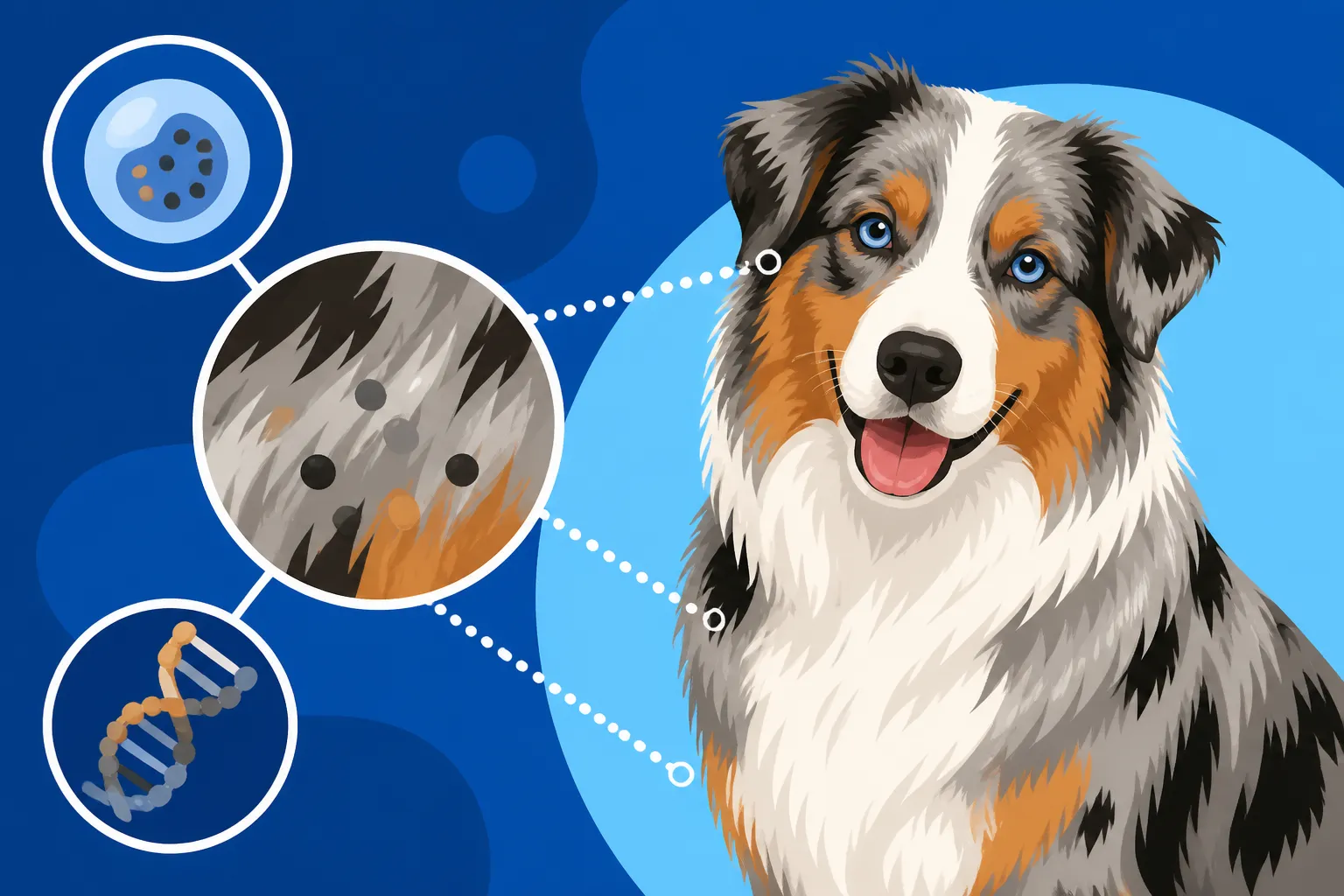
Before we dive into the gorgeous swirling patterns, let's get down to the nitty-gritty of what the merle gene actually is. It's not a color in itself, but rather a modifier gene that acts upon the dog's base coat color. Think of it like a dimmer switch for paint – it lightens and dilutes parts of the coat, creating those characteristic patches. Without understanding this fundamental principle, it's easy to misunderstand why certain color combinations or breeding practices can lead to significant problems.
What is the Merle Gene M Locus
The merle gene, scientifically known as the M Locus, is an incompletely dominant gene. What this means in plain English is that a dog only needs one copy of the merle gene (Mm) to display the merle pattern. If a dog doesn't have the merle gene (mm), it will have a solid coat color. If a dog inherits two copies of the merle gene (MM), that's where the serious issues begin, which we'll discuss later. This gene essentially disrupts pigment production in random areas of the coat, leading to irregular patches of diluted color mixed with areas of full, undiluted color.
For example, on a black base coat, the merle gene will dilute some of the black pigment to shades of grey, silver, or blue, leaving other patches completely black. On a red base coat, it will dilute parts of the red to lighter, creamy, or pinkish shades, with other areas remaining a rich red. It's this beautiful, unpredictable patchwork that makes each merle Australian Shepherd unique. Beyond the coat, the merle gene often affects eye and nose pigmentation too. Many merle Aussies have those captivating blue eyes, or "marbled" eyes that show streaks of blue and brown, or even two different colored eyes entirely, which is perfectly normal for a single merle. The nose and paw pads might also show pink patches where the merle gene has diluted the pigment.
The Different Alleles of the Merle Gene
The science behind the merle gene is more complex than just a simple 'M' or 'm'. Researchers have identified several different alleles (versions) of the merle gene, all stemming from variations in the length of a specific SINE insertion on a canine chromosome. These different lengths correlate to how much the pigment is diluted. The primary alleles we talk about are:
- m (non-merle): This is the recessive allele. Dogs with 'mm' genotype will have a solid coat and are not merle.
- M (merle): This is the classic merle allele that produces the distinct pattern. Dogs with 'Mm' display the merle pattern and are typically healthy, provided they are not double merle.
- Mc (cryptic merle): This allele has a shorter SINE insertion. Dogs with cryptic merle might show very little to no visible merle patterning, making them appear solid. This is incredibly deceptive for breeders, as a dog can look solid but still carry the merle gene, leading to accidental merle-to-merle breedings if not genetically tested.
- Md (diluted merle): Another shorter allele, often resulting in a very faint merle pattern.
- Ma (atypical merle): This allele produces a more subtle merle pattern, sometimes appearing as faint mottling or only visible in certain lighting.
- Mh (harlequin/heavy merle): This allele has a longer SINE insertion and often results in a more dramatic merle pattern with larger areas of diluted color and often more white.
The length of this genetic insertion directly impacts the extent of pigment dilution, and critically, the potential for associated health issues. For instance, an Aussie carrying one copy of the standard 'M' allele will have a beautiful, striking coat, and typically no merle-related health problems. However, if a dog is genetically 'Mh/Mh' or 'M/Mh', even without being a 'full' double merle (MM), there can still be a heightened risk of health complications due to the stronger dilution effect. This is why a simple visual inspection is often not enough; genetic testing is the only way to accurately determine a dog's merle genotype, especially for breeding purposes. Understanding these nuances is crucial for any responsible owner or breeder, ensuring the health and future of the breed. You can dive even deeper into the mechanics of this gene by exploring content like The Merle Gene and How It Dilutes Aussie Coat.
How Merle Interacts with Base Coat Colors
The merle gene doesn't create color out of thin air; it works its magic by interacting with the dog's underlying base coat color. In Australian Shepherds, these primary base colors are black and red (which is genetically liver). The way merle manifests visually is dramatically different depending on whether it's acting on a black or a red background. This interaction is what gives us the classic blue merle and red merle Aussies that are so widely admired.
Blue Merle Australian Shepherds
When the merle gene (M) acts upon a black base coat, the result is a stunning blue merle Australian Shepherd. Imagine starting with a solid black dog; now, apply the merle modifier. You'll see irregular patches of solid black pigment alongside areas where the black has been diluted to shades of grey, silver, or what many affectionately call "blue." These diluted areas can vary widely in shade and intensity, from light silver to a deep charcoal grey.
A typical blue merle Aussie will have distinct black patches, sometimes quite large, interspersed with the lighter "blue" areas. They often also display the classic copper or tan points (above the eyes, on the cheeks, chest, and legs), and white markings on the muzzle, blaze, chest, belly, and sometimes a full or partial collar. The combination of black, various shades of grey, copper, and white creates a truly eye-catching pattern. Many blue merles also boast striking blue eyes, or heterochromia (one blue, one brown eye), or marbled eyes where both colors are present within a single iris. Their noses and paw pads will often be primarily black, but may have some pink mottling in the merle areas. For more visual examples and in-depth descriptions of these captivating patterns, consider looking at Blue Merle Australian Shepherd Coat Patterns.
Red Merle Australian Shepherds
Similarly, when the merle gene (M) works on a red base coat, you get the equally beautiful red merle Australian Shepherd. Here, the merle gene dilutes the red (or liver) pigment. So, instead of black and grey, you'll see patches of solid, rich red alongside areas where that red has been lightened to shades of cream, light tan, or even a soft pinkish-orange. Just like with blue merles, these diluted areas are interspersed with patches of the full, undiluted red.
A red merle Aussie will showcase vibrant red patches, often deep liver or rusty tones, alongside the paler, diluted red areas. They will also typically have the same copper/tan points (though these blend more subtly with the red base) and white markings as their blue merle counterparts. Their eyes can also be blue, brown, amber, or marbled. However, red merle Aussies, due to their red base genetics, will always have liver-colored noses and paw pads, even in the solid red areas. The merle gene may cause some pink mottling within these liver-colored areas. The unique interplay of solid red, lighter red, copper, and white is truly magnificent. To understand the specifics of what gives these dogs their distinct reddish hues, you might find What Makes a Red Merle Aussie Red particularly insightful.
The Intricacies of Merle Expression and Variations
The merle gene isn't always a straightforward, obvious splash of color. Sometimes its expression is subtle, almost hidden, and other times it can create patterns that are so unique they lead to confusion. Understanding these more intricate expressions of merle is especially critical for breeders, as some variations can lead to accidental dangerous pairings if not properly identified through genetic testing.
Cryptic Merle and Phantom Merle
One of the trickiest variations to contend with is cryptic merle, often designated as 'Mc' or 'Ma' in genetic testing. A dog with cryptic merle carries the merle gene, but the SINE insertion is so short that it results in minimal to no visible merle patterning on their coat. Imagine a blue merle Aussie that looks completely black, or a red merle that appears solidly red. To the untrained eye, these dogs look entirely solid, non-merle. This is a significant concern for responsible breeding because if a breeder doesn't genetically test their 'solid-looking' dog, they could unknowingly breed a cryptic merle to a visible merle, leading to a double merle litter with all the associated health problems.
The frustration for breeders is real; you spend years studying pedigrees, only to find out through testing that a dog you thought was solid actually carries a hidden merle gene. This underscores why visual inspection alone is insufficient for breeding decisions. Similarly, phantom merle (Mh) refers to an allele that, while producing more visible merle than cryptic, can still result in a dog that appears almost solid in some areas, or with very minimal, almost ghost-like merle markings. It’s not quite as hidden as cryptic merle, but it’s still subtle enough to be easily missed, especially in dogs with heavy white markings that might obscure the faint merle pattern. Both cryptic and phantom merle highlight the critical importance of DNA testing for any Australian Shepherd intended for breeding.
Harlequin and Tweed Merle Patterns
When discussing merle patterns, terms like "harlequin" and "tweed" often come up, though their definitions can vary and sometimes be misapplied, especially with Australian Shepherds.
The term "harlequin" is famously associated with Great Danes, where a separate gene causes large, solid black patches on a white background. While some refer to "harlequin merle" in Aussies, it's typically a misnomer. What people are usually describing is an Australian Shepherd with extensive white markings on a merle coat, perhaps even a largely white head, giving an appearance somewhat similar to a harlequin Great Dane but without the underlying harlequin gene. This extreme white can be a visual indicator of a double merle, where the merle gene has heavily diluted not just pigment, but also suppressed pigment completely, leading to large unpigmented areas. These heavily white-marked merles are often beautiful but require careful health checks because of the increased risk of congenital issues.
Tweed merle, on the other hand, is a more genuinely recognized variation within the Australian Shepherd breed, though it's not a separate gene, but rather a unique expression of the merle gene. Instead of the typical two shades (solid and diluted) that a classic merle exhibits, a tweed merle will display multiple distinct shades within its diluted patches – perhaps light grey, medium grey, and dark charcoal all within what would normally be just the "blue" areas of a blue merle. This creates a much more mottled, almost woven fabric-like appearance, hence the name "tweed." This variation is thought to be influenced by modifier genes that interact with the primary merle gene, adding another layer of complexity to the already intricate Aussie coat. While tweed merle is aesthetically distinct, it carries the same genetic implications as standard merle and still requires responsible breeding practices to avoid double merle health risks.
The Risks of Double Merle Breeding
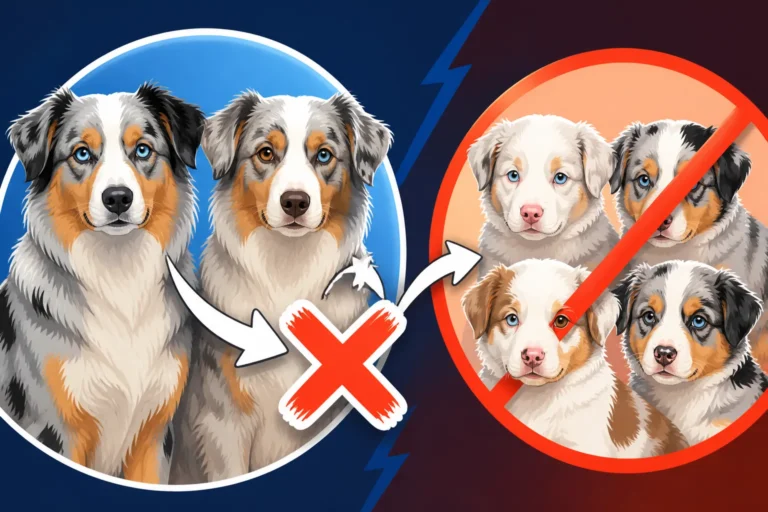
This is perhaps the most crucial section for any prospective Australian Shepherd owner or responsible breeder. While a single merle Aussie is generally healthy, the practice of breeding two merle dogs together – often out of ignorance or a desire for more white markings – leads to what is known as a "double merle" or "homozygous merle." This pairing carries devastating health consequences for the offspring, making it an unethical and irresponsible practice.
Why Merle to Merle Breeding is Dangerous
A double merle Australian Shepherd occurs when a puppy inherits two copies of the dominant merle gene (MM), one from each parent. Unlike a single merle (Mm) who has one copy and is generally healthy, the double dose of the merle gene causes an over-dilution of pigment, affecting not just the coat, but critically, the development of the eyes and ears. This isn't just a slight cosmetic issue; it leads to severe, life-altering, and often painful disabilities.
The most common and devastating health issues associated with double merles include:
- Deafness: This can range from partial to complete deafness in one or both ears. The merle gene interferes with the development of pigment cells in the inner ear, which are essential for normal hearing.
- Blindness: Again, this can be partial or complete. The merle gene affects the development of the eyes, leading to a range of severe abnormalities.
- Microphthalmia: This condition means the eyes are abnormally small, often sunken, and sometimes malformed. These eyes are often non-functional and can be painful, sometimes requiring surgical removal.
- Colobomas: These are defects in the iris, retina, or optic nerve, appearing as gaps or fissures in ocular tissue.
- Other Eye Defects: These can include cataracts, retinal detachment, persistent pupillary membranes, and general structural abnormalities of the eye.
It’s heartbreaking to see these beautiful animals born with such profound disabilities, all preventable through responsible breeding. The desire for "more white" or "more blue eyes" sometimes drives unscrupulous breeders to take this dangerous gamble, often resulting in puppies with no quality of life. For a deeper dive into the ethical and financial costs associated with such breeding practices, you'll find Double Merle Australian Shepherds and What Breeding Two Merles Costs to be a sobering read, explaining the full impact on these innocent dogs. Additionally, for a clear explanation of why this practice is so widely condemned, check out Why Merle-to-Merle Aussie Breeding Is Called Reckless.
Identifying a Double Merle Australian Shepherd
Recognizing a double merle Australian Shepherd often comes down to their physical appearance, which serves as a stark warning sign. The most striking characteristic is the presence of excessive white markings, especially on the head and face. Many double merles have entirely white heads, often with very little or no pigment around their eyes or on their nose. Their coats may appear predominantly white or very pale, with only sparse, diluted merle patches. The skin under these white areas can be sensitive and prone to sunburn, often appearing pink.
While a regular merle Aussie can have white markings, the sheer amount and placement of white on a double merle is usually extreme. Beyond the coat, their eyes are often affected. They commonly have ice-blue eyes, but they might be unusually small (microphthalmia) or appear deformed. Sometimes, their pupils might be oddly shaped due to colobomas. These visual cues are strong indicators, but confirmation of a double merle truly comes from genetic testing and a veterinary ophthalmic exam, which can reveal the full extent of eye damage.
Tragically, many double merles end up in shelters or with rescue organizations because their disabilities make them difficult to care for without significant commitment. These dogs often require specialized care, including living with a Deafness in a Double Merle Australian Shepherd, learning hand signals, and adapting their environment to accommodate their vision or hearing loss. It's a sad reality that could be entirely avoided if breeders prioritized health over aesthetics and conducted proper genetic screenings. For information on how to identify these dogs and the challenges they face, How to Spot a Double Merle Australian Shepherd offers more detailed insights.
Responsible Breeding and Genetic Testing
Given the potential for serious health issues with the merle gene, particularly in double merles, responsible breeding practices and comprehensive genetic testing are not just recommended – they are absolutely essential. Any breeder serious about the health and longevity of their Australian Shepherds will prioritize these steps to ensure happy, healthy puppies.
The Importance of Genetic Health Panels
Responsible Australian Shepherd breeders utilize comprehensive genetic health panels to make informed breeding decisions. These panels test for a range of genetic conditions prevalent in the breed, including, crucially, the various merle alleles. Companies like Embark and Paw Print Genetics offer advanced DNA testing that can accurately identify a dog's merle genotype (e.g., mm, Mm, M/Mc, Mh/Mh, etc.). This means a breeder can definitively know if their seemingly solid dog is actually a cryptic merle or if their merle dog carries a more extreme allele like Mh.
By knowing the precise merle status of both parent dogs, breeders can strategically plan pairings to never produce a double merle. For example, a visible merle (Mm) should always be bred to a non-merle (mm) dog. This pairing will still produce merle puppies (approximately 50% merle, 50% non-merle), but none will be double merle. This proactive approach prevents immense suffering and financial burden for future owners. A reputable breeder will not only perform these tests but will be transparent and eager to share the results with prospective buyers. You can learn more about the critical tests every Aussie should have by reading The Genetic Panel Every Australian Shepherd Needs.
Making Informed Choices for Your Aussie
As a prospective Australian Shepherd owner, you have a vital role to play in promoting responsible breeding. When searching for a puppy, it is absolutely paramount to ask the breeder for genetic test results for both parents, specifically confirming their merle status. Do not take a breeder's word for it if they simply say a dog "looks solid" or "doesn't have the merle gene." Demand to see the official documentation from a reputable genetic testing laboratory. This ensures that you are not inadvertently supporting irresponsible breeding practices that perpetuate suffering.
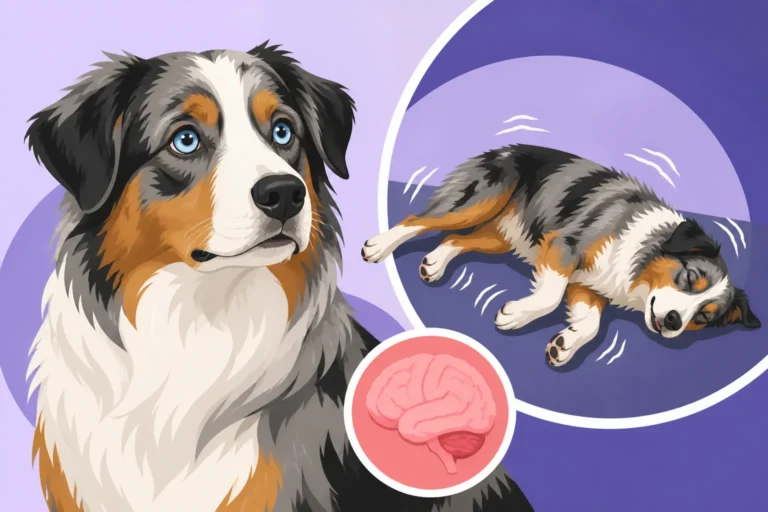
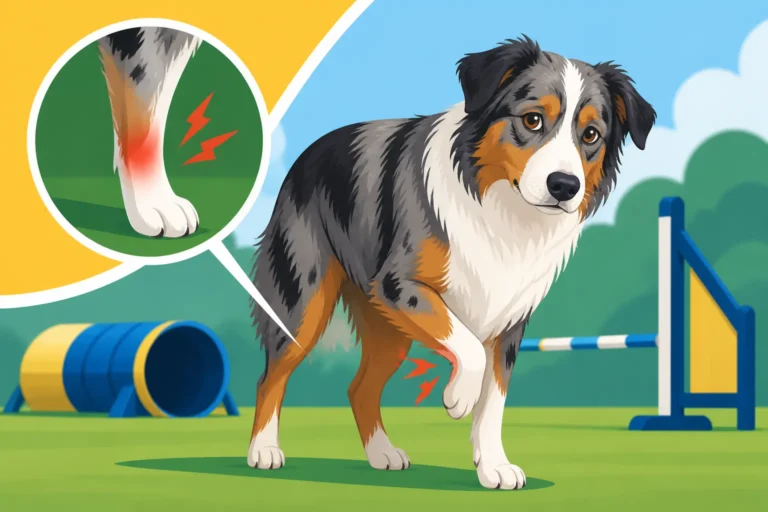
Prioritize health and temperament over specific color patterns. A stunning blue merle coat is wonderful, but not if it comes at the cost of your dog's sight or hearing. A responsible breeder will focus on producing healthy, well-socialized puppies first and foremost. They will also be knowledgeable about conditions like Australian Shepherd Epilepsy Starting Between One and Five or Australian Shepherd Hip Dysplasia and Working Joints, taking steps to reduce these risks in their lines.
Even with the most responsible breeding, unforeseen health issues can sometimes arise. That’s why many discerning Australian Shepherd owners consider investing in pet insurance. Companies like Healthy Paws can provide a financial safety net against unexpected veterinary costs, which can be considerable over an Aussie's lifetime, especially if they develop a genetic condition that wasn't screened for or a new illness. While insurance doesn't prevent problems, it can certainly ease the burden of treatment. Always remember, the lowest-priced puppy might end up being the most expensive in the long run due to hidden health issues. Make sure you know what to expect from a breeder by familiarizing yourself with The Test Results an Aussie Breeder Must Produce.
Understanding Merle Alleles and Their Appearance
To bring all this information together, it can be helpful to visualize the different merle alleles and how they generally manifest in an Australian Shepherd's coat. Keep in mind that individual expression can vary, but this table provides a general guide.
| Merle Allele Genotype | Typical Appearance | Known Health Risks (when bred to merle) |
|---|---|---|
| mm (Non-Merle) | Solid color (Black Tri, Red Tri, Bi-color) | None from merle gene itself |
| Mm (Standard Merle) | Classic merle pattern (Blue Merle, Red Merle) | None if bred to non-merle; double merle risks if bred to merle |
| Mcm (Cryptic Merle) | Appears solid, very faint or no merle pattern visible | Double merle risks if bred to merle |
| Mam (Atypical Merle) | Subtle merle, faint mottling, or diluted areas | Double merle risks if bred to merle |
| Mdm (Diluted Merle) | Very mild merle, often looks faded | Double merle risks if bred to merle |
| Mhm (Harlequin/Heavy Merle) | Pronounced merle, extensive diluted areas, more white | Double merle risks if bred to merle |
| MM / McM / MaM / MdM / MhM / MhMh (Double Merle) | Excessive white on head/body, often solid white face, minimal pigment | Severe vision & hearing defects, microphthalmia, colobomas |
Note: This table simplifies the complex genetics; always consult genetic testing for precise genotypes.
Disclaimer
The information provided in this article is for educational purposes only and is not intended as a substitute for professional veterinary advice. Always consult with a qualified veterinarian or a certified canine geneticist for diagnosis and treatment of any health conditions or for specific breeding advice related to your Australian Shepherd.