Why an Hour of Fetch Bores an Aussie
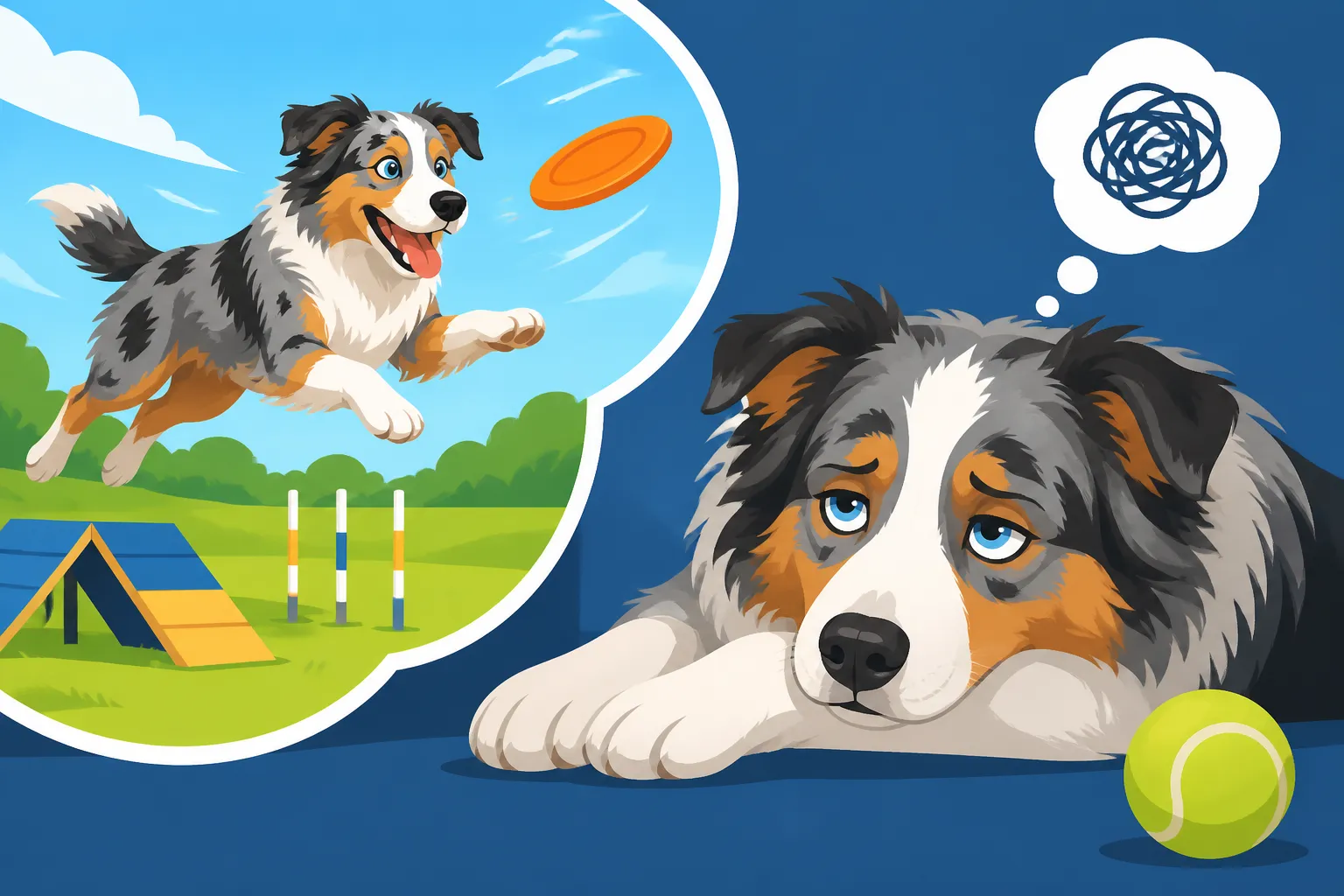
It’s a common scenario for Australian Shepherd owners: you’ve spent what feels like an entire afternoon throwing a ball, watching your energetic Aussie race across the yard, retrieve it, and bring it back, tail wagging. You’re exhausted, your arm is sore, and yet, your dog still seems to be pacing the living room, nudging a toy into your hand, looking utterly unfulfilled. You think, "How can an hour of fetch not be enough?" The truth is, for many Aussies, simple, repetitive fetch can actually fall short of meeting their complex needs, leaving them physically tired but mentally restless. This guide will explore why this happens and, more importantly, offer strategies to truly engage and satisfy your Australian Shepherd, ensuring they're both happily tired and mentally enriched.
The Aussie Brain: It's More Than Just Movement
When you look at your Australian Shepherd, you see a blur of motion, intelligence gleaming in their eyes. But what's truly going on beneath that beautiful coat and intense gaze is a mind hardwired for intricate tasks, problem-solving, and a deep partnership with a handler. Their heritage isn't about mindless running; it's about strategic work.
The Herding Instinct That Demands More
Australian Shepherds were bred for herding livestock, a job that requires far more than just chasing. Imagine a lone Aussie in a vast field, needing to gather a scattered flock of sheep, move them through a gate, and bring them safely to a pen. This isn't just a physical act; it's a mental marathon. They have to assess the terrain, predict animal movement, apply pressure, block escape routes, and respond to their handler's subtle commands—all in real-time. This instinct for complex problem-solving, strategic thinking, and teamwork is deeply ingrained.
So, when we offer an hour of simple fetch, where the only "problem" to solve is running to a thrown object and bringing it back, it barely scratches the surface of what their incredible brains are designed for. Their instinctual operating system demands purpose, direction, and a mental challenge. The Australian Shepherd Herding Drive You Cannot Train Out is a powerful force that needs appropriate outlets, and just running won't cut it.
Mental Stimulation vs. Physical Exhaustion
Think of it this way: you could spend all day moving boxes from one side of a warehouse to another. Physically, you'd be worn out. But if those boxes were all identical, and the task was completely repetitive, your mind would likely still feel fresh, maybe even bored and frustrated. Now imagine if each box contained a puzzle you had to solve before moving it, or if you had to strategize the most efficient path through an obstacle course with those boxes. That would tire your brain as much as your body, wouldn't it?
This is precisely the distinction for an Australian Shepherd. While they absolutely need vigorous physical exercise, if that exercise lacks a mental component, they remain mentally understimulated. An Australian Shepherd that has only had physical exercise might still be bouncing off the walls, demonstrating frustration behaviors or seeking out "jobs" around the house that aren't always ideal, like herding children or nipping at heels. Why Physical Exercise Alone Never Settles an Aussie explores this phenomenon in detail. Their intelligence is a tool that needs constant sharpening and application, and if left idle, it can become a source of restless energy.
Why Repetitive Fetch Falls Short for an Aussie
Understanding the Aussie's inherent drive for mental engagement helps us see why a seemingly endless game of fetch might not be the panacea we hope it is. It's not that fetch is bad; it's that its limitations often leave a high-drive dog feeling unfulfilled.
The Lack of Problem-Solving in Simple Fetch
When you throw a ball, your Aussie races to it. That's a great burst of speed. They grab it, turn, and bring it back. That’s a demonstration of retrieving instinct. But where's the strategy? Where's the choice? Where's the complex decision-making required to navigate a difficult situation, as they would with a recalcitrant sheep? In simple fetch, there isn't any. The route is usually direct, the object is predictable, and the task is identical every single time.
This lack of variety and challenge means that while their legs might be tired, their brain cells aren't firing on all cylinders. They're not engaging the parts of their intelligence that crave figuring things out, anticipating, or making nuanced judgments. This can lead to a state of being physically tired but mentally amped up, rather than settled. They've exercised their body, but their powerful mind is still seeking its true purpose.
Building Drive, Not Draining It
Another subtle but significant aspect of repetitive fetch is that it can actually build arousal and drive in some Aussies, rather than draining it. For a dog that thrives on movement and chase, the constant repetition of a high-speed pursuit can heighten their excitement levels. It's like pouring gasoline on a fire if you're trying to achieve calm. They get into a "chase mode" that is hard to switch off, leaving them wired even after the session ends.
This isn't to say fetch is entirely useless. Short, intense sessions of fetch can be a good warm-up or a burst of cardio. However, if it's the only form of exercise or the primary way you try to "tire out" your Aussie, you might be inadvertently reinforcing their go-go-go mentality without teaching them an "off switch." It becomes a habit of high-energy output without an equivalent period of mental winding down. For some Aussies, a flirt pole, while physically demanding, can similarly ramp up their chase drive, as discussed in Whether a Flirt Pole Winds an Aussie Up, if not used mindfully.
Strategies to Truly Tire an Australian Shepherd
So, if repetitive fetch isn't the ultimate answer, what is? The key lies in diversifying your approach, blending physical exertion with robust mental challenges that tap into your Aussie’s natural intelligence and working drive.
Integrating Brain Games and Training into Exercise
The most effective way to tire an Australian Shepherd is to engage both their body and their mind simultaneously. Instead of just throwing a ball, try turning retrieves into scent games or obstacle courses. Hide the retrieve toy in tall grass or behind bushes, making your Aussie use their nose and problem-solving skills to find it. This turns a simple retrieve into a nuanced hunting expedition. You can buy durable scent-work toys on platforms like Chewy or Amazon that encourage this kind of engagement.
Another fantastic method is to incorporate obedience or trick training into your walks. Every few minutes, stop and ask for a sit-stay, a down, a spin, or a weave through your legs. Reward them for thoughtful execution, not just speed. This requires them to focus, process commands, and use their brain while still on the move. Even simple activities like Scent Games That Tire an Australian Shepherd can be incredibly effective because they demand focus and mental effort. Consider investing in puzzle feeders at home, where your Aussie has to manipulate mechanisms to get their food or treats. These slow down eating and provide valuable mental work, especially during times when intense physical exercise isn't possible. You can find many options from brands on Amazon or Chewy.
Structured Activities Over Mindless Repetition
Australian Shepherds thrive on purpose. Instead of random running, think about structured activities that mimic their ancestral jobs or leverage their natural talents. Dog sports are ideal for this. Agility, for example, combines intense physical movement with complex problem-solving as they navigate obstacles, requiring precision and speed. Australian Shepherd Agility and Disc Sports are fantastic outlets for their energy and intelligence. Herding lessons, even with ducks or sheep if you have access, can provide an unparalleled outlet for their instincts, giving them a real "job" to do. If livestock isn't an option, urban herding alternatives like Treibball, where dogs herd large exercise balls into a goal, can be a wonderful substitute. You can learn more about Treibball as an Aussie Alternative to Sheep.
Even daily walks can be made more enriching. Vary your routes, introduce new sights, sounds, and smells. Let them sniff! Sniffing is incredibly mentally stimulating for dogs. A long line can provide safe freedom in appropriate areas, allowing them to explore and choose their path, which is more engaging than being led on a tight leash. Consider Building an Aussie Herding Course in a Yard if you have the space, offering a mini-arena for mental and physical challenges.
Here’s a quick comparison of typical fetch versus more engaging activities:
| Activity Element | Repetitive Fetch (Example: Ball Launcher) | Engaging Activities (Examples: Scent Work, Agility) |
|---|---|---|
| Physical Effort | High bursts of speed, cardio | High bursts of speed, cardio, coordination, balance |
| Mental Stimulation | Low, repetitive | High, problem-solving, strategic thinking, focus |
| Instinctual Outlet | Chase, retrieve | Herding, hunting, cooperation, problem-solving |
| Arousal Level | Can increase drive and excitement | Engages, then helps settle into a tired satisfaction |
| Flexibility | Limited scope | Highly varied, adaptable to environment |
| Training Value | Minimal beyond basic retrieve | Reinforces commands, builds focus, enhances bond |
The Role of a Balanced Daily Routine
Even with the most engaging activities, a truly fulfilled Australian Shepherd benefits from a well-structured daily routine that considers their unique needs for both activity and rest. It’s about more than just what you do; it’s how you integrate it into their day.
Splitting Exercise Throughout the Day
Instead of one massive, exhausting session, consider breaking your Aussie’s exercise into multiple, shorter, and varied segments throughout the day. A 20-minute sniffari walk in the morning, a 15-minute training session at midday, and a longer, more structured activity like a hike, a dog sport class, or a rigorous game of hide-and-seek in the evening can be far more effective than a single hour of continuous, high-intensity fetch.
This approach prevents your Aussie from becoming overstimulated by prolonged high-arousal activity and gives their brain multiple opportunities to engage. It also helps manage their energy levels more consistently, reducing those frustrating peaks of pent-up energy. Splitting an Aussie's Exercise Across the Day can make a huge difference in their overall demeanor. Remember, it's not just about the total time, but the quality and distribution of that time.
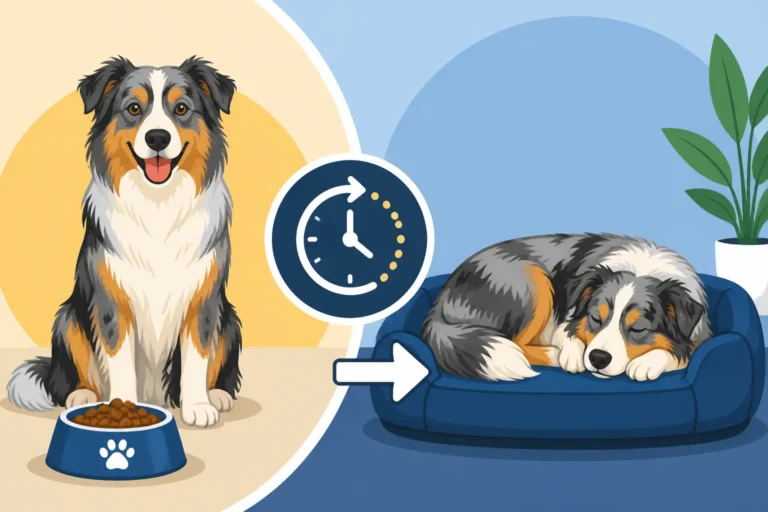
Enforced Downtime and "Off Switches"
Perhaps one of the most crucial, yet often overlooked, aspects of managing an Australian Shepherd's energy is teaching them how to relax. Just as they excel at high-intensity work, they need to learn an "off switch." Many Aussies, especially young ones or those that are constantly encouraged to be "on," struggle with this. They might pace, whine, or constantly seek attention even when physically tired.
This is where Mat Settle Training for a Restless Aussie comes in incredibly handy. Teach your dog to go to a specific mat or bed and relax there for extended periods. Start with short durations and gradually increase them, rewarding calm behavior. This isn't about punishment; it's about teaching them how to be calm and that quiet time is also valuable. Providing them with long-lasting chews (like those you can find on Chewy) or puzzle toys during these rest periods can help reinforce the calm behavior. Learning to Teaching an Aussie to Take a Break is vital for their mental well-being and for peaceful coexistence in your home. A well-trained Aussie isn't just one that can perform commands; it's one that can also be calm and content in different situations. Even the diet plays a role in their overall well-being; some owners find that a fresh, balanced diet, such as those from Ollie, contributes to more consistent energy levels, supporting both their active and their rest periods.
Ultimately, your Australian Shepherd wants to work with you, not just for you. By understanding their inherent drives and offering a diverse, mentally stimulating routine, you'll find that an hour of varied activities will satisfy them far more than an hour of endless fetch, leading to a much happier, more settled canine companion.
Disclaimer
This article is for general informational purposes only and does not constitute professional advice. Laws, prices and regulations vary by location and change over time. Consult a qualified professional for guidance on your specific situation.