Ranch Bred Against Ring Bred Australian Shepherds
It's incredibly easy to get confused when you start looking into Australian Shepherds, isn't it? You might hear people talking about "working lines" or "show lines" as if they're entirely different breeds, and it leaves you wondering what on earth the real differences are and which type might be right for your home. This guide is here to unravel the distinctions between ranch-bred and ring-bred Australian Shepherds, helping you understand their unique traits, needs, and how to find the right companion for your family.
What Even Is the Difference Between Ranch and Ring Bred?
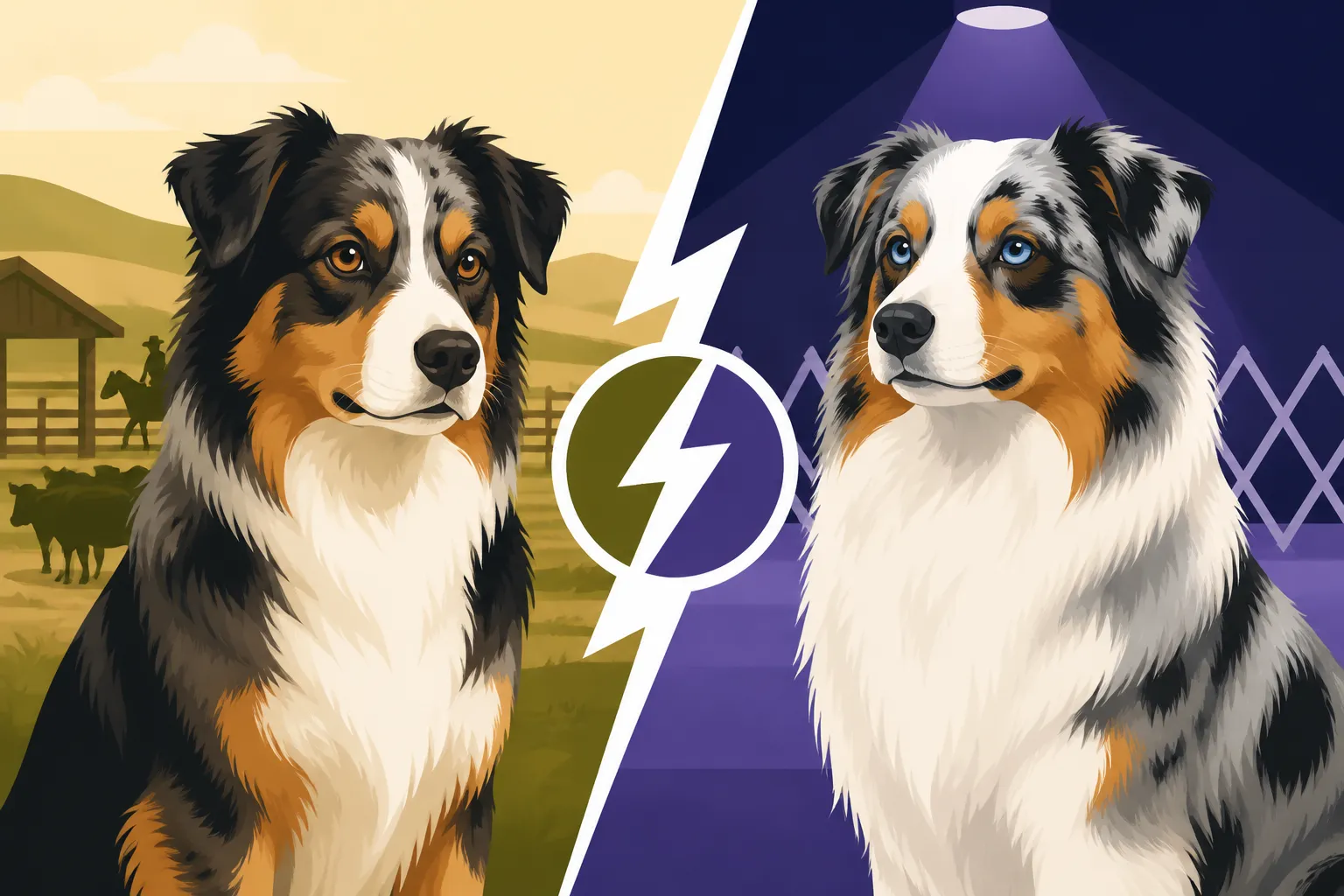
When we talk about ranch-bred versus ring-bred Australian Shepherds, we're really talking about different breeding philosophies and the specific goals breeders have in mind. Both types are undeniably Australian Shepherds, sharing the same breed standard and genetic pool, but the emphasis placed on certain traits diverges significantly. It's not about two separate breeds, but rather two distinct paths within the same breed, shaped by what their human partners value most.
The Origin of the Divide
The Australian Shepherd started its life as a working dog, pure and simple. These dogs were indispensable partners to ranchers, herding livestock in the rugged terrain of the American West. Breeders of these original lines focused relentlessly on traits that made a dog excel at its job: intelligence, intense herding instinct, endurance, biddability, and a robust physical constitution that could withstand long days of hard work. Their survival, and the success of the ranch, depended on these traits. The concept of a "show dog" was far from their minds; function was the form.
As the breed gained popularity, especially after its rodeo fame, some people started to appreciate the Aussie for its striking appearance and intelligence beyond the ranch. This led to the establishment of breed clubs and formal conformation shows. When a dog enters the show ring, it's judged against a written standard that describes the ideal physical appearance and temperament. Breeders who focus on the show ring aim to produce dogs that conform perfectly to this standard, leading to a different set of priorities in their breeding programs. The split wasn't immediate or intentional, but a gradual divergence as different segments of the dog-owning public sought Aussies for different purposes.
Understanding "Type" in Australian Shepherds
When breeders talk about "type," they're referring to the overall look, feel, and character of a dog that makes it instantly recognizable as its breed. Within the Australian Shepherd breed, both ranch-bred and ring-bred dogs still retain "Aussie type," but with subtle differences. For a ranch breeder, "type" might mean an athletic, agile dog with keen eyes and an innate desire to gather and drive stock. For a show breeder, "type" might emphasize specific angles, coat texture, head shape, and a calm, composed demeanor in the ring.
It's important to remember that these aren't always black-and-white distinctions. There are dogs that come from working lines who excel in performance sports like agility, which require some of the same drive and biddability as herding, but also a specific kind of athleticism. Similarly, some show-bred Aussies have retained a good amount of working drive and can successfully participate in herding trials. The labels "ranch-bred" and "ring-bred" serve as general indicators of a breeder's primary focus and, consequently, the likely traits you'll find in their puppies. Thinking of it as a spectrum rather than a binary choice often provides a more accurate picture.
The Foundations of the Working Australian Shepherd
To truly understand a ranch-bred Australian Shepherd, you have to picture the environment they were developed for: vast ranches, challenging livestock, and long, demanding days. These dogs were not accessories; they were essential tools, partners that could mean the difference between a successful season and financial ruin. Every trait was selected for its utility in the field, creating a resilient, intelligent, and highly driven animal.
The Purpose-Bred Ranch Dog
A ranch-bred Aussie is first and foremost a working dog. Their purpose is to manage livestock, whether it's cattle, sheep, or goats. This means breeders prioritize instinct, biddability, and physical soundness above all else. They need dogs that can think independently when a situation demands it but also respond instantly to commands from a handler, often from a distance. A good ranch dog understands the nuance of moving stock – when to press, when to back off, and how to read the animals' behavior. This isn't just about chasing; it's about control, direction, and safety for both the dog and the livestock.
These dogs are bred for extreme mental and physical stamina. They might cover miles in a day, often over uneven terrain, in various weather conditions. Their structure needs to be efficient and durable, allowing for quick bursts of speed, tight turns, and sustained effort without breaking down. For a ranch breeder, a dog's pedigree isn't just about famous ancestors; it's about proven working ability passed down through generations. They look for traits that demonstrate a strong work ethic, natural intelligence, and a calm but authoritative presence with stock. Whether an Aussie Can Still Work Sheep is a question easily answered when you see a ranch-bred dog in action.
Traits Essential for Fieldwork
The traits that are absolutely non-negotiable for a ranch-bred Australian Shepherd are those that directly contribute to effective herding. High drive is paramount – an innate desire to work and to engage with stock. This isn't just "energy"; it's a specific kind of focused energy aimed at a task. Alongside drive, these dogs possess incredible intelligence and problem-solving abilities. A ranch dog needs to be able to assess a situation, anticipate livestock movement, and often make decisions independently when the handler isn't there to direct every step.
Biddability, or the willingness to obey, is also crucial. A rancher needs a dog that can be directed precisely, turning on a dime, stopping instantly, or changing pace at a subtle signal. Nerves of steel are also vital; a ranch dog must be confident and resilient, able to handle sometimes aggressive livestock or unexpected challenges without becoming fearful or overly aggressive itself. These dogs are partners in a dangerous and physically demanding job, and every trait, from their keen eyesight to their sturdy paws, is selected to ensure they can perform it safely and effectively.
The Unsung Heroes of the Farm
While show dogs might earn ribbons and accolades, ranch-bred Australian Shepherds are the unsung heroes of countless farms and ranches. Their lives are often spent far from the spotlight, diligently performing tasks that are vital to agricultural operations. They are the eyes and ears of the rancher, often working silently, reading the stock and the handler with incredible precision. They may not have the perfect conformation for a judge's eye, but their movement is always efficient and powerful, tailored for the work at hand.
The bond between a rancher and their working Aussie is profound, built on trust, mutual respect, and shared effort. These dogs are not just pets; they are colleagues. Their health and longevity are important not just for their own well-being, but for the economic viability of the farm. When you encounter a ranch-bred Aussie, you're looking at a living piece of history, a direct descendant of the dogs that helped build the American West, still performing the job they were originally bred for.
The Evolution of the Show Ring Aussie
As the Australian Shepherd's charm became undeniable, it wasn't long before people started appreciating them for more than just their working prowess. The move from the dusty fields to the polished show ring brought a different set of priorities for breeders, shaping a distinct "type" that excelled in conformation events.
Prioritizing Conformation and Aesthetics
For ring-bred Australian Shepherds, the primary goal of breeding is to produce dogs that conform as closely as possible to the breed standard set by organizations like the American Kennel Club (AKC) or the Australian Shepherd Club of America (ASCA). This standard outlines the ideal physical appearance, including everything from head shape, ear set, eye color, and coat texture to body proportions, bone structure, and gait. Judges evaluate dogs on how well they embody this ideal "look."
This focus on aesthetics naturally shifts breeding choices. While soundness and temperament are still important, subtle differences in coat length, color patterns, and overall "flash" can become more highly valued. A dog that moves beautifully and holds its stance confidently in the ring will be favored. This doesn't mean show-bred Aussies are unhealthy or lack intelligence, but their selection criteria lean heavily towards visual perfection according to the standard. For example, the Australian Shepherd Standard and What Judges Want is a detailed document that guides these breeders.
The Role of the AKC and ASCA Standards
Both the AKC and ASCA have breed standards that describe the ideal Australian Shepherd. While they share many similarities, reflecting the breed's origins, there can be subtle differences in emphasis. The ASCA, for instance, often emphasizes working ability and temperament more directly in their standard, reflecting its history as a working-dog registry before the breed gained wider recognition. The AKC standard, while also acknowledging the breed's working heritage, primarily serves as the blueprint for conformation showing.
Breeders who focus on the show ring dedicate themselves to understanding these standards inside and out. They meticulously plan breedings to enhance desired physical traits, hoping to produce puppies that will excel in competition. This often involves careful selection based on lineage, scrutinizing the conformation of previous generations, and participating in dog shows to gain feedback from experienced judges. The "perfect" stacked pose, the elegant movement around the ring, and a coat that catches the light just so—these are the hallmarks of a successful show-bred Aussie.
From Stock Dog to Companion
While their ancestors were rough-and-tumble ranch dogs, many show-bred Australian Shepherds today live primarily as beloved family companions. They may still possess a strong desire to learn and engage, but their daily lives often don't involve herding livestock. Instead, they might participate in obedience, rally, agility, or even simply enjoy long walks and playtime in the park.
Breeders focusing on these lines often select for a slightly mellower temperament, one that thrives in a suburban or active family environment. While they still require significant mental and physical exercise, the intense, non-stop drive of a hardcore ranch dog might be softened. These Aussies are often praised for their beauty, intelligence, and their ability to integrate well into family life, adapting to a world where their "job" is primarily to be a cherished pet and perhaps an occasional performance dog. This evolution has made the Australian Shepherd accessible to a wider audience, but it also highlights the difference in lifestyle expectations.
Key Differences in Temperament and Drive
This is where the rubber really meets the road for prospective owners. The differences in temperament and drive between ranch-bred and ring-bred Australian Shepherds are arguably the most significant factors to consider when choosing a puppy. It's not about one being "better" than the other, but about matching the dog's innate tendencies with your ability to meet those needs.
Energy Levels and Exercise Requirements
A ranch-bred Australian Shepherd is typically a canine athlete with an almost inexhaustible fuel tank. They are bred for endurance, for working all day, every day, often covering many miles in the process. Their energy isn't just a physical need; it's deeply intertwined with their mental stimulation. If a ranch-bred Aussie isn't given a job, it will find one, and that job might be herding your children, chasing shadows, or redecorating your furniture. How Much Daily Exercise an Australian Shepherd Needs for these dogs often means several hours of vigorous activity, ideally including mental challenges like herding, advanced obedience, or intense dog sports.
Ring-bred Aussies, while still active and intelligent dogs, generally have a somewhat lower, or at least a more manageable, energy level compared to their working counterparts. They still require substantial daily exercise – an hour or two of walks, fetch, or playtime is typically a minimum – but they might be more content to relax indoors once their needs are met. The intensity of their drive to work might be less pronounced, making them a better fit for families who enjoy an active lifestyle but don't live on a ranch or participate in demanding, multi-hour dog sports. Think of it as a dimmer switch: a ranch dog is usually on full blast, while a show dog might be at 60-70%, still bright but less overwhelming.
Instinctive Herding Drive in Each Line
The herding instinct is the core operating system of the Australian Shepherd breed, regardless of line. However, the intensity and expression of that drive can differ. In a ranch-bred Aussie, the herding instinct is incredibly strong and refined. They often exhibit a powerful "eye," a focused stare used to intimidate and control livestock, and an innate understanding of how to move animals. They might be prone to "heel nipping" children or pets, attempting to gather and control anything that moves, simply because it's what they're hardwired to do. The Australian Shepherd Herding Drive You Cannot Train Out is very real and needs an appropriate outlet.
Show-bred Aussies still possess herding instinct, but it's often less intense or more easily managed. They might enjoy chasing a frisbee or a large exercise ball, mimicking herding behavior in a playful way, but without the deep-seated urgency or precision of a working dog. While they might still try to herd family members, it's generally easier to redirect and manage. Some show lines have even deliberately selected for a slightly less intense herding instinct to make them more suitable as family companions. This difference is crucial, as an unfulfilled strong herding drive can lead to frustration and behavioral issues in any Aussie, but especially in a working-line dog.
Trainability and Focus for Different Jobs
Both types of Australian Shepherds are highly intelligent and generally eager to please, making them very trainable. However, what they are trained for and how they focus can vary. Ranch-bred Aussies often display an incredible focus on their handler and the task at hand, especially when it involves movement or problem-solving. They thrive on structured work and can learn complex sequences of commands quickly. Their drive to work is so high that training can be a constant, demanding activity, requiring a handler who is equally engaged and experienced. They are often less tolerant of repetition for repetition's sake, preferring to learn and then apply.
Show-bred Aussies are also very intelligent and excel in various dog sports and obedience disciplines. They tend to be highly motivated by positive reinforcement and enjoy the collaborative nature of training. While they might not have the same unwavering, high-intensity focus of a dedicated working dog, they are typically very biddable and adaptable, making them fantastic partners for competitive obedience, agility, rally, or even just mastering impressive tricks. Their focus might be broader, capable of adapting to a wider variety of activities beyond intense herding work. They are still highly intelligent and need mental stimulation, perhaps through puzzle toys found on platforms like Chewy, or regular training sessions.
Physical Characteristics: Form Follows Function
While both ranch-bred and ring-bred Australian Shepherds adhere to the same overall breed standard, the subtle emphasis on certain physical traits can lead to visible differences. These distinctions often stem from the principle of "form follows function" – how a dog is built influences what it can do best.
Differences in Build and Bone Structure
Ranch-bred Australian Shepherds are typically built for durability and efficiency over flash. They tend to have a slightly leaner, more athletic build, with a strong, flexible frame that can handle quick changes of direction, jumps, and sustained running over varied terrain. Their bone structure is usually substantial enough to support their active lifestyle without being overly heavy, allowing for agility and stamina. You'll often see powerful hindquarters, a deep chest for lung capacity, and well-angulated joints designed for efficient movement and shock absorption. They are athletes, and their bodies reflect that.
Ring-bred Aussies, while still athletic, might have a slightly heavier bone structure and a more "finished" or refined look, emphasizing certain aspects of the breed standard that are prized in the conformation ring. This could include a slightly fuller coat, a more pronounced stop (the area between the eyes), or specific angulations that look aesthetically pleasing when stacked. They are still strong, agile dogs, but the emphasis shifts slightly towards a balanced, symmetrical appearance that aligns with the judges' ideal. The differences are often subtle and might not be immediately obvious to an untrained eye, but they are purposeful variations developed over generations.
Coat Types and Grooming Needs
Both ranch-bred and ring-bred Australian Shepherds possess the breed's signature double coat, which consists of a dense, insulating undercoat and a weather-resistant outer coat. However, there can be some variation in length and density. Ranch-bred Aussies often have a slightly shorter, coarser coat, which is practical for working in varied conditions. A shorter coat is less prone to picking up burrs, mud, and debris, and it's easier to maintain when a dog is spending hours in the field. While still requiring regular brushing, especially during twice-yearly coat blow in an Australian Shepherd, their grooming needs are often focused on functionality.
Show-bred Aussies sometimes exhibit a fuller, longer coat, particularly around the mane (ruff), feathering on the legs, and breeches (trousers). This luxuriant coat is often prized in the show ring for its impressive appearance, creating a more dramatic silhouette. While beautiful, a longer, denser coat generally demands more intensive grooming to prevent mats and keep it pristine. Regular, thorough brushing is essential to manage shedding and prevent tangles, making tools like undercoat rakes and slicker brushes (available at retailers like Chewy) indispensable. It's a common misconception that a longer coat implies less grooming; in fact, it usually means more. Regardless of coat length, why an Australian Shepherd should never be shaved holds true for both lines, as shaving can damage the protective double coat.
Eye-Catching Features in the Show Ring
One of the Australian Shepherd's most striking features is its eyes – often intelligent, expressive, and sometimes captivatingly blue or marbled. In the show ring, eye color and expression are carefully evaluated according to the breed standard. Judges look for an alert, intelligent, and keen expression. While blue eyes and parti-colored eyes are common and accepted in merle-coated Aussies, their placement and balance on the face contribute to the overall aesthetic appeal. A certain head shape, combined with ear set and eye placement, creates the desired "Aussie expression" that show breeders strive for.
For ranch dogs, while a keen eye is certainly valued for its utility in spotting livestock and reading situations, the specific aesthetics of eye color or head shape are secondary to working ability. A rancher isn't judging how beautiful the dog's eyes are, but how effectively they use them to control sheep. This isn't to say ranch Aussies aren't beautiful; they have a rugged, purposeful beauty all their own. However, the selective pressure for specific aesthetic "eye-catching" features is more pronounced in the show ring, where every detail contributes to the overall impression a judge receives.
Health Considerations in Both Lines
Regardless of whether an Australian Shepherd is ranch-bred or ring-bred, they are susceptible to certain genetic health conditions common to the breed. Reputable breeders in both lines prioritize health, but the depth and breadth of their testing can sometimes vary. Understanding these shared and distinct health concerns is vital for any prospective owner.
Common Genetic Conditions Across the Breed
Australian Shepherds, as a breed, are predisposed to several genetic conditions. Hip and elbow dysplasia are significant concerns, affecting joint health and mobility. Reputable breeders in both camps should conduct OFA (Orthopedic Foundation for Animals) or PennHIP evaluations on their breeding stock to minimize the risk of passing on these debilitating conditions. Australian Shepherd Hip Dysplasia and Working Joints is a topic that all Aussie owners should be familiar with. Eye diseases are also prevalent, including Collie Eye Anomaly (CEA), Progressive Retinal Atrophy (PRA), and Hereditary Cataracts (HC). Early eye checks for puppies and regular ophthalmologist exams for breeding dogs are crucial.
Perhaps one of the most well-known genetic issues is the MDR1 (Multi-Drug Resistance 1) mutation, which affects how a dog processes certain common veterinary drugs. About half of all Australian Shepherds carry this gene, and it can cause severe, even fatal, reactions to medications like ivermectin (a common dewormer) or loperamide. All responsible breeders should test for MDR1, and you, as an owner, need to be aware of your dog's status. The Genetic Panel Every Australian Shepherd Needs should include these tests to ensure the health of future generations.
Line-Specific Health Trends
While many health issues are breed-wide, there can be subtle trends within specific lines. For example, some working lines, due to their intense physical demands, might be more prone to injuries related to overuse or trauma, such as cruciate ligament tears, if not properly conditioned. Conversely, a strong emphasis on specific conformational traits in show lines might inadvertently lead to a higher incidence of certain issues if breeders aren't vigilant about overall soundness. For instance, selecting for an extremely dense coat could, in rare cases, make a dog more prone to skin issues if not properly groomed and cared for.
It’s also worth considering that dogs from high-drive working lines are often managed in ways that minimize chronic conditions – for instance, strict diet and conditioning can reduce the impact of arthritis later in life. On the other hand, a show dog might lead a less physically demanding life, potentially exacerbating issues like weight gain if not carefully managed. The specific challenges each line faces often relate back to their lifestyle and the traits that have been prioritized.
The Importance of Genetic Testing
Genetic testing is absolutely non-negotiable for any responsible Australian Shepherd breeder, whether they focus on ranch work or the show ring. For conditions like MDR1, CEA, and Hereditary Cataracts (HSF4 gene), a simple DNA test can definitively determine a dog's carrier or affected status. For structural issues like hip and elbow dysplasia, radiographic evaluations (OFA or PennHIP) are essential. These tests allow breeders to make informed decisions, avoiding pairings that could produce affected offspring and gradually improving the overall health of the breed.
As a prospective puppy buyer, you should always ask to see the health clearances for both parents of any litter you are considering. Don't just take a breeder's word for it; ask for copies of certificates or look up the results on public databases like the OFA website. A reputable breeder will be transparent and proud to share this information. If a breeder hedges or can't provide verifiable health clearances for the parents, it's a major red flag, regardless of whether they breed for ranch work or show. The Test Results an Aussie Breeder Must Produce are fundamental to ethical breeding practices.
Making the Right Choice for Your Lifestyle
Deciding between a ranch-bred and a ring-bred Australian Shepherd isn't about which one is "better," but which one is a better fit for your life. It’s a serious commitment, spanning potentially Australian Shepherd lifespan across twelve to fifteen years, and making the wrong choice can lead to frustration for both you and the dog.
Assessing Your Home and Activity Level
Before you even start looking at puppies, take a brutally honest inventory of your lifestyle. Do you live on a sprawling property with acreage, or in a suburban home with a fenced yard? How much time, realistically, can you dedicate to exercising a dog every single day? We're not just talking about a quick walk around the block. A ranch-bred Aussie, even if not actively herding, requires hours of intense physical activity and serious mental engagement daily. This could mean running, hiking, biking, or participating in demanding dog sports like agility, flyball, or advanced obedience. If you don't provide it, they'll invent their own "job," which often involves destructive behaviors or incessant barking.
A ring-bred Aussie, while still energetic and needing substantial exercise, might be more adaptable to a slightly less intense schedule. They can often thrive with one to two hours of brisk walking, fetching, or focused training sessions each day, combined with plenty of indoor mental stimulation. They are generally more tolerant of downtime but still require consistent activity to prevent boredom and anxiety. Consider your schedule, your physical capabilities, and your commitment to daily exercise, rain or shine. If you're a couch potato, neither type of Aussie is likely to be a good fit.
The Realities of Living with a High-Drive Dog
Living with a high-drive, ranch-bred Australian Shepherd is a lifestyle choice. Their instincts are profound. They may try to "herd" anything that moves – children, cats, squirrels, even slow-moving vehicles. This isn't naughtiness; it's their intrinsic nature. You need to be prepared to manage this instinct, either by providing an appropriate outlet (like actual herding or a rigorous dog sport) or by consistently redirecting it in a safe, constructive way. They need clear boundaries, consistent training, and a strong, confident leader. Without adequate mental and physical stimulation, they can become anxious, destructive, or even reactive.
If you don't have experience with working breeds, or if your idea of exercise is a leisurely stroll, a ranch-bred Aussie can quickly become overwhelming. Their intensity can be a challenge even for experienced owners. Think about your family dynamics too: are there small children who might be perceived as "flock members" to be herded? Do you have other pets that might not appreciate being constantly rounded up? These are not minor quirks; they are fundamental aspects of the dog's personality.
Considering Your Experience Level
Your experience level with dogs, particularly active and intelligent breeds, is a major factor. A ranch-bred Australian Shepherd often thrives with an experienced handler who understands working dog dynamics, positive reinforcement training, and how to channel intense drive into productive activities. First-time dog owners, or those accustomed to more laid-back breeds, might find the sheer intensity and intelligence of a working-line Aussie to be a significant challenge. These dogs are smart enough to outwit a novice owner and strong-willed enough to create their own rules if not consistently guided.
A ring-bred Aussie can be an excellent choice for a dedicated first-time owner, or someone with moderate dog experience, as long as they are committed to consistent training, socialization, and providing ample exercise and mental stimulation. They still require a firm, fair hand and clear expectations, but their somewhat mellower drive can be more forgiving for those learning the ropes. Finding a good trainer, perhaps through classes or private lessons, is always a wise investment for any Australian Shepherd owner. Australian Shepherd Training and Sport Costs can be substantial, so budget accordingly.
| Feature | Ranch-Bred Australian Shepherd | Ring-Bred Australian Shepherd |
|---|---|---|
| Primary Goal | Herding livestock, working partner | Conformation to breed standard, companion, performance sports |
| Energy Level | Very high, almost inexhaustible endurance for daily work | High, active but more adaptable to companion lifestyle |
| Herding Drive | Extremely strong, keen eye, innate desire to work stock | Present but often less intense, more playful, easier to redirect |
| Temperament | Intelligent, biddable, resilient, intense, independent thinker | Intelligent, eager to please, adaptable, can be slightly mellower |
| Build/Structure | Leaner, athletic, built for efficiency and durability | Often slightly heavier bone, refined look, emphasis on aesthetics |
| Coat | May be slightly shorter/coarser, functional | Can be fuller/longer, especially ruff and feathering, visually appealing |
| Ideal Owner | Experienced working dog handler, active lifestyle, dedicated to sports/work | Active family, moderate dog experience, committed to training/exercise |
| Typical Role | Stock dog, high-level performance competitor | Family companion, dog sports (agility, obedience, rally) |
Finding a Reputable Breeder for Either Type
Once you’ve decided which type of Australian Shepherd best suits your lifestyle, the next crucial step is finding a reputable breeder. This is not a decision to be rushed, as a good breeder is transparent, ethical, and dedicated to the health and temperament of their dogs. Choosing an Australian Shepherd Breeder wisely is paramount to bringing home a happy, healthy puppy.
Questions to Ask a Ranch Breeder
When looking for a ranch breeder, your questions should heavily focus on the working ability and health of their dogs. Ask about:
- Working Titles and Experience: Do their dogs actively herd? What titles have they earned in herding trials (e.g., HT, PT, HS, HX, HCH)? Ask for videos of the parents working stock.
- Temperament with Livestock: How do the parent dogs interact with different types of stock? Are they strong-eyed, loose-eyed, or a combination? How do they handle pressure?
- Health Clearances: Demand to see OFA/PennHIP clearances for hips and elbows, current eye certifications (CERF/OFA Eye), and DNA test results for MDR1, HSF4 (hereditary cataracts), and CEA. This is vital for all lines.
- Parental Background: Ask about the working history and health of the parents' siblings and ancestors. Are there any known issues with temperament or health in their lines?
- Puppy Placement: How do they evaluate puppies for working potential? Do they offer guarantees on working ability?
- Support: What kind of support do they offer after you take a puppy home? Do they have a network of other working Aussie owners?
A good ranch breeder will be passionate about their dogs' working ability and will want to ensure their puppies go to homes where that drive can be fulfilled, whether it's on a ranch or in high-level performance sports.
What to Look for in a Show Breeder
For a ring-bred Aussie, your questions will still cover health and temperament, but with an added focus on conformation and suitability as a companion. Ask about:
- Conformation Titles: What championship titles (e.g., CH, GCH) have the parent dogs earned in the show ring? This demonstrates they meet the breed standard.
- Temperament: How would they describe the parents' temperaments both in the ring and at home? Are they calm and confident in public? How do they interact with visitors or children?
- Health Clearances: Just like ranch breeders, show breeders must provide verifiable OFA/PennHIP, CERF/OFA Eye, and DNA results for MDR1, HSF4, and CEA for both parents.
- Puppy Socialization: How are the puppies raised? What socialization protocols do they follow to ensure well-adjusted puppies ready for family life?
- Return Contract: Does the breeder have a contract that requires you to return the dog to them if you cannot keep it, at any point in its life? This is a mark of a responsible breeder.
- Mentorship: Do they offer ongoing support and advice for training, grooming, and general care?
A reputable show breeder will be focused on producing dogs that are not only beautiful and conform to the standard but are also healthy, well-socialized, and possess a stable temperament suitable for companion life or various dog sports.
The Importance of Transparency and Health Clearances
Regardless of the breeder's focus, transparency and verifiable health clearances are non-negotiable. An ethical breeder will openly discuss the pros and cons of their line, be honest about potential health concerns, and provide documentation for all health testing. They should welcome questions, be willing to show you their facilities, and introduce you to the parent dogs (at least the mother). They will also ask you many questions to ensure you are a suitable home for one of their puppies.
Avoid any breeder who offers multiple breeds, sells puppies on a first-come, first-served basis without screening, doesn't perform health testing, or won't allow you to visit their premises. These are often signs of a backyard breeder or a puppy mill, where the health and welfare of the dogs are secondary to profit. Investing the time and effort to find a truly reputable breeder will pay dividends in the long-term health, happiness, and temperament of your Australian Shepherd, ensuring you bring home a companion that truly thrives in your chosen lifestyle.
Disclaimer
This article is for general informational purposes only and does not constitute professional advice. Laws, prices and regulations vary by location and change over time. Consult a qualified professional for guidance on your specific situation.