Urban Herding an Aussie With an Exercise Ball
Many Australian Shepherd owners living the city or suburban life often find themselves scratching their heads, wondering how to manage their dog's intense, hardwired instinct to herd everything that moves. This drive, so useful on a farm, can manifest as persistent heel-nipping, circling children, or trying to 'collect' other dogs at the park, leading to frustration for both dog and human. This guide is all about channeling that powerful, beautiful herding drive into a fun, safe, and incredibly satisfying activity right in your urban or suburban backyard: urban herding with an exercise ball.
Understanding the Australian Shepherd's Herding Instinct in an Urban Setting
Australian Shepherds were bred for a job, and that job is herding. They are brilliant, athletic, and possess an inherent drive to gather, move, and control livestock. When you bring an Aussie into a modern home, especially in a city or a bustling neighborhood, that deeply ingrained instinct doesn't just disappear. It needs an outlet.
The Innate Drive and Its Manifestations
That powerful impulse to herd is part of your Australian Shepherd's DNA, their operating system, if you will. It’s The Australian Shepherd Herding Drive You Cannot Train Out. You see it in their intense stare, their quick, agile movements, and their tendency to try and control the movement of anything they perceive as a "flock." In a rural setting, this means sheep or cattle. In an urban environment, it translates to cars speeding by, cyclists, joggers, children playing, or even the vacuum cleaner. Your Aussie isn't being "naughty" when they nip at your heels as you walk through the house; they’re trying to move you, to keep you within their perceived boundaries, just like they would a stray lamb. It's a natural, albeit sometimes inconvenient, expression of their breed.
Think about a time you've seen An Australian Shepherd Circling Joggers and Cyclists or perhaps An Australian Shepherd That Organizes the Dogs at the Park. These aren't signs of disobedience; they're signs of a dog trying to do the job they were literally born to do. Without a proper outlet, this drive can become misdirected, causing stress for your dog and headaches for you. It's crucial to understand that this isn't a behavior to suppress entirely, but rather to redirect and manage.
Challenges of City Life for a Herding Breed
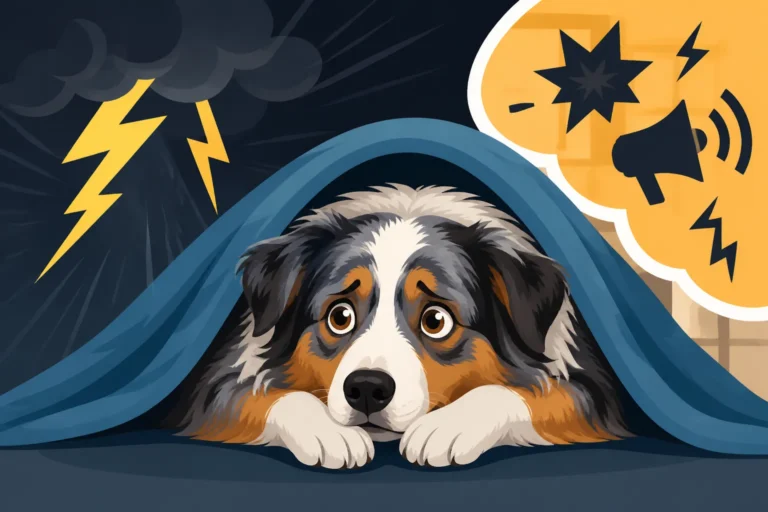
The biggest challenge for an Australian Shepherd in a city or suburban environment is the sheer lack of appropriate "livestock" and open, unrestricted spaces. You can't exactly let them loose on a flock of sheep in Central Park! This environmental mismatch often leads to a variety of behavioral issues. Without a constructive way to express their herding drive, Aussies can become anxious, reactive, and even destructive. They might bark excessively at passersby, chase cars, or develop compulsive behaviors.
Many owners believe that long walks or trips to the dog park will satisfy their Aussie's needs, but for a true herding breed, physical exercise alone is often not enough. A simple walk might burn off some energy, but it rarely engages their minds in the way their instincts crave. Imagine being a brilliant strategist with no war to plan; you'd likely feel pretty restless and unfulfilled. Your Aussie feels the same way when their mental and instinctual needs aren't met. This is where urban herding with an exercise ball shines, providing that critical mental stimulation and a safe, appropriate outlet for their innate drive.
Why an Exercise Ball? The Benefits of Urban Herding
So, why an exercise ball? It might seem like a simple solution, but these large, often colorful balls offer a fantastic way to mimic the work an Australian Shepherd was bred for, without needing actual livestock or vast open fields.
A Safe and Productive Outlet for Herding
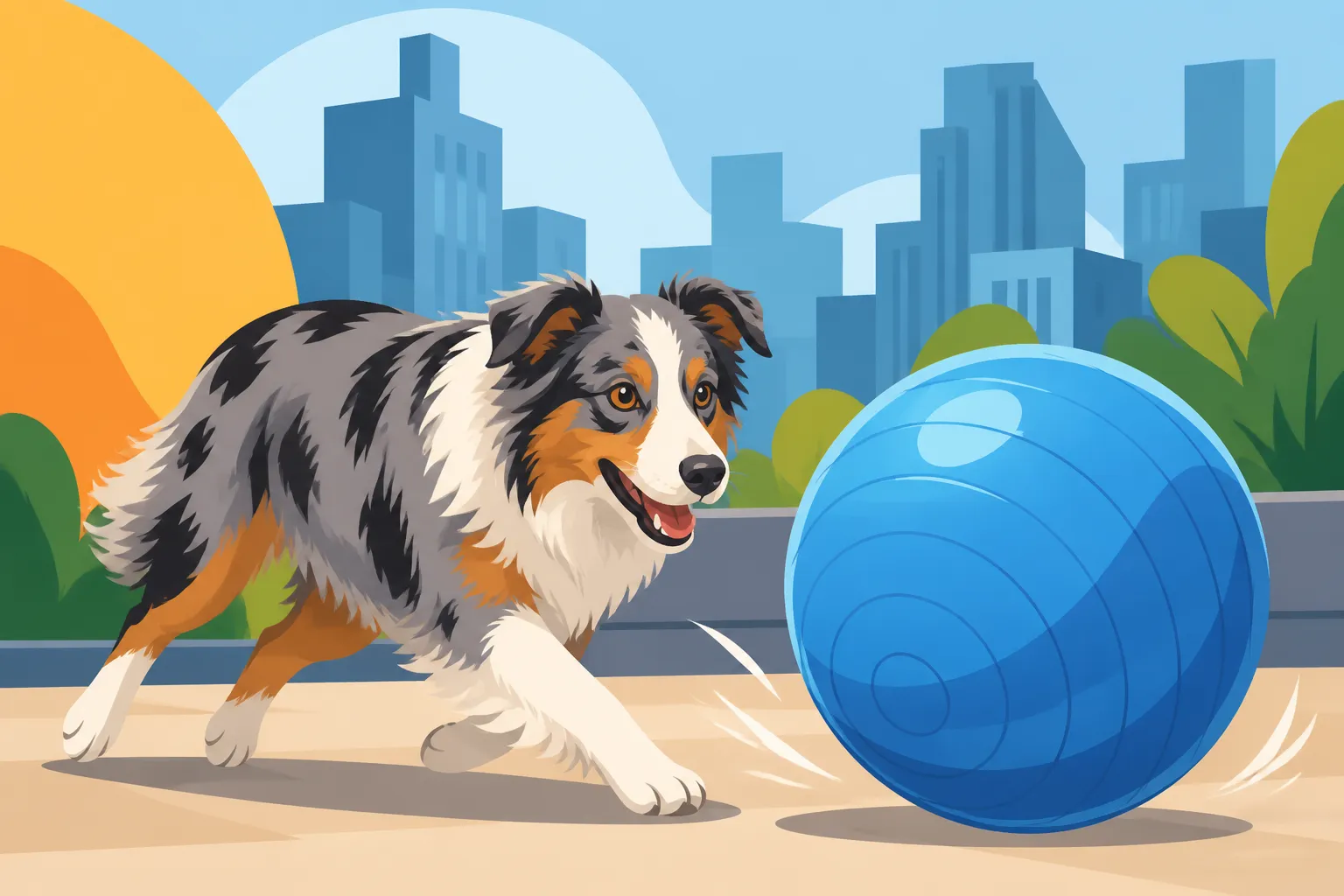
An exercise ball acts as a perfect substitute for a wayward sheep or stubborn cow. Your Australian Shepherd can push, nudge, chase, and control the movement of the ball, engaging their full herding repertoire in a controlled and safe manner. This activity satisfies their deep-seated instinct to gather and move, without any risk of nipping at children, chasing cars, or causing trouble with other dogs. It's a structured game that directly taps into their genetic programming.
When your Aussie is focused on moving the ball, they're not scanning the environment for other "flock" members to manage. This dedicated "work" helps to reduce their overall stress and anxiety levels, providing immense mental satisfaction. It gives them a real job, even if it's just in your backyard. Instead of them constantly looking for things to herd – which often leads to behaviors we don't want – you're giving them a clear, acceptable target and a set of rules for engagement. This redirection is key to managing a high-drive breed in a non-working environment.
Physical and Mental Conditioning
Urban herding with an exercise ball isn't just a mental game; it's a fantastic full-body workout for your Australian Shepherd. They'll be running, pushing, stopping, turning, and strategizing, all of which burn a significant amount of physical energy. But perhaps even more importantly, it offers incredible mental stimulation. As they learn to control the ball, they're problem-solving, making quick decisions, and focusing their attention intensely. This kind of engagement is what truly tires out an Australian Shepherd, far more effectively than a simple hour-long run. It’s the kind of activity that helps with Mental Work That Actually Tires an Australian Shepherd.
The focus required for urban herding also helps to build a stronger bond between you and your dog. As you guide them and celebrate their successes, they learn to trust your cues and work cooperatively. This collaboration translates to improved focus and responsiveness in other areas of their life, making them generally calmer and more attentive. You’ll notice an improvement in their ability to concentrate, their patience, and their overall demeanor. It gives them a purpose, and a happy Aussie is an Aussie with a job to do.
Choosing the Right Exercise Ball and Gear
Getting started with urban herding requires the right tools to ensure both effectiveness and safety. It's not just about grabbing any old ball; the type and size matter significantly.
Types of Herding Balls and Exercise Balls
When it comes to the ball itself, you have a couple of main options. Dedicated "herding balls" or "push-n-play" balls are specifically designed for this activity. They are typically made of durable, heavy-duty plastic, are puncture-resistant, and often solid or semi-solid, making them difficult for a dog to pick up and carry, forcing them to push with their nose or chest. These are fantastic for Aussies with a strong, committed herding drive that will really get into the pushing and nudging. You can find a good selection of these robust options on platforms like Amazon, often alongside other durable dog toys.
Alternatively, a standard large exercise ball (like a yoga ball) can be a good starting point, especially for dogs new to the activity or those with a slightly less intense push drive. They are much lighter and easier to move, which can build confidence initially. However, they are far less durable and can puncture easily, meaning they might not last long with an enthusiastic Aussie. The size of the ball is critical: it should be large enough that your dog cannot easily pick it up or get their jaw around it, reducing the risk of accidental injury or them trying to treat it like a chew toy. Generally, a ball between 25 and 30 inches in diameter is suitable for most adult Australian Shepherds. Too small, and it becomes a chase toy; too large, and it's unwieldy.
Here’s a quick comparison to help you decide:
| Aspect | Herding Ball (e.g., Jolly Ball, Push-N-Play) | Standard Exercise Ball (e.g., Yoga Ball) |
|---|---|---|
| Durability | Very high, designed for dog play | Low, punctures easily |
| Weight | Often heavier, solid plastic | Lightweight, air-filled |
| Cost | Generally higher | Lower |
| Ideal Use | Dedicated herding, aggressive pushers | Introduction, gentler dogs |
| Safety Concern | Can be very hard if kicked into obstacle | Risk of popping, deflating |
Essential Safety Gear and Accessories
Beyond the ball itself, a few pieces of safety gear are absolutely essential for urban herding, particularly when you're starting out. A long line and a comfortable, secure harness are non-negotiable. The long line allows you to maintain control of your Australian Shepherd, especially if they get overly excited or try to bolt, while still giving them enough freedom to interact with the ball. A harness is preferred over a collar for the long line, as it prevents strain on your dog's neck if they hit the end of the line or you need to redirect them quickly. For more on this, check out Long Lines and Harnesses for an Australian Shepherd.
You'll also want to choose your training location carefully. A securely fenced yard is ideal, free from obstacles that could damage the ball or injure your dog. If you don't have a fence, a large, open field with no distractions and no potential hazards is necessary, always keeping your Aussie on the long line. As the handler, wear comfortable shoes with good grip, as you'll be moving and changing direction quickly. Always have water available for both you and your dog, as this activity can be quite intense, especially on warmer days. Safety should always be your top priority.
Step-by-Step: Introducing Your Aussie to the Herding Ball
Introducing your Australian Shepherd to urban herding with an exercise ball should be a positive and gradual experience. The goal is to build excitement and confidence, allowing their natural instincts to kick in without overwhelming them.
First Introductions and Building Interest
Begin in a quiet, familiar, and securely fenced area, like your backyard, free from distractions. Introduce the ball by simply placing it on the ground and letting your Aussie investigate it at their own pace. Resist the urge to immediately push it or demand interaction. Some dogs will be curious right away, sniffing and nudging, while others might be a bit wary of the large, unfamiliar object. Use a calm, encouraging tone.
The key here is positive association. If your Aussie so much as nudges the ball, offer a high-value treat and enthusiastic praise. You want them to associate the ball with good things. You can also try gently rolling the ball a short distance yourself, seeing if their prey drive or herding instinct kicks in to chase it. If they show any interest in moving it, even by accident, reward that behavior instantly. This initial phase is all about making the ball seem like the most exciting, rewarding thing in their world. If you're looking for structured guidance on this and other training steps, resources like BAXTER & Bella offer comprehensive online programs that can be incredibly helpful for new owners.
Guiding and Shaping Initial Herding Behaviors
Once your Aussie shows some interest, you can start to gently shape the desired herding behaviors. The goal is to encourage them to push the ball with their nose, chest, or shoulders, rather than biting or chasing it like a retrieve toy. If they try to bite, gently interrupt them with a soft "nope" and redirect their attention to pushing. You can do this by standing behind the ball and encouraging them to push it towards you, rewarding them heavily for any forward motion.
Use your body language to guide them. Often, a herding dog will naturally respond to human body pressure, mimicking how they might move livestock. Move around the ball yourself, encouraging your Aussie to push it away from you or towards a specific spot. Keep initial sessions very short – just a few minutes – to maintain high motivation and prevent over-arousal. Always end on a positive note, even if it's just for a tiny success. Remember, we're not just playing fetch here; we're tapping into something primal, so patience and positive reinforcement are paramount. This structured play, like Tug as a Legal Outlet for Aussie Herding Drive, channels their energy constructively.
Incorporating Basic Commands
As your Australian Shepherd becomes more comfortable and engaged with the ball, you can start introducing basic verbal commands to add structure and control to the game. Simple cues like "Push" or "Go" when you want them to move the ball, and "Leave It" or "Stop" to halt the action, will be invaluable. Start by saying the command just as they are performing the action naturally, then reward. Over time, they'll associate the verbal cue with the action.
You might also work on "Stay" commands near the ball, teaching them impulse control even when the excitement is high. This level of control is essential for safe and enjoyable urban herding. For instance, have them "Stay" while you reposition the ball, then release them with "Push!" This adds a layer of mental challenge and reinforces your leadership. Building this foundation of commands helps ensure that the herding ball remains a controlled and constructive activity, rather than an unbridled free-for-all.
Advanced Techniques and Troubleshooting
Once your Aussie has the basics down, it’s time to elevate their urban herding game. This not only keeps the activity fresh and engaging but also hones their skills and mental acuity even further.
Developing Directional Control and Finesse
Moving beyond simply pushing the ball, you can teach your Australian Shepherd directional commands. This is where the real "herding" aspect becomes prominent. Introduce cues like "Left" and "Right" (or "Come By" and "Away," common herding terms), "Stop," and "Go Around." You can do this by using your body to block their path and guide the ball in the desired direction, simultaneously giving the verbal cue and rewarding them when they comply. Setting up simple cones or markers can create a mini-course for them to navigate the ball through, making the game more challenging and strategic. For inspiration on creating these kinds of setups, look at ideas for Building an Aussie Herding Course in a Yard.
Finesse also comes into play as they learn to move the ball with increasing precision. Encourage them to move it gently, or to hold it in place with their nose. This level of control requires intense focus and problem-solving, providing incredible mental stimulation. As they become more adept, you’ll notice them anticipating your cues and working more cooperatively, truly understanding their "job" within the game. This sophisticated engagement is a hallmark of a well-exercised Australian Shepherd mind.
Addressing Common Challenges
Even with the right approach, you might encounter some common challenges. One is over-arousal, where your Aussie becomes too excited, barking excessively, or getting frustrated. When this happens, it's crucial to take a break. End the session, put the ball away, and let your dog decompress. Short, positive sessions are always better than longer, frustrated ones. Another issue can be disinterest; if your Aussie isn't engaging, try increasing the value of your rewards, using more enthusiastic praise, or changing the ball type. Some dogs prefer the solid, heavy herding balls, while others might be intimidated by them and do better with a lighter exercise ball initially.
Sometimes, an Aussie might try to guard the ball, not wanting to give it up. This is a common resource guarding behavior. To mitigate this, ensure you always have control via the long line and practice "Leave It" and "Drop It" commands regularly, rewarding them for disengaging. Never try to forcefully take the ball, as this can escalate the guarding. Instead, trade them for a high-value treat, or use the "Off" command to tell them to move away from it. Consistency and patience are key here. Remember, these are learning opportunities, not failures.
Graduating to Different Environments (Safely!)
Once your Australian Shepherd is confidently herding the ball in your secure backyard, you might consider gradually introducing them to new, slightly more distracting environments. This should always be done with extreme caution and with your dog still on the long line. A quiet, open park during off-peak hours could be a next step. The goal is to build their ability to focus on the task even with minor background distractions.
Never attempt urban herding in an unfenced or busy public area until your dog has exceptional recall and focus, and even then, consider the risks. The sight of a large, rolling ball can be very exciting for other dogs or even children, potentially leading to unintended interactions. Start small, increase distractions incrementally, and always prioritize safety and control. The idea is to expand their skills, not put them or others at risk.
Integrating Urban Herding into Your Aussie's Routine
Urban herding with an exercise ball is a fantastic activity, but it’s just one piece of the puzzle when it comes to keeping your Australian Shepherd happy and healthy. Integrating it effectively into their routine can have far-reaching positive effects.
Frequency, Duration, and Balancing Act
For most Australian Shepherds, two to three urban herding sessions per week, each lasting 15-20 minutes, can be incredibly beneficial. The exact frequency and duration will depend on your dog's age, energy level, and enthusiasm for the game. Remember, quality over quantity: a focused, engaged 15-minute session is far more valuable than a distracted, hour-long one. It's important to remember that this is a high-intensity activity, so allow for rest days in between.
Urban herding should not be the only form of exercise your Australian Shepherd gets. It’s a vital component that addresses their unique instinctual needs, but it needs to be balanced with other types of physical and mental stimulation. Think about variety: regular walks (even if they don't fully tire an Aussie, they offer scent work and exposure to the world), play dates with appropriate dog friends, obedience training, and puzzle toys are all important. A well-rounded routine prevents boredom and ensures all aspects of their well-being are met. As we often discuss, Why Physical Exercise Alone Never Settles an Aussie really highlights the need for a diverse routine.
Benefits Beyond the Ball: Ripple Effects on Behavior
The positive impact of regular urban herding extends far beyond the time spent with the ball. Owners often report a noticeable improvement in their Australian Shepherd's overall behavior at home. Dogs that get a satisfying outlet for their herding drive tend to be calmer, less prone to destructive behaviors, and more focused on walks. Their reactivity to external stimuli, like passing cars or other dogs, often decreases because their instinctual needs are being met in a constructive way.
This activity also strengthens the bond and communication between you and your dog. As you work together to move and control the ball, you're building a deeper understanding of each other's cues and intentions. This enhanced partnership translates into a more harmonious life together. You'll find your Aussie is more attuned to you, more responsive to commands, and generally a more contented companion. It reinforces the idea that Whether an Aussie Needs a Job to Be Calm is often true – a satisfied working dog is a calm companion.
Long-Term Engagement and Enjoyment
To keep urban herding exciting for the long haul, consider varying the terrain, creating new courses with cones, or introducing different types of balls (while adhering to safety guidelines, of course). Keeping the game fresh prevents boredom and maintains your Aussie's enthusiasm. You can introduce new directional commands or even teach them to push the ball through tunnels or over small ramps. The possibilities are vast once your dog understands the basic concept.
Ultimately, recognizing when your Aussie is truly satisfied is key. After a good herding session, they should be tired but content, often settling down for a long nap. This mental and physical fulfillment is the true measure of success. Investing time in activities like urban herding isn't just about managing a high-energy breed; it's about enriching their lives and celebrating their unique abilities. It's a fantastic way to tackle The Cost of Keeping a High-Energy Australian Shepherd Busy by providing an engaging, low-cost activity that delivers huge returns in dog happiness.
Disclaimer
This article is for general informational purposes only and does not constitute professional advice. Laws, prices and regulations vary by location and change over time. Consult a qualified professional for guidance on your specific situation.