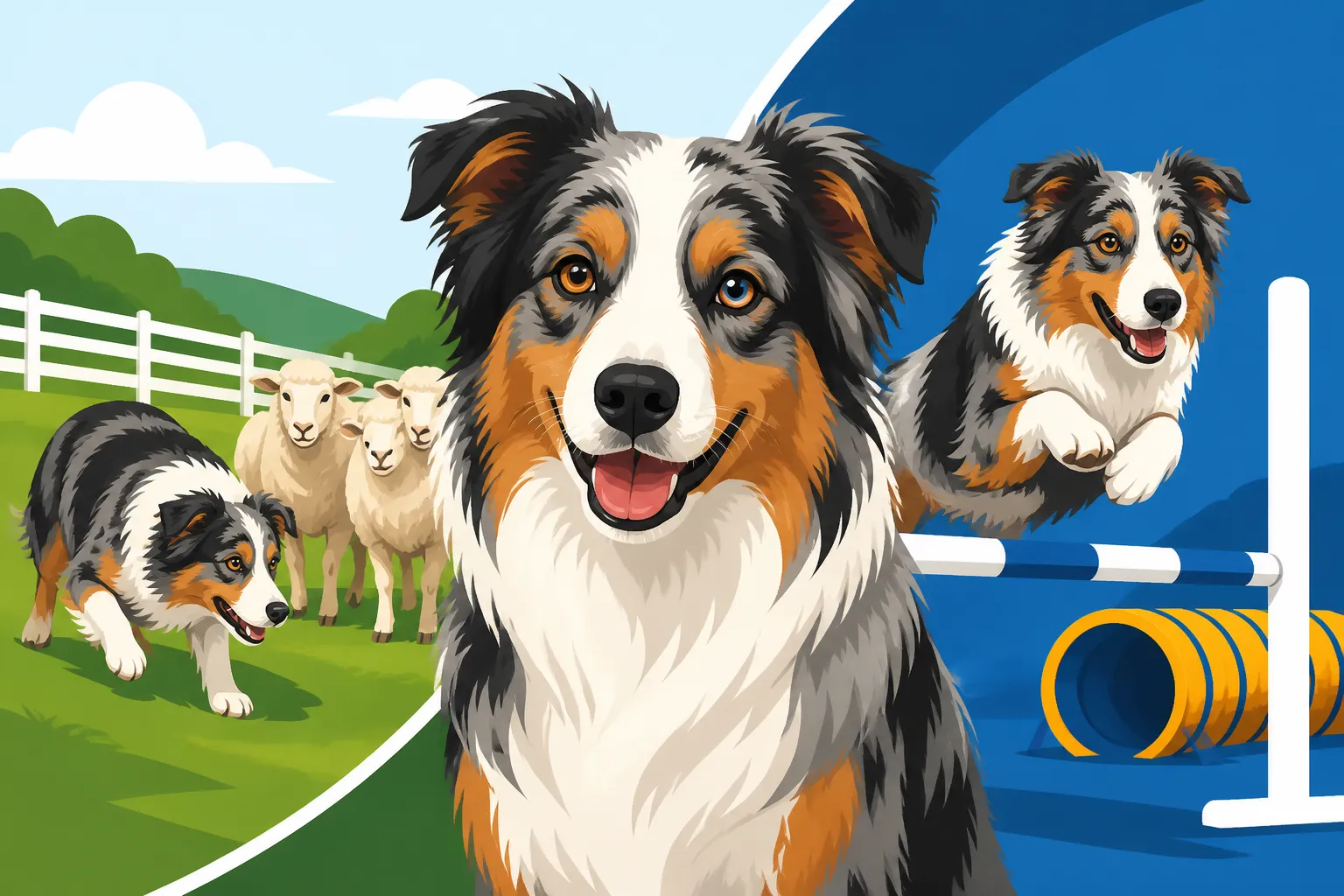
Australian Shepherd Sports From Herding to Agility
One of the most common laments I hear from Australian Shepherd owners is the sheer amount of energy their dog possesses, coupled with a brilliant mind that seems to constantly be seeking purpose. This isn't a breed content with just a walk around the block or a casual game of fetch; their historical role as working partners has hardwired them for more. If you're struggling to channel that incredible drive, this guide is going to walk you through the exhilarating world of dog sports, offering powerful outlets that fulfill your Aussie's deep-seated need for a job, transforming potential frustration into a truly magnificent partnership.
Understanding the Australian Shepherd's Innate Drive for Work
If you've ever lived with an Australian Shepherd, you know they're not just pets; they're partners. Their intelligence, agility, and tireless work ethic are legendary, stemming directly from their heritage as ranch dogs. This isn't a breed that evolved to lounge on the sofa all day, no matter how much we might wish they would sometimes! Ignoring this fundamental aspect of their nature is often the root cause of many common behavioral issues, from destructive chewing to incessant barking.
The Herding Instinct: More Than Just a Quirk
The defining characteristic of an Australian Shepherd is, without a doubt, their herding instinct. It’s embedded deep within their DNA, a legacy from generations spent moving livestock. This isn't just a cute quirk; it's a powerful, innate drive that dictates much of their behavior. You'll see it in how they try to "herd" your children, the cats, other dogs at the park, or even inanimate objects like vacuums. They might nip at heels, circle family members, or try to keep everyone grouped together. It’s not malice; it’s just their brain saying, "Gather the flock!"
This instinct is so fundamental that it's often the operating system of the breed. Trying to "train it out" completely is usually a futile exercise; it's like trying to train a retriever not to retrieve. Instead, the wise owner learns to understand, manage, and channel this drive into appropriate outlets. If left undirected, this powerful urge can manifest in ways that are frustrating for both dog and owner. They might become overly focused on moving objects, like cars or bicycles, or become anxious when they can't control their "flock" (i.e., your family). Finding a safe, structured way for them to express this drive is paramount for their well-being and your sanity. You can learn more about this in The Australian Shepherd Herding Drive You Cannot Train Out.
Why Mental Stimulation is Just as Crucial as Physical
While physical exercise is undoubtedly important for an Australian Shepherd – they can easily run for miles – it's often the mental stimulation that truly tires them out and provides satisfaction. Imagine a brilliant human stuck doing repetitive, mindless tasks all day; they might be physically exhausted but mentally frustrated. It's the same for an Aussie. A long run might burn off some physical steam, but if their clever brain isn't engaged, they'll still be looking for a "job." This is why an hour of fetch might leave them panting but still bouncing off the walls.
Dog sports, unlike simple exercise, require problem-solving, focus, and cooperation. They challenge an Aussie to think, strategize, and work in partnership with their human. This mental engagement taps into their innate intelligence and desire to please, giving them a profound sense of purpose. When an Aussie feels mentally fulfilled, they are much calmer, more settled, and less likely to invent their own "jobs" – which often involve destroying your furniture or incessantly barking at squirrels. Providing these opportunities is truly about Giving an Australian Shepherd a Job Instead of a Walk, ensuring a balanced and happy life for both of you.
Herding: Tapping into Their Ancestral Roots
For many Australian Shepherds, nothing comes close to the satisfaction of herding. It’s what they were bred for, and seeing that instinct ignite is a truly magical experience. It's not just about chasing sheep; it's about control, strategy, and a deep understanding of animal movement.
Starting with Herding Instinct Tests
If you suspect your Aussie has a strong herding drive, the first step is often an instinct test. These are typically offered by experienced herding trainers and clubs. During a test, your dog is introduced to a small flock of livestock, usually sheep or ducks, in a controlled environment. The trainer observes your dog's natural reactions: do they show interest? Do they try to gather the animals? Do they circle, stalk, or attempt to nip heels? Some Aussies take to it like they've been doing it their whole lives, while others might be a bit confused at first, or even overly excited.
The goal of an instinct test isn't to evaluate skill, but to confirm the presence of the innate drive. It's truly fascinating to see a dog that has never seen livestock before suddenly 'turn on' and display textbook herding behaviors. A good trainer will guide you through this process, explaining what they're observing and whether your dog has the potential for further herding work. It's not uncommon for pet Aussies, even those from show lines, to have a strong instinct. This initial experience can be incredibly validating for owners who have witnessed their dog's "herding" behaviors at home and wondered if there was a proper outlet for it.
From Instinct to Controlled Work: Training for the Field
Once an Aussie's instinct is confirmed, the real training begins. This isn't about letting your dog run wild with livestock; it's about teaching them control, responsiveness, and how to work as a team with you. Early training focuses on basic commands specific to herding, like "walk up" (to move the stock forward), "lie down" (to stop), and directional commands like "come by" (clockwise) and "away to me" (counter-clockwise). These commands help the dog understand how to move the stock precisely, often working in conjunction with your own movements and verbal cues.
The training process is gradual and requires patience. It teaches the dog to listen to the handler even when their instincts are screaming at them to just "go." This level of mental control and partnership is incredibly beneficial, carrying over into other aspects of their daily life. Learning to stop, turn, and gather on command translates into better overall obedience and focus. It’s also incredibly mentally taxing for the dog, providing a profound sense of satisfaction after a session. These sessions are usually done one-on-one with a trainer, often using a small group of easily managed stock, allowing for personalized feedback and steady progress.
Competitive Herding and Trial Levels
For those who find a passion for herding, there's a vibrant world of competitive trials. Organizations like the Australian Shepherd Club of America (ASCA) and the American Kennel Club (AKC) offer various levels of herding titles, from beginner to advanced. These trials simulate actual ranch work, testing a dog's ability to move stock through various courses, pens, and gates, often with different types of livestock like sheep, cattle, or ducks. The complexity increases with each level, demanding greater precision, independence, and responsiveness from the dog.
Competing in herding isn't just about winning; it's about the journey and the incredible bond you build with your dog. It's about seeing your Aussie thrive in the environment they were born for, working as a true partner. Each successful maneuver, each precise turn of the flock, is a testament to the hours of training and the deep understanding between you and your dog. It's a sport that deeply respects the natural abilities of the Australian Shepherd and offers an unparalleled outlet for their formidable intelligence and drive. While it might seem daunting at first, many clubs offer introductory clinics that can get you started, and the community is generally very supportive.
Agility: A Dance of Speed, Smart, and Partnership
Agility is perhaps the most popular dog sport globally, and for good reason: it’s fast-paced, exciting, and absolutely enthralling to watch. For an Australian Shepherd, it's a perfect blend of physical challenge and mental puzzle, requiring them to navigate an obstacle course with speed and accuracy, all while responding to their handler's cues.
The Fundamentals of Agility Training
Getting started in agility usually begins with foundation training, focusing on body awareness, impulse control, and basic obstacle introduction. Before tackling complex sequences, dogs learn how to properly use their bodies, climb small objects, and understand directional cues. Think about it: a dog needs to know how to jump through a tire, weave through poles, and run across a teeter-totter, all without hesitation. This involves breaking down each obstacle into small, achievable steps. For instance, a dog might first learn to simply walk onto a contact obstacle like an A-frame, then gradually learn to run it, and finally, to hit the "contact zone" at the bottom before dismounting.
Trainers often use lures and rewards to build confidence and enthusiasm for each obstacle. Positive reinforcement is key, making the experience fun and rewarding. Classes might focus on drills like sending your dog around a cone or through a tunnel, building their independence and ability to take directions from a distance. Impulse control is also paramount; an Aussie's natural speed needs to be balanced with the ability to pause, wait for a cue, and execute precisely. Many online platforms like BAXTER & Bella offer excellent introductory courses that can help you get started with foundational work at home before joining a local club.
Common Agility Obstacles and Their Challenges
An agility course is typically made up of a variety of obstacles designed to test different skills. These include:
- Jumps: Standard bar jumps, panel jumps, broad jumps, and tire jumps test a dog's leaping ability and precision.
- Weave Poles: Perhaps one of the most challenging obstacles, requiring the dog to weave in and out of 6 to 12 poles in a specific S-pattern. This takes immense coordination and practice.
- Tunnels: Open tunnels and collapsed tunnels (chutes) test a dog's confidence and willingness to enter dark spaces quickly.
- Contact Obstacles: A-frame, dog walk, and teeter-totter (seesaw) require the dog to touch specific "contact zones" on the ascent and descent, often painted yellow, to ensure safety and prevent flying off the end.
- Table: A pause obstacle where the dog must jump onto a raised platform and stay for a designated period (usually 5 seconds).
Each obstacle presents its own unique challenge, but the ultimate goal is to connect them into a fluid, fast-paced sequence where the dog and handler move as one. An Australian Shepherd's natural athleticism and desire to please make them excellent candidates for excelling in these areas. However, their speed and intensity also mean that proper training to avoid injuries is incredibly important. Early joint support might be something to consider for a working Aussie, which is discussed in Starting Joint Support on a Young Working Aussie.
Progressing Through Agility Levels
Just like herding, agility offers different levels of competition, allowing teams to progress as their skills develop. Most organizations, like the AKC or the United States Dog Agility Association (USDAA), have Novice, Open, and Excellent/Master levels. At each level, courses become more complex, requiring greater speed, accuracy, and handler strategy. Timing is critical, and faults are accumulated for knocked bars, missed contacts, or incorrect execution of obstacles.
Handlers learn to "read" the course, plan their strategy, and use various handling techniques – crosses, sends, and lead-outs – to guide their dog through the sequence. It's a true partnership, where the dog relies on the handler for direction, and the handler relies on the dog's skill and commitment. The thrill of watching an Australian Shepherd fly over jumps, weave through poles with incredible speed, and hit those contacts perfectly is truly unmatched. It builds incredible focus and communication between dog and owner, creating a bond strengthened by shared challenges and triumphs. This partnership also helps to manage An Australian Shepherd That Cannot Switch Off, as the intense focus and physical exertion provide a healthy mental and physical release.
Beyond Herding and Agility: A World of Aussie Sports
While herding and agility are often the first sports people consider for an Australian Shepherd, their versatile nature and keen intelligence make them excel in a wide array of other dog sports. These activities provide different challenges and can be a fantastic way to bond with your dog, no matter your personal interests or your Aussie's specific talents.
Disc Dog: The Ultimate Fetch Game
If your Australian Shepherd is obsessed with fetch, disc dog (also known as frisbee dog) might be their calling. This high-flying, energetic sport involves handlers throwing a frisbee for their dog to catch, often incorporating acrobatic catches, vaults off the handler's body, and complex routines set to music. It's a fantastic outlet for an Aussie's boundless energy, athleticism, and incredible jumping ability. Seeing an Aussie soar through the air, twisting to snatch a disc, is truly a sight to behold.
There are various levels of competition, from distance and accuracy challenges to freestyle routines that are judged on choreography, variety of moves, and the team's overall athleticism and entertainment value. It's a sport that requires both the dog and handler to be in good physical condition, and it certainly helps with An Australian Shepherd That Will Not Stop Fetching. For safety, always use dog-specific discs, which are more durable and flexible than human frisbees, preventing injury to your dog's mouth. You can easily find these on platforms like Amazon, along with training guides to help you get started with the basics of throwing and catching.
Obedience and Rally: Precision and Teamwork
For those who appreciate precision and focused teamwork, competitive obedience and rally obedience offer a structured environment to showcase an Australian Shepherd's intelligence and trainability.
-
Competitive Obedience: This sport involves a series of exercises performed by the dog and handler as a team, judged on their accuracy and performance. Exercises include heeling (walking precisely by the handler's side), recalls (coming when called), stays (remaining in position), retrieves, and scent discrimination. It demands extreme focus, attention to detail, and a deep level of understanding between dog and handler. An Aussie's eagerness to please and quick learning make them excellent candidates, but their independent streak means consistency in training is paramount.
-
Rally Obedience: Often described as a "friendly" version of obedience, rally involves navigating a course with numbered stations, each indicating a specific exercise to perform (e.g., "sit-stay," "spiral left," "send over jump"). Unlike traditional obedience, handlers can talk to their dogs, encourage them, and provide multiple commands. It's a great stepping stone into competitive dog sports, combining teamwork, communication, and basic obedience skills in a more relaxed atmosphere. Both sports are excellent for refining an Aussie's manners and strengthening the communication channels between you, offering profound benefits beyond the competition ring. The Aussie Puppy Curriculum Month by Month can lay a fantastic foundation for these types of precise sports.
Scent Work and Tracking: Unleashing Their Noses
An Australian Shepherd's nose is incredibly powerful, and scent work offers a fantastic way to engage this often-underestimated sense. These sports tap into a dog's natural hunting and searching instincts, providing immense mental stimulation.
-
Scent Work (Nosework): In scent work, dogs learn to detect specific odors (like birch, anise, or clove) hidden in various environments – containers, interior rooms, exterior areas, and vehicles. It's like a canine Easter egg hunt, where the dog is rewarded for locating the hidden scent. This sport is accessible to almost any dog, regardless of age or physical ability, and Aussies, with their problem-solving minds, often excel. It builds confidence in shy dogs and provides a calming, focused activity for energetic ones. Many kits are available on Amazon to help you start practicing these skills at home.
-
Tracking: This more advanced sport involves training a dog to follow a human scent trail over varying terrain, through different environments, and often across obstacles. Dogs learn to discriminate between different human scents and follow a specific track layer. Tracking requires intense concentration and stamina, relying solely on the dog's nose. For an Aussie that loves to explore and solve puzzles, it's an incredibly rewarding challenge. Both scent work and tracking offer incredible mental enrichment and can be profoundly tiring for an Australian Shepherd, as discussed in Scent Games That Tire an Australian Shepherd.
The Benefits of Dog Sports for Your Australian Shepherd
Engaging your Australian Shepherd in dog sports offers a cascade of benefits that extend far beyond the training field or competition ring. These activities are not just about burning off energy; they're about fostering a well-adjusted, confident, and deeply bonded companion.
Enhancing Physical Health and Stamina
Australian Shepherds are built for action, and dog sports provide the perfect avenue to keep their bodies in peak condition. Regular participation in sports like agility, disc dog, or herding builds strong muscles, improves cardiovascular health, and maintains a healthy weight. Unlike repetitive backyard play, sports often involve varied movements, engaging different muscle groups and promoting overall athleticism. The controlled nature of training also means that dogs learn to use their bodies efficiently, which can help prevent injuries.
However, it's crucial to approach physical conditioning safely. A young, growing Australian Shepherd needs appropriate exercise limits to protect their developing joints, as excessive impact can contribute to conditions like Australian Shepherd Hip Dysplasia and Working Joints. As they age, these sports can be adapted to maintain fitness without overtaxing their bodies, helping to delay the onset of Australian Shepherd Arthritis After Years of Work. A strong, fit Aussie is a healthier Aussie, less prone to obesity-related issues and better equipped to handle the rigors of an active life. Consistent physical activity also helps maintain good muscle tone, which supports joint health throughout their lives.
Boosting Mental Engagement and Problem-Solving
As we've discussed, an Australian Shepherd's mind is a powerful tool, and dog sports are essentially puzzles wrapped in physical activity. Each course, each routine, each scent hide requires your dog to think, strategize, and make decisions. They learn to interpret your cues, anticipate the next step, and solve environmental challenges. This mental workout is incredibly stimulating and fulfilling. For instance, in agility, a dog must remember a sequence of obstacles and the correct way to perform each one, all while running at top speed. In herding, they learn to read livestock and adjust their approach accordingly.
This constant mental engagement prevents boredom, which is a common precursor to destructive behaviors in intelligent breeds. When an Aussie's mind is satisfied, they are generally calmer and more content in the home environment. They learn to focus under distraction, develop better impulse control, and become more confident problem-solvers. This translates into a more adaptable dog that can handle novel situations with grace and less anxiety. The satisfaction of a mentally challenging training session often leaves an Aussie more "tired" in a good way than an hour of mindless running, providing a much-needed outlet for their bright minds.
Strengthening the Human-Canine Bond
Perhaps the most profound benefit of engaging in dog sports is the incredible strengthening of the bond between you and your Australian Shepherd. These activities are shared experiences, built on trust, communication, and mutual effort. You become a team, working towards common goals, celebrating successes, and navigating challenges together. Your dog learns to rely on your guidance, and you learn to read their subtle cues, understanding their strengths and helping them overcome their weaknesses.
The positive reinforcement used in training builds a relationship based on cooperation and joy, rather than dominance or fear. Every clear communication, every successful execution of a command, every shared moment of triumph deepens that connection. This bond extends beyond the training field, creating a more harmonious relationship at home. A dog that feels understood, respected, and valued as a partner is a dog that is deeply loyal and dedicated. This shared journey creates memories and experiences that solidify a lifelong companionship, making your Aussie not just a pet, but a true member of your family and a partner in adventure.
Getting Started with Australian Shepherd Sports
Diving into the world of dog sports can feel a little overwhelming at first, but with the right approach and resources, it's an incredibly rewarding journey. The key is to start simple, find good guidance, and most importantly, make it fun for both you and your Aussie.
Finding the Right Trainer and Club
Choosing the right trainer is paramount, especially for a breed as sensitive and intelligent as the Australian Shepherd. Look for trainers who use positive reinforcement methods, understand breed-specific traits (like herding drive and potential for overarousal), and prioritize safety and enjoyment for both dog and handler. Many trainers specialize in specific sports, so if you have a particular interest, seek out someone with expertise in that area. Word-of-mouth recommendations from other Aussie owners or local breed clubs can be invaluable. Don't be afraid to audit a class before committing to see if the teaching style and class environment are a good fit.
Joining a local dog sports club is also highly recommended. These clubs offer structured classes, practice opportunities, and a supportive community of like-minded individuals. They can provide guidance on everything from equipment to competition rules and often host trials themselves. A good club will prioritize clear communication and a safe learning environment, making it much easier to immerse yourself in the sport. This community aspect is often overlooked but can be a huge motivator and source of knowledge, connecting you with experienced mentors. For more on this, check out Finding a Trainer Who Understands an Aussie.
Essential Gear and Resources
Depending on the sport, you'll need specific gear. For any dog sport, a well-fitting harness (avoiding pressure on the throat), a sturdy leash, and high-value training treats are universal essentials.
- Agility: You might need your own practice jumps or tunnels for home use, which can be found on Amazon. Collapsible tunnels are especially handy.
- Disc Dog: Invest in durable, dog-safe discs.
- Scent Work: Scent kits (containing specific odors like birch or anise, and small tins to hide them) are crucial. Again, Amazon is a great place to find beginner kits.
- Herding: While specialized equipment like herding staffs might be used by trainers, you'll mostly need a strong leash and good walking shoes for yourself.
Beyond physical gear, educational resources are invaluable. Books, online courses, and instructional videos can supplement in-person training. Platforms like BAXTER & Bella offer comprehensive online puppy training programs that build a strong foundation in obedience and focus, which are essential for any dog sport. Many competitive organizations also have extensive online resources, including rulebooks and training tips. Don't underestimate the power of watching experienced teams in action, either in person at trials or online, to inspire and inform your own training journey.
Managing Expectations and Celebrating Small Victories
Embarking on a dog sports journey with your Australian Shepherd is not always a straight line to success. There will be days when your dog seems to "forget" everything they learned, or when you feel like you're not making progress. It's crucial to manage your expectations and remember that this is a journey of continuous learning for both of you. Don't compare your Aussie to others; focus on your own team's progress. Celebrate every small victory – a clean weave entry, a faster recall, a confident contact hit.
Patience, consistency, and a sense of humor are your best friends. Your Australian Shepherd feeds off your energy, so keep training sessions positive and fun, even when things aren't going perfectly. The goal isn't just to win ribbons, but to build a stronger bond and a happier, more fulfilled dog. Remember that your Aussie is trying their best, and sometimes a step back to reinforce basics or a break from training is more beneficial than pushing through frustration. Enjoy the process, the learning, and the incredible partnership you are building. This long-term commitment is also important when considering Australian Shepherd Training and Sport Costs.
Potential Challenges and Considerations in Aussie Sports
While dog sports offer immense rewards, it's important to go into them with open eyes, understanding the potential challenges and considerations that come with training a high-drive, athletic breed like the Australian Shepherd.
Overarousal and Frustration
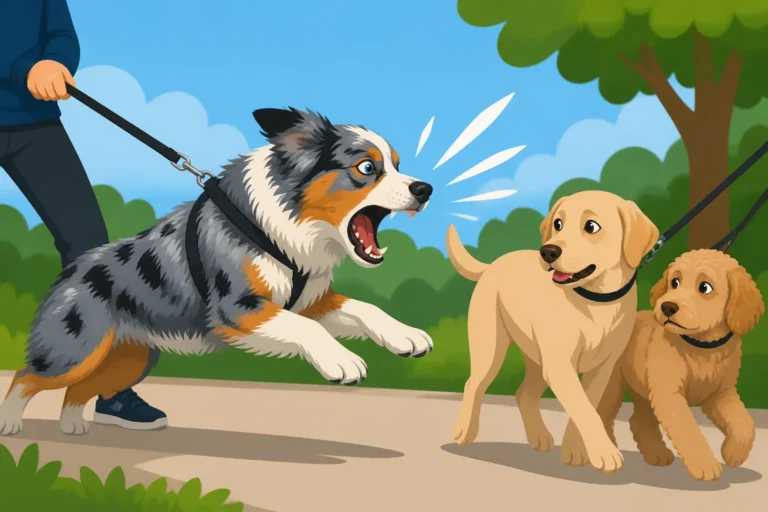
Australian Shepherds are known for their intensity and passion, which are wonderful traits in dog sports. However, this same intensity can sometimes tip into overarousal or frustration. An Aussie can become so excited by the action that they struggle to focus, or they might get frustrated if they don't understand what's being asked of them, leading to barking, spinning, or even nipping. This is especially true in fast-paced sports like agility or disc dog, where the energy levels are high. Recognising the signs of Australian Shepherd Reactivity and Overarousal is crucial for effective training.
Learning to manage your Aussie's arousal levels is a key skill. This involves teaching them an "off switch" – a cue to calm down and relax – and incorporating breaks during training. Understanding their threshold for excitement and working below it, gradually building their tolerance for distraction and intensity, is far more effective than trying to "power through" an over-excited state. A good trainer can help you identify these signs and implement strategies to keep your Aussie engaged and focused without becoming overwhelmed. Sometimes, frustration can also stem from a dog feeling unwell or in pain, so always rule out physical causes if behavior suddenly changes.
Preventing Injuries in High-Impact Sports
Many dog sports, particularly agility and disc dog, involve high-impact movements: jumping, weaving, tight turns, and rapid stops. For an athletic breed like the Australian Shepherd, the risk of injury, while manageable, is a genuine concern. Injuries can range from sprains and strains to more serious issues like cruciate ligament tears or joint problems. Protecting your Aussie's physical well-being must always be a top priority. Owners often worry about Whether Sports Wear Out an Aussie's Joints, and while possible, proper care mitigates the risks.
Prevention strategies include:
- Proper Conditioning: Ensure your dog is physically fit and warmed up before intense activity, and cooled down afterward.
- Correct Technique: Teach your dog safe and biomechanically sound ways to perform obstacles, minimizing stress on their joints. For example, ensuring they learn to hit contact zones on agility equipment rather than leaping off.
- Age-Appropriate Training: Avoid high-impact work with young puppies whose growth plates are still open.
- Regular Vet Checks: Annual check-ups, and more frequent checks if your dog is actively competing, can help identify and address potential issues early.
- Supportive Gear: Consider things like paw balms for protection on rough surfaces, especially for working Aussies, which ties into Australian Shepherd Paw and Coat Care After Fieldwork.
- Nutrition and Supplements: A high-quality diet and appropriate joint supplements can support joint health, especially as your Aussie ages.
The Time and Financial Commitment
Engaging in dog sports is a wonderful hobby, but it's important to be realistic about the time and financial commitment involved. This isn't a casual endeavor; it requires dedication.
- Time: Training sessions, classes, practice time, and travel to trials can consume a significant portion of your week. Consistent practice is key to progress, so carving out regular time is essential. A truly committed owner knows that The Cost of Keeping a High-Energy Australian Shepherd Busy goes far beyond just providing food and shelter.
- Financial: Costs can include class fees, private lessons, club memberships, entry fees for competitions, travel and lodging for trials, specialized equipment, and potential vet care for any sport-related injuries. While some sports are less expensive to start, advanced competition can add up. It's truly The Aussie Cost Owners Never See Coming for many new owners.
However, for those who embrace the journey, the rewards far outweigh the investment. The joy of working with your Australian Shepherd, seeing them thrive, and strengthening your bond is truly priceless. Many resources, from local community clubs to online groups, offer ways to learn and participate without breaking the bank, and there are often opportunities for volunteering at trials which can reduce costs and provide invaluable experience.
Disclaimer
This article is for general informational purposes only and does not constitute professional advice. Laws, prices and regulations vary by location and change over time. Consult a qualified professional for guidance on your specific situation.