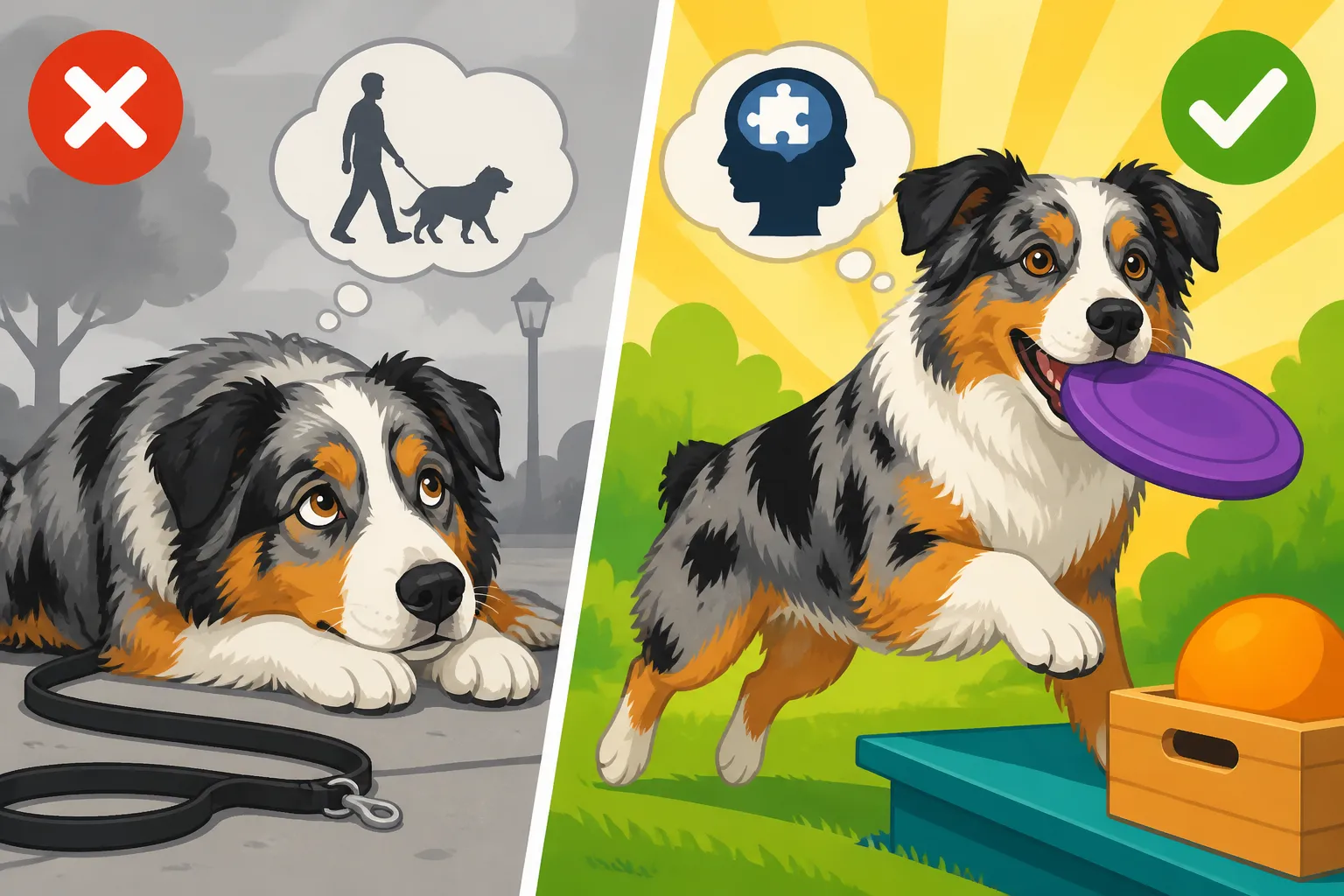
Giving an Australian Shepherd a Job Instead of a Walk
It’s a common scenario for Australian Shepherd owners: you’ve just come back from a long walk, maybe even a run, with your energetic Aussie, fully expecting them to settle down for a nice, well-deserved nap. But instead, they're pacing, nudging a toy into your lap, or staring intently at you, practically vibrating with unmet energy. You might find yourself scratching your head, wondering, "Didn't we just exercise for an hour?" The truth is, for an Australian Shepherd, a simple walk, no matter how long, often isn't enough to truly satisfy their deep-seated need for purpose. This guide is here to help you move beyond just physical exertion and discover how giving your Australian Shepherd a "job" can transform their behavior, alleviate frustration, and foster a truly well-adjusted, happy companion.
Why "Just a Walk" Isn't Enough for an Australian Shepherd
If you've ever owned an Australian Shepherd, you know they're not your average stroll-around-the-block kind of dog. Their minds are constantly whirring, observing, assessing, and often, trying to find something to do. This isn't a fault; it's a feature, deeply ingrained in their genetic makeup. Expecting them to be content with only physical exercise is like giving a brilliant mathematician a coloring book – it might occupy them for a moment, but it won't fulfill their intellectual hunger.
The Herding Dog Instinct Deep Within
Australian Shepherds were bred for generations to be intelligent, independent problem-solvers on the ranch. Their ancestors were entrusted with managing flocks of sheep and cattle, often making decisions without direct commands from a human. This meant they needed keen observation skills, quick thinking, and an innate drive to organize and control movement. That powerful instinct doesn't just vanish because they're living in your suburban home or apartment. It's still there, bubbling under the surface. When an Aussie sees children playing, cars driving by, or even you moving from room to room, that herding instinct can kick in. They want to gather, to control, to impose order. A simple walk offers little outlet for this complex behavioral repertoire. It might burn off some physical steam, but it doesn't engage the intricate machinery of their herding brain. They're still looking for "work." You might notice your Aussie trying to An Australian Shepherd Circling Joggers and Cyclists or An Australian Shepherd Herding Children in the Yard if this drive isn't channeled.
Boredom Leads to Destructive Behaviors
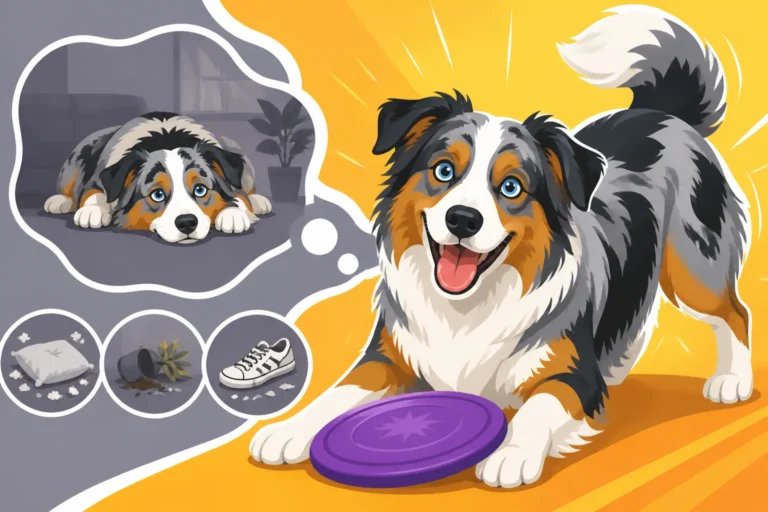
An under-stimulated Australian Shepherd is a bored Australian Shepherd, and a bored Australian Shepherd is often a destructive one. Picture this: your dog has been inside all day while you're at work. They had a brief walk in the morning. When you get home, they have all that pent-up mental energy and a powerful urge to find something to occupy themselves. Without a constructive outlet, that "job" they invent for themselves might involve redecorating your couch with their teeth, meticulously shredding your favorite rug, or systematically chewing through the leg of a chair. These aren't acts of malice; they're symptoms of an active mind that isn't being challenged. They're essentially saying, "I have to do something with all this brainpower, and since you haven't given me a proper task, I'll find my own!" It can be incredibly frustrating for owners, but it stems from a fundamental misunderstanding of the breed's needs.
The Endless Energy Loop of a High-Drive Dog
Many owners fall into the trap of trying to exhaust their Australian Shepherd purely through physical exercise. They think, "If I just run them for another hour, they'll finally be tired." While physical activity is crucial, it can sometimes create an endless loop. The more you run an Aussie, the fitter they get, and the more endurance they build. It's like trying to fill a bottomless pit with pebbles. You might achieve momentary physical fatigue, but their mental battery is still fully charged. They might lie down for five minutes, then pop up, ready for the next adventure. This isn't laziness on their part; it's simply that their energy reserves are vast, and their mental drive is even vaster. To truly tire them out, you need to engage their minds as much, if not more, than their bodies. Think about it: a sheepdog on a ranch might cover miles in a day, but they're also constantly making decisions, responding to cues, and problem-solving, which is far more draining than just trotting along a path. Why Two Hours of Running Never Settles an Aussie really hits this point home.
Understanding the Australian Shepherd's Mindset
To effectively give your Australian Shepherd a job, you first need to really understand the unique way their minds work. This isn't a breed that's content to simply exist; they thrive on purpose and engagement. Their intelligence is both a blessing and, if not managed, a potential source of frustration for both dog and owner.
An Intelligence Built for Problem Solving
Australian Shepherds are notoriously smart. They pick up new commands with astonishing speed, often understanding what you want before you've even fully articulated it. This intelligence isn't just about learning tricks; it's a cognitive ability geared towards complex problem-solving. On a ranch, a good Aussie might have to figure out how to move a stubborn ewe from a tricky corner, navigate obstacles, or bring scattered lambs back to the flock, all while adapting to changing conditions and without constant human direction. They assess situations, strategize, and execute. When they're not given these kinds of challenges, that powerful problem-solving engine idles, often leading them to create their own problems to solve. This is why puzzle toys are so effective, but also why they might get bored of simple ones quickly; their brains are looking for novelty and increasing difficulty.
A Desire to Please and to Be Useful
One of the most endearing traits of an Australian Shepherd is their intense desire to please their human. They bond deeply with their families and thrive on interaction and positive reinforcement. For an Aussie, being "good" often means being useful. They want to contribute, to be part of the team, and to feel like they have an important role. This isn't just about getting a treat; it's about the inherent satisfaction they derive from working collaboratively with you. When you give them a job, even a simple one, and they successfully complete it, you can almost see the pride in their eyes. They feel validated, important, and connected. This intrinsic motivation is a powerful tool you can leverage. Whether an Australian Shepherd Needs a Job to Be Calm touches on this perfectly – it's not just about energy, it's about fulfillment.
The Drive to "Manage" Their Environment
That herding instinct extends beyond just livestock; it often manifests as a desire to "manage" or organize their entire environment. This can include family members, other pets, and even inanimate objects. They might try to nudge you away from the kitchen counter while you're cooking, or gently push your toddler back towards you. They're not being rude; they're attempting to control the movement and placement of their "flock." This drive to manage means they are highly observant of routines, changes, and anything out of place. They notice everything! By providing them with a structured job, you're essentially giving them a designated area and set of tasks to "manage" that are appropriate and beneficial, rather than letting them try to manage things you'd rather they didn't. This can be as simple as An Aussie That Organizes the Dogs at the Park or An Australian Shepherd Herding a Vacuum Cleaner.
The Difference Between Physical Exercise and Mental Stimulation
This is a critical distinction for Australian Shepherd owners. Many believe that simply walking or running their dog for hours on end will satisfy all their needs. While physical exercise is absolutely vital for their health and well-being, it's only half the equation for an Aussie. Mental stimulation is the other, often overlooked, piece of the puzzle that truly leads to a calm, content dog.
The Treadmill Effect: Endless Motion Without Exhaustion
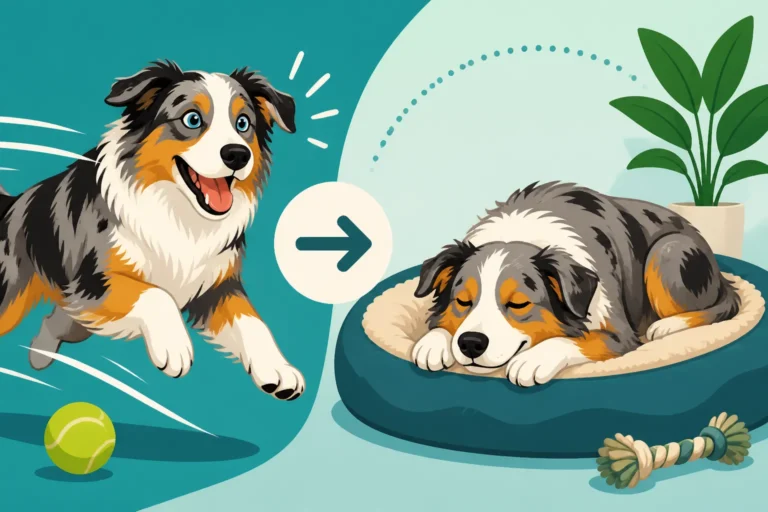
Imagine yourself on a treadmill. You might sweat, your muscles might burn, and you'll certainly be physically tired. But how mentally drained are you? Probably not very much. In fact, many people listen to podcasts or watch TV while on a treadmill because the activity itself is repetitive and doesn't require much thought. The same can be true for an Australian Shepherd on a long, uneventful walk or simply chasing a ball endlessly in the yard. They're moving their bodies, yes, but their brains are still largely disengaged. They build incredible stamina and muscle, which is great for their physical health, but it doesn't "switch off" their active minds. They might come home panting, but ten minutes later, they're bouncing off the walls because their minds haven't had a good workout. This "treadmill effect" is why so many Aussie owners feel like they're in an endless battle against their dog's energy.
The Brain Work That Actually Tires Them Out
True mental stimulation, the kind that engages an Aussie's problem-solving intelligence and working drive, is far more effective at achieving genuine fatigue. Think of it like this: after a mentally challenging day at work, solving complex problems or learning new skills, you often feel more tired than after a purely physical activity. Your brain needs rest. Aussies are the same. Engaging their minds through training, puzzle-solving, or scent work forces them to concentrate, analyze, and make decisions. This uses up a different kind of energy, tapping into their cognitive reserves. A 15-minute training session where they're learning a new trick or working on a complex chain of commands can be more tiring for an Australian Shepherd than an hour of mindless running. Their brains are working, and that brain work leads to a much more profound and satisfying state of rest. Scent Games That Tire an Australian Shepherd are a fantastic example of this kind of work.
Long-Term Benefits of Mental Engagement
The benefits of consistent mental stimulation for an Australian Shepherd extend far beyond simply tiring them out for the day. Over the long term, it contributes to a more well-balanced, adaptable, and confident dog.
Firstly, it builds a stronger bond between you and your Aussie. When you engage in activities that challenge their minds, you become a partner in their "work," reinforcing their desire to please and creating a deeper understanding.
Secondly, it helps prevent and reduce behavioral problems. A mentally stimulated dog is less likely to be bored, anxious, or destructive. They have an outlet for their energy and intelligence, leading to fewer self-invented "jobs" like chewing forbidden items or excessive barking.
Thirdly, it improves their capacity to learn and adapt. Regular mental challenges keep their brains sharp and flexible, making them more resilient to new situations and less prone to stress or reactivity. It’s an investment in their overall well-being and a key component of Australian Shepherd Temperament and Working Character.
Ideas for Providing a "Job" Indoors
Even when the weather is bad, or you're simply having a lazy day, your Australian Shepherd's brain doesn't stop. Luckily, there are countless ways to give them a fulfilling "job" right inside your home, turning everyday moments into opportunities for mental enrichment.
Puzzle Toys and Enrichment Games
These are fantastic for independent mental work and can keep an Aussie occupied for surprising lengths of time. Don't think of them as just "toys"; they're tools for problem-solving.
Start with beginner-level puzzle toys that require simple actions like nudging or flipping to release treats. Brands like Kong and Nina Ottosson offer a wide range on platforms like Amazon, from basic treat dispensers to multi-step puzzles. As your Aussie masters them, gradually introduce more complex puzzles that require multiple steps or a higher degree of cognitive effort.
Beyond manufactured toys, you can create your own enrichment games. The "shell game" (hiding a treat under one of three cups) is a classic. You can also create a "snuffle mat" by weaving fabric strips through a rubber mat, then scattering kibble deep within for your Aussie to sniff out. This engages their nose and brain simultaneously. Rotating toys and puzzles regularly prevents boredom and keeps the challenge fresh. Remember, the goal isn't just to get the treat; it's the process of figuring out how to get the treat that's the "job."
Scent Work and Hide-and-Seek
An Australian Shepherd's nose is incredibly powerful, and engaging it is a fantastic way to provide mental stimulation. Scent work, often called "nose work," is one of the most natural and fulfilling jobs for any dog.
Start with simple hide-and-seek games. Tell your Aussie to "stay" (or have a family member hold them), then hide a favorite treat or toy in an obvious spot in the room. Release them with a "find it!" command. As they get better, gradually increase the difficulty by hiding items in less visible places, under blankets, behind furniture, or even in another room.
For more structured scent work, you can teach them to find specific scents. Many trainers offer introductory classes, but you can also start at home by imprinting a particular scent (like an essential oil on a cotton swab, kept in a sealed jar) and teaching them to associate it with a reward. Over time, you can hide the scented item and have them locate it, just like professional detection dogs. This activity is incredibly tiring because it requires intense focus and problem-solving, utilizing one of their primary senses. Scent Work Titles are even available if you want to get competitive.
Chores and Helper Tasks Around the House
Why not put that intelligent desire to be useful to good work? Australian Shepherds love feeling like they're helping out. Teaching them simple household chores can be incredibly rewarding for both of you.
Start with basic tasks like "put away your toys." Have a designated toy bin. Start by placing a toy near the bin, encourage your Aussie to pick it up, and then guide them to drop it in the bin, rewarding them lavishly. Gradually increase the distance and the number of toys.
Other helper tasks can include:
- Fetching specific items: "Go get my slippers," "Bring me the remote."
- Picking up dropped items: Teaching them to retrieve something you've dropped.
- Closing doors: Nudging a door shut on command.
- Carrying groceries: Giving them a lightweight canvas bag to carry in from the car (after training, of course!).
- Finding a person: "Go find Dad!"
Not only do these tasks provide mental stimulation, but they also strengthen your bond and improve your Aussie's obedience in a fun, practical way. It gives them a real sense of purpose and contribution to the household, making them feel truly valued.
Outdoor Activities That Serve as a Job
While indoor jobs are great for rainy days, getting outside offers a whole new world of opportunities for your Australian Shepherd to engage their minds and bodies. These activities go beyond simply walking on a leash and tap into their natural athleticism and working drive.
Structured Fetch and Retrieval Games
Many Aussies love to fetch, but simply throwing a ball repeatedly can, as discussed, lead to the "treadmill effect." To turn fetch into a true job, you need to add structure and mental challenges.
- "Find It" Fetch: Instead of throwing the ball in plain sight, hide it in tall grass, behind a bush, or under a log. This forces your Aussie to use their nose and problem-solving skills to locate it before retrieving.
- Multi-Item Retrieval: Throw multiple items (e.g., a ball, a disc, a specific toy) and then send your Aussie to retrieve them one at a time on command. For example, "Get the ball!" then "Now get the frisbee!" This requires them to identify and select the correct item.
- Obstacle Course Fetch: Incorporate jumps, tunnels, or weave poles (even homemade ones from household items) into your fetch routine. They have to navigate the course and retrieve the item.
- Back-and-Forth Fetch: Work with another person. One person throws, the Aussie retrieves, then is sent to the other person for a reward and another throw. This teaches directional cues and handler focus.
These variations elevate fetch from a mindless activity to a dynamic, mentally engaging task that requires focus, obedience, and problem-solving. It's also a great way to practice Australian Shepherd Recall Around Moving Things in a high-distraction environment.
Flirt Poles and Urban Herding
These activities tap directly into your Aussie's prey drive and herding instincts in a controlled and appropriate manner.
- Flirt Pole Fun: A flirt pole is essentially a long stick with a lure (a toy, piece of fabric) attached to a rope at the end. You drag the lure along the ground, making it dart and weave like prey. Your Aussie chases, pounces, and "captures" it. This provides an incredible physical and mental workout in short bursts. The key is to make it a game of "chase and capture," allowing them to "win" and grab the lure regularly, then letting them proudly carry it for a moment before you start again. It’s an amazing way to channel their chasing instincts without them chasing actual animals or cars. Whether a Flirt Pole Winds an Aussie Up is important to consider – it needs to be managed to avoid overstimulation.
- Urban Herding with a Herding Ball: If you don't have access to livestock, a large herding ball (like a Jolly Ball or similar heavy-duty plastic ball) can be an excellent substitute. This is not just a kick-around; it’s about teaching your Aussie to control the ball's movement. You can set up cones or obstacles and encourage them to push the ball through them, or keep it within a designated area. This engages their desire to organize and control movement, mimicking real herding work. You can literally Introducing an Aussie to a Herding Ball in your own yard.
Exploring New Environments with Purpose
Taking your Australian Shepherd to new places isn't just about seeing the sights; it can be a valuable job in itself, especially if you add purpose to the excursion.
- Hiking with a Pack: For physically mature Aussies (usually after 18-24 months to protect their joints), carrying a doggy backpack can give them a sense of purpose on hikes. Start with an empty pack, then gradually add lightweight items like water bottles or a collapsible bowl. This makes them feel like they're contributing to the outing. Be mindful of How Weight Multiplies the Load on Aussie Joints and always start light.
- Scent Trailing in New Areas: Visit a local park or hiking trail you haven't been to before. Before your walk, have a friend or family member walk ahead and "lay a trail" by dragging a high-value treat on a string or leaving small treats periodically. Then, put your Aussie on a long line and encourage them to follow the scent. This is essentially a basic form of tracking and is incredibly mentally stimulating in a novel environment.
- Exploratory Walks with Challenges: Instead of a routine walk, seek out areas with varied terrain, fallen logs to climb over, shallow streams to cross, or uneven paths. Encourage your Aussie to navigate these challenges, offering praise and treats for their efforts. This makes the walk an exploratory "mission" rather than just a linear movement. Remember to check their paws after for Grass Seeds and Foxtails in an Aussie Coat.
Incorporating Training into Daily Life for a Working Mind
For an Australian Shepherd, training isn't just about teaching manners; it's a fundamental component of their well-being, serving as a constant "job" for their active minds. It's an ongoing dialogue that reinforces their role as a valued member of your family.
Regular Short Training Sessions
You don't need to dedicate hours every day to formal training. In fact, short, frequent sessions are often more effective for an Aussie's attention span and learning style. Aim for 5-10 minute bursts several times a day.
These sessions can be integrated into your daily routine:
- Before meals: Ask for a "sit" and "stay" before putting the food bowl down.
- Before going outside: Practice waiting patiently at the door with a "place" or "stay" command.
- During commercial breaks: A quick sequence of tricks or obedience commands.
- While waiting for the kettle to boil: Run through known commands or introduce a new mini-lesson.
The key is consistency and variety. Work on known commands to keep them sharp, but also introduce new concepts regularly to keep their brains challenged. This could be anything from refining their Australian Shepherd Recall Around Livestock to learning a new complex trick. A good online training program, like the BAXTER & Bella program, can provide structured lessons and help you keep things fresh, even if you're a beginner. They offer step-by-step guidance that makes incorporating training into your routine much easier.
Advanced Obedience and Trick Training
Once your Aussie has mastered basic obedience, it's time to level up! This is where their intelligence truly shines, and where you can provide them with increasingly complex "jobs."
- Advanced Obedience: Work on off-leash heeling, distance recalls, or proofing commands in highly distracting environments. This requires immense focus and self-control from your Aussie. Consider joining an obedience club or taking advanced classes.
- Trick Training: This is a fantastic way to engage their problem-solving skills and creativity. Beyond "sit" and "stay," teach them to "bow," "weave through your legs," "play dead," "fetch a specific named toy," or "open and close doors." Break down complex tricks into small, achievable steps. Use a clicker for precise communication. Tricks are not just for show; they build confidence, strengthen your bond, and provide a mental workout. Trick Training as Aussie Mental Work is not to be underestimated.
- Chain Behaviors: This is where you link multiple tricks or obedience commands together into a sequence. For example, "Sit, stay, down, roll over, come!" This requires your Aussie to remember a sequence of commands and execute them in order, which is a powerful mental exercise. It’s like giving them a multi-step project at work.
Formal Dog Sports as a Full-Time Job
For many Australian Shepherds, especially those from working lines, formal dog sports offer the ultimate expression of their natural talents and a truly fulfilling "career." These aren't just hobbies; they are intensive, structured activities that provide both physical and mental stimulation at a high level.
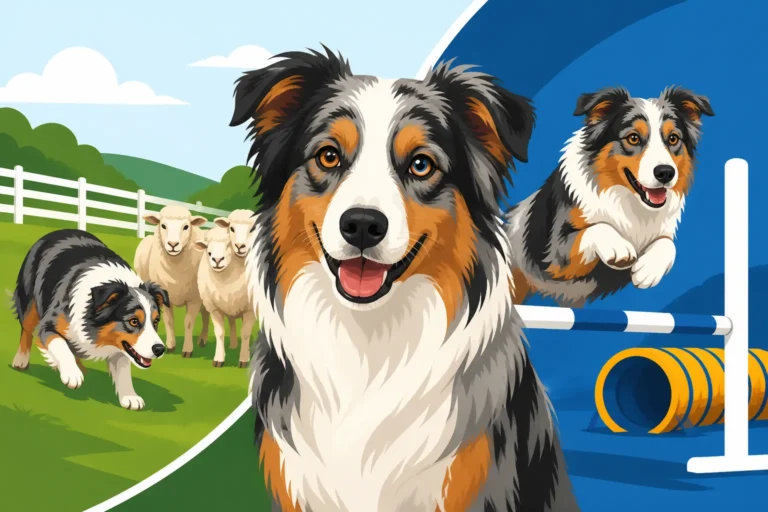
- Herding: This is the quintessential Aussie job. If you have access to a facility with livestock, an Australian Shepherd Herding Instinct Test can confirm their innate abilities. Then, you can pursue formal herding training. This involves learning to control sheep or cattle, navigate pastures, and respond to complex handler commands. It's incredibly demanding and deeply satisfying for a dog bred for this purpose.
- Agility: This fast-paced sport involves navigating an obstacle course (jumps, tunnels, weave poles, dog walks) with speed and accuracy. It requires immense focus, athleticism, and a strong partnership between dog and handler. An Aussie's First Agility Class can be a fantastic way to get started.
- Obedience/Rally: While we discussed basic obedience, competitive obedience and rally take it to another level, requiring precision, reliability, and sustained focus in a trial setting.
- Disc Dog/Flyball: These high-energy sports involve catching flying discs or racing over hurdles and retrieving a ball from a box. They cater to an Aussie's love of chasing, jumping, and retrieving.
- Scent Work/Tracking: As mentioned earlier, formal scent detection or tracking competitions utilize your Aussie's powerful nose for complex problem-solving.
These sports provide an invaluable outlet for their drive, turning their natural instincts into a highly structured and rewarding "job."
Recognizing When Your Aussie Needs a Job (and Not Just a Walk)
Sometimes, the signs that your Australian Shepherd needs more than just physical exercise are glaringly obvious. Other times, they might be more subtle, disguised as general "bad behavior." Learning to read these cues is key to a harmonious relationship with your active, intelligent dog.
Hyperactivity and Pacing
One of the most common indicators that your Aussie's mental needs aren't being met is a pervasive hyperactivity that doesn't seem to be resolved by physical exercise alone.
- Pacing or Restlessness: You might notice your Aussie incessantly pacing around the house, unable to settle. They might flop down for a minute, then spring back up, moving from room to room, looking for something to do. This isn't necessarily anxiety, but often a manifestation of an under-stimulated brain trying to find an outlet. An Australian Shepherd That Paces Indoors is a classic sign.
- Constant Nudging or Pawing: Your Aussie might constantly nudge your hand with their nose or paw at you, trying to initiate play or get your attention. While some of this is normal, excessive attention-seeking behavior can signal boredom. They're trying to tell you, "Hey, I'm ready for a task!"
- Frantic Play: When they do play, it might seem frantic or over-the-top, almost as if they can't control their excitement. They might zoom around the house wildly, or play bite more intensely than usual. This can be a sign of over-arousal due to a lack of structured mental engagement throughout the day.
Destructive Chewing and Barking
These behaviors are often misinterpreted as defiance or naughtiness, but for an Australian Shepherd, they are frequently coping mechanisms for boredom and a lack of mental work.
- Inappropriate Chewing: If your Aussie is systematically destroying furniture, shoes, or other household items, especially after they've had physical exercise, it's a huge red flag. They're finding their own "job" to do, and that job involves deconstructing things. Their strong jaws and problem-solving minds make them highly efficient at this. An Australian Shepherd Destroying Doors When Alone highlights the extent of this. Providing appropriate chew toys and puzzle feeders (perhaps from Amazon) can help, but the underlying need for mental work must be addressed.
- Excessive Barking: Australian Shepherds are often vocal, but if your dog is barking incessantly at every sound, movement, or even just at seemingly nothing, it could be a sign of under-stimulation. They might be trying to "herd" things outside the window, alert you to every perceived threat (real or imagined), or simply making noise because they have nothing else to occupy their minds. Australian Shepherd Alert Barking Against Anxiety can often be distinguished from boredom barking once you understand the root cause. A dog that is constantly "on alert" due to boredom is trying to give itself a job.
Frustration and Nipping Behaviors
When an Aussie's mental needs aren't met, and their working drive has no outlet, it can manifest as frustration, which may lead to unwanted behaviors, particularly those linked to their herding roots.
- Heel Nipping: This is a classic herding behavior. If your Aussie is nipping at your heels, the backs of your legs, or the heels of children, they are attempting to "herd" you. This is their natural instinct to gather and control movement, and it often occurs when they feel restless and don't have a better "job" to do. Australian Shepherd Heel Nipping and How to Redirect It is a critical skill to learn.
- Mouthiness/Nipping at Hands: An under-stimulated Aussie might become excessively mouthy, nipping at your hands or arms during play or when seeking attention. Again, this is not aggression but often a sign of a dog trying to interact in the only way it knows how when its mental energy is overflowing.
- Difficulty Settling: Perhaps the most telling sign is an inability to relax and settle down, even after a busy day. You want them to curl up on the couch with you, but they're restless, sighing, twitching, and generally unable to truly unwind. This suggests their minds are still buzzing, waiting for their next task. An Australian Shepherd That Cannot Switch Off is a common complaint.
Balancing Physical Exertion with Mental Work
Finding the right balance between physical exercise and mental stimulation is the holy grail for Australian Shepherd owners. It's not about choosing one over the other, but integrating both seamlessly into your dog's daily life to create a truly well-rounded and content companion.
Creating a Weekly "Job" Schedule
Just like you might plan your own week, a structured schedule can be incredibly helpful for your Aussie. It ensures they get a consistent variety of activities and helps you manage your time effectively.
Consider a rotating schedule that includes:
- Active Days: Incorporate longer, more intense physical activities like hiking, running (for mature dogs), or attending a dog sport class (agility, flyball). Pair these with focused mental warm-ups and cool-downs.
- Mental Work Days: On days where a long physical outing isn't feasible, prioritize extended scent work sessions, a new trick training session, or rotating through a series of complex puzzle toys. These can still involve shorter walks for potty breaks and light exercise.
- Enrichment Integration: Weave small "jobs" into every day – quick obedience refreshers before meals, a short game of hide-and-seek, or a 10-minute training session for a new trick.
- Rest Days: Just like athletes, Aussies need rest days! A day with only leash walks, chew time, and maybe a simple Kong can be just as valuable. Overtraining, both physically and mentally, can lead to burnout.
The goal is consistency and variety. A program like BAXTER & Bella’s online puppy school can help you build this foundation from the ground up, providing structured daily activities that cover both physical and mental needs, which can be adapted as your Aussie matures.
Adapting Jobs to Your Aussie's Age and Health
It's crucial to remember that an Australian Shepherd's capacity for physical and mental work changes throughout their life. What's appropriate for a rambunctious puppy isn't necessarily right for a senior dog or one with health issues.
- Puppies (Under 1 Year): Focus on short, frequent bursts of training and gentle, age-appropriate play. Over-exercising a puppy, especially with high-impact activities, can damage developing joints. Mental stimulation is key at this stage, teaching basic commands, manners, and short scent games. Limit long runs and jumps. Remember their Exercise Limits for an Australian Shepherd Under a Year.
- Adolescents (1-2 Years): This is often when their energy peaks, and they can handle more physical activity. However, their minds are also developing rapidly. This is a great time to introduce more complex training, advanced tricks, or try introductory dog sports. Always be mindful of joint health and ensure they are physically mature before intense activities.
- Adults (2-7 Years): This is typically their prime, where they can excel in competitive dog sports, long hikes, and intense mental challenges. Continue to vary their activities to keep them engaged and prevent boredom.
- Seniors (8+ Years): As Aussies age, their physical abilities may decline, and they might develop conditions like Australian Shepherd Arthritis After Years of Work. Adapt their "jobs" to be less physically demanding but still mentally stimulating. Scent work, gentle trick training, shorter but still engaging walks, and puzzle toys become even more important. It's about maintaining their cognitive function and quality of life without overtaxing their bodies. Senior Australian Shepherd Care After Ten becomes a focus.
The Joys of a Truly Fulfilled Australian Shepherd
When you consistently provide your Australian Shepherd with a balance of appropriate physical exercise and challenging mental work, you unlock their full potential. The difference in their demeanor is remarkable.
Instead of a restless, hyperactive, or destructive dog, you'll have a companion who is:
- Calm and Content: They'll be able to settle down readily, enjoying quiet time with you without constant fidgeting or seeking attention.
- Well-Behaved: Destructive behaviors often fade away as their needs are met, leading to a much more peaceful household.
- Responsive and Engaged: Your Aussie will be more tuned into you, eager to learn, and a joy to train because they understand and appreciate the value of having a "job."
- Confidently Independent: While they love working with you, proper mental stimulation also fosters a sense of self-reliance, meaning they can entertain themselves appropriately for periods.
The investment in understanding and meeting your Australian Shepherd's unique needs through purposeful "jobs" pays dividends in the form of a happier, healthier, and more deeply bonded relationship. It's truly a game-changer for this intelligent and driven breed.
Here's a quick comparison of just walking versus providing a job:
| Aspect | "Just a Walk" (Physical Exertion Only) | "A Job" (Mental Stimulation + Physical Activity) |
|---|---|---|
| Primary Focus | Burning physical energy through repetitive motion. | Engaging the brain with problem-solving, decision-making, and purposeful activity. |
| Effect on Energy | Builds stamina, can lead to the "treadmill effect" (physically tired, mentally wired). | Deeply satisfying; leads to genuine mental fatigue, promoting a calmer, more settled state. |
| Behavioral Impact | May reduce some hyperactivity, but often leaves underlying boredom and frustration. | Significantly reduces destructive chewing, excessive barking, heel nipping, and restlessness by providing an outlet. |
| Bond with Owner | May be good, but largely relies on shared physical activity. | Strengthens bond through collaborative problem-solving, communication, and shared accomplishment. |
| Skill Development | Primarily physical fitness. | Enhances cognitive abilities, focus, obedience, problem-solving skills, and self-control. |
| Long-Term Outcome | Can lead to an overly fit but perpetually restless dog if mental needs are ignored. | Fosters a well-balanced, confident, adaptable, and genuinely content Australian Shepherd. |
Disclaimer
This article is for general informational purposes only and does not constitute professional advice. Laws, prices and regulations vary by location and change over time. Consult a qualified professional for guidance on your specific situation.